Commercial plastic queen cell cups function as the backbone of standardized mass production. They provide high dimensional consistency and superior durability compared to wax, enabling repeated reuse and seamless integration with automated or semi-automated queen rearing workflows.
The Core Insight In large-scale operations, the slight biological edge of wax is outweighed by the logistical necessity of standardization. Plastic cups convert queen rearing from a variable artisanal process into a consistent industrial workflow by ensuring geometric uniformity and enabling rigorous sanitation cycles.
The Power of Standardization
Geometric Consistency
Plastic cups are manufactured to precise specifications, typically featuring a uniform 8-9mm diameter.
This consistency ensures that every larva has an identical developmental space, leading to uniform accumulation of royal jelly across thousands of cells.
Equipment Integration
Unlike handmade wax cups, which can vary in shape and size, plastic cups are engineered for seamless compatibility with modern grafting frames and holding fixtures.
This standardization facilitates rapid assembly and reduces the mechanical adjustments required during batch operations.
Durability and Operational Resilience
Resistance to Deformation
Traditional wax cups are fragile and prone to distortion during handling or temperature fluctuations.
Plastic cups possess superior physical strength, ensuring they maintain their shape during grafting, transportation, and installation into cell builder colonies.
Protection of Larvae
The rigid structure of plastic provides a protective barrier for the delicate larvae.
This reduces the risk of mechanical damage during the grafting process, a critical factor when managing the high-volume throughput of commercial apiaries.
Efficiency Through Reusability
Sanitization and Lifecycle
A distinct advantage of plastic is the ability to withstand repeated cleaning and disinfection.
Operators can boil or chemically sanitize plastic cups to eliminate pathogens, a process that would destroy wax cups.
Reduced Labor Costs
Because they are reusable and do not need to be hand-dipped or molded for every cycle, plastic cups significantly lower the labor burden.
This transforms the cups into a standardized consumable rather than a manufactured component, streamlining the supply chain for the operation.
Understanding the Trade-offs
The Acceptance Gap
You must recognize that honeybees generally show a biological preference for natural beeswax.
Initial acceptance rates for plastic cups can be slightly lower than for fresh wax cups, as the material composition of wax mimics the natural nesting environment more closely.
The Necessity of Pre-treatment
To mitigate lower acceptance rates, plastic cups often require pre-treatment.
Coating the cups with syrup or exposing them to the hive environment prior to grafting helps induce worker bees to clean the cups and begin wax construction, narrowing the performance gap with natural wax.
Making the Right Choice for Your Goal
- If your primary focus is Operational Scale: Prioritize plastic cups to maximize workflow efficiency, equipment compatibility, and asset reusability.
- If your primary focus is Biological Optimization: Consider traditional wax cups for small-batch, premium breeding where maximum acceptance and morphological perfection outweigh labor costs.
For modern commercial apiaries, the technical reliability of plastic cups is the key to unlocking consistent, high-volume production.
Summary Table:
| Feature | Plastic Queen Cell Cups | Traditional Wax Cups |
|---|---|---|
| Dimensional Consistency | High (Precise 8-9mm diameter) | Variable (Hand-dipped/Molded) |
| Durability | High (Rigid & Deformation-resistant) | Low (Fragile & Temperature-sensitive) |
| Reusability | Multiple cycles after sanitization | Single-use only |
| Labor Requirement | Low (Ready-to-use) | High (Requires manual production) |
| Pathogen Control | Can be boiled or chemically sanitized | Cannot be sanitized with heat |
| Acceptance Rate | Requires pre-treatment for best results | Naturally high acceptance |
Elevate Your Apiary Operations with HONESTBEE
Transitioning to professional-grade equipment is the first step toward scaling your commercial queen rearing. As a leading partner for commercial apiaries and global distributors, HONESTBEE provides the comprehensive wholesale solutions you need to succeed.
From high-precision queen rearing tools and automated honey-filling machines to specialized hive-making machinery, we supply the full spectrum of industrial beekeeping equipment and consumables. Our hardware is designed for durability and standardized performance, ensuring your operation remains consistent and profitable.
Ready to optimize your production and reduce labor costs?
Contact HONESTBEE today for wholesale pricing and expert guidance
References
- Anisha Poudel, Bhawana Aryal. Effect of Queen Cell Cup Types on Graft Acceptance And Queen Bee Emergence in Apis mellifera L.. DOI: 10.3126/jpps.v9i2.85021
This article is also based on technical information from HonestBee Knowledge Base .
Related Products
- JZBZ Type Wide Base Plastic Queen Cell Cups for Base Mounting and Queen Rearing
- Clear Black Plain Polystyrene Queen Bee Grafting Cell Cups No Lug for Bee Queen Cup
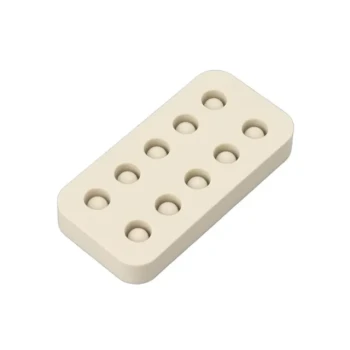
- 10-Cell Silicone Beeswax Bee Queen Cups Forming Mold
- Brown Nicot Queen Cell Cups for Breeding Queen Bees Beekeeping
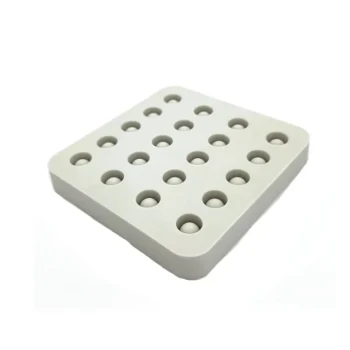
- High-Efficiency 20-Cell Silicone Mold for Beeswax Bee Queen Cup Production
People Also Ask
- What is the primary function of commercial plastic queen cell cups? Driving Efficiency in Mass Queen Rearing
- What are the primary advantages of using plastic queen cell cups? The Industrial Choice for High-Efficiency Apiaries
- What is the function of standardized plastic Queen Cell Cups? Boost Efficiency in Commercial Larval Grafting
- Why are standardized plastic queen cell cups preferred? Boost Commercial Queen Rearing Efficiency
- Why are standardized plastic queen cell cups typically used in large-scale queen bee production? Boosting Apiary Output