Plastic queen cell cups are the definitive standard for modern commercial queen rearing due to their extreme durability and dimensional precision. These tools eliminate the labor-intensive fabrication required for traditional wax cups while ensuring a high level of uniformity across thousands of units. By providing a stable, standardized substrate, plastic cups allow commercial apiaries to scale operations with predictable results and high larval acceptance rates.
Central Takeaway: Plastic queen cell cups transition queen rearing from a manual craft to a high-efficiency industrial process, offering superior structural stability and reusability that traditional beeswax simply cannot match. This makes them the essential consumable for any large-scale beekeeping supply portfolio.
The Power of Dimensional Standardization
Precision Geometric Specifications
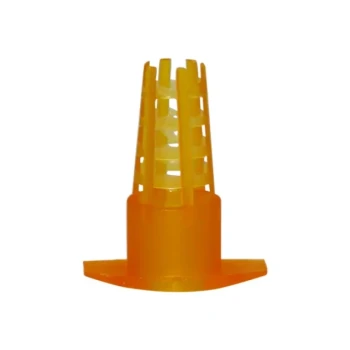
Unlike handmade wax cups, plastic versions offer highly standardized geometric dimensions, typically maintaining a consistent diameter of 8-9mm. This uniformity mimics the ideal natural queen cell base, which is critical for inducing nurse bees to begin cell building and royal jelly secretion.
Consistency in Large-Scale Operations
Standardization allows for seamless integration with modern queen rearing frames and automated equipment. For distributors, this means providing a product that fits a wide array of standardized beekeeping hardware, reducing compatibility issues for the end-user.
Facilitating Larval Grafting
The smooth internal walls and consistent shape of plastic cups protect delicate larvae from mechanical damage during the grafting process. This structural reliability ensures that the internal environment remains stable, leading to more uniform queen development across the entire batch.
Durability and Operational Efficiency
Superior Structural Stability
Plastic cups are engineered to withstand the rigors of a commercial apiary, preventing deformation during handling, transportation, or installation. Unlike fragile beeswax, these components maintain their shape even under the physical pressure of high-volume grafting and frame movement.
Sanitation and Reusability
One of the most significant commercial advantages is the ability to clean, disinfect, and reuse high-quality plastic cups. This capability reduces the long-term cost per queen produced and ensures that pathogens can be effectively managed through standardized sterilization protocols.
Simplified Workflow
By removing the need to manually fabricate wax cups on wooden bars, plastic alternatives drastically simplify the inoculation process. This efficiency allows commercial operations to increase their annual yield of queens and royal jelly from modest amounts to industrial-scale output.
Performance Across Diverse Environments
Stability in Fluctuating Conditions
Plastic cups have proven to be exceptionally reliable during seasonal transitions, such as the autumn rearing period. In environments where wax might become brittle or soft, plastic maintains its integrity, often achieving acceptance rates equal to or higher than traditional materials.
Industrialization of Royal Jelly Production
The use of standardized plastic cups is the technical cornerstone of the royal jelly sector, enabling yields to move from a few hundred grams to several kilograms per colony. The consistent spatial specifications encourage nurse bees to deposit royal jelly evenly, stabilizing the overall harvest.
Understanding the Trade-offs
Initial Acceptance Variables
While plastic offers long-term efficiency, some colonies may show a slightly lower initial acceptance rate compared to fresh, aromatic beeswax. However, this is typically mitigated once the cups have been "conditioned" or aged within the hive environment.
Environmental Considerations
Plastic is a non-biodegradable consumable, which requires a disciplined recycling or disposal strategy within the apiary. Furthermore, because they are reusable, the burden of ensuring complete sterilization falls on the operator to prevent the carryover of brood diseases.
Optimizing Your Sourcing Strategy
Choosing the right queen rearing components depends on the specific scale and technical goals of your client base. As a technical partner, we provide the expertise and rapid fulfillment necessary to keep commercial operations running without interruption.
- If your primary focus is Industrial Scale Production: Prioritize highly standardized 8-9mm plastic cups to ensure compatibility with automated grafting frames and maximize royal jelly yields.
- If your primary focus is Cost-Per-Unit Efficiency: Emphasize high-quality, heat-resistant plastic models that can withstand repeated sterilization cycles for multiple seasons of use.
- If your primary focus is Rapid Market Response: Leverage our one-stop sourcing and ultra-fast delivery to maintain a consistent inventory of these essential consumables during the peak grafting season.
By integrating standardized plastic cell cups into their workflow, commercial beekeepers can achieve the precision and scale necessary to lead the modern honey and royal jelly industries.
Summary Table:
| Feature | Plastic Cell Cups | Traditional Beeswax Cups |
|---|---|---|
| Durability | High; resists deformation | Low; fragile and easily deformed |
| Dimensional Precision | Standardized 8-9mm | Variable/Handmade |
| Reusability | Yes (after sterilization) | No (Single use) |
| Labor Requirement | Ready-to-use | High (manual fabrication) |
| Scalability | Ideal for Industrial Scale | Limited to small-scale craft |
| Consistency | High uniformity across batches | Significant individual variation |
Scale Your Beekeeping Inventory with HONESTBEE
As a dedicated partner to distributors, wholesalers, and B2B resellers, HONESTBEE provides a comprehensive one-stop sourcing solution for the modern apiary. From high-precision plastic cell cups and specialized hardware to honey-filling machinery and branded cultural merchandise, we supply the full spectrum of tools required for industrial-scale success.
Why Partner with HONESTBEE?
- Unmatched Efficiency: Benefit from ultra-fast delivery and rapid response times to keep your inventory fluid.
- Professional Expertise: Leverage our deep industry knowledge and premium trading services to optimize your profit margins.
- Reliable Supply: We offer a full-spectrum product portfolio including essential consumables and hive-making machinery with OEM/ODM support.
Ready to elevate your supply chain with a reliable industry leader? Contact us today to explore our wholesale offerings!
References
- Mohammed Ahmed Alshogari, A. M. Raut. Queen Rearing Optimization: Role of Queen Cup Materials and Substrates on Larval Acceptance and Queen Emergence Rate in <i>Apis Mellifera</i> L. DOI: 10.55446/ije.2025.3263
This article is also based on technical information from HonestBee Knowledge Base .
Related Products
- JZBZ Type Wide Base Plastic Queen Cell Cups for Base Mounting and Queen Rearing
- Clear Black Plain Polystyrene Queen Bee Grafting Cell Cups No Lug for Bee Queen Cup
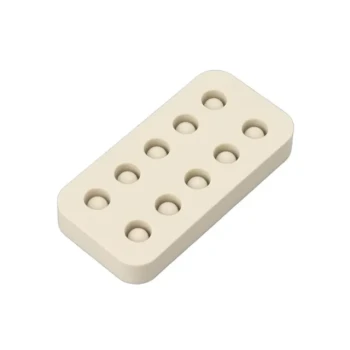
- 10-Cell Silicone Beeswax Bee Queen Cups Forming Mold
- Brown Nicot Queen Cell Cups for Breeding Queen Bees Beekeeping
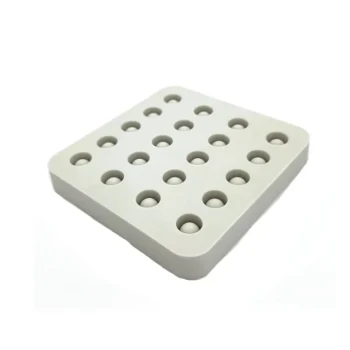
- High-Efficiency 20-Cell Silicone Mold for Beeswax Bee Queen Cup Production
People Also Ask
- What is the primary function of commercial plastic queen cell cups? Driving Efficiency in Mass Queen Rearing
- What technical advantages do commercial plastic queen cell cups offer? Scale Your Queen Rearing for Maximum Efficiency
- What is the function of standardized plastic Queen Cell Cups? Boost Efficiency in Commercial Larval Grafting
- Why are standardized plastic queen cell cups preferred? Boost Commercial Queen Rearing Efficiency
- Why are standardized plastic queen cell cups typically used in large-scale queen bee production? Boosting Apiary Output