A practical planning figure is 40–70 pounds (18–32 kg) of raw honey per hive per year under favorable forage and weather conditions. Actual surplus yield can be lower—around 30–40 pounds (14–18 kg) for an average healthy colony—or higher, with strong colonies producing 60–80 pounds (27–36 kg) or more in excellent conditions. For commercial operations, the key is to size equipment for cumulative harvest volume and short peak-processing windows, not for the output of one hive.
Annual yield is highly variable, so commercial machinery should be planned around a realistic base case plus seasonal volume spikes. The larger the apiary, the more important high-capacity extraction, filtration, temperature management, and automated filling become for avoiding labor bottlenecks and maintaining consistent product quality.
How Much Honey Should Commercial Apiaries Expect?
Use a planning range, not a fixed yield
A standard commercial planning assumption is 40–70 pounds per hive per year under favorable conditions. This range represents raw honey production and should not be treated as a guaranteed harvest.
A more conservative base case is approximately 30–40 pounds per hive, particularly where forage, weather, colony strength, or management conditions are inconsistent. Strong colonies in excellent conditions may reach 60–80 pounds or more.
Calculate total annual volume
The basic planning formula is:
Total annual honey volume = Number of hives × Expected yield per hive
For example, an apiary with 100 hives could produce approximately:
- Conservative case: 3,000–4,000 pounds
- Favorable planning case: 4,000–7,000 pounds
- Strong-season case: 6,000–8,000 pounds or more
These figures are approximate and describe total raw honey before processing losses, retained colony stores, or other operational deductions.
Account for local forage and flowering periods
Honey yield depends heavily on plant species, land area, weather, colony strength, and forage availability. A short, intense flowering season can produce a large volume that must be extracted and packaged quickly.
Regions with high nectar potential may support more colonies and larger harvests, but they also require greater processing capacity during a limited period. Apiary density and machinery planning should therefore be based on local floral conditions rather than hive count alone.
What the Yield Means for Processing Equipment
Extraction capacity becomes the first bottleneck
Once an apiary manages multiple hives, manual extraction can become too slow during peak harvest. Commercial operations typically need equipment for uncapping, honey extraction, straining or filtration, and transfer into storage tanks.
The extractor should be selected according to the number of frames processed per batch, the expected number of harvest batches, and the available operating hours. A machine that appears adequate on an annual basis may still be undersized if most of the honey arrives within a few days or weeks.
Filtration and handling must match the harvest rate
Raw honey commonly requires removal of wax particles and other debris before storage or filling. Filtration equipment and transfer systems must handle the same peak flow as the extractor; otherwise, filtration or pumping becomes the limiting step.
Commercial layouts should also minimize unnecessary transfers. Short, hygienic product paths reduce handling time and support more consistent sanitation practices.
Heating and storage require controlled capacity
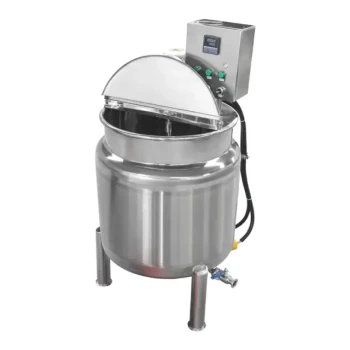
Commercial apiaries may use heating tanks or temperature-managed processing equipment to make honey easier to handle and transfer. These systems should be sized for the volume produced during peak harvest, while protecting the operation’s quality-control requirements.
Storage tanks also need sufficient working capacity between extraction and final packaging. If tanks are too small, filling may need to stop while honey is processed or moved, creating avoidable downtime.
How Yield Affects Honey-Filling Machinery
Filling speed should follow peak output
Annual yield determines the total amount to be packaged, but peak harvest rate determines the required filling-machine performance. A filling line must keep pace with processed honey without creating a queue at the storage or filtration stage.
For example, a 100-hive apiary producing several thousand pounds annually may not require the same filling configuration as a large commercial operation producing thousands of tons across a region. The correct specification depends on container size, filling accuracy, operating hours, and the percentage sold in packaged form.
Consistent dosing matters at wholesale scale
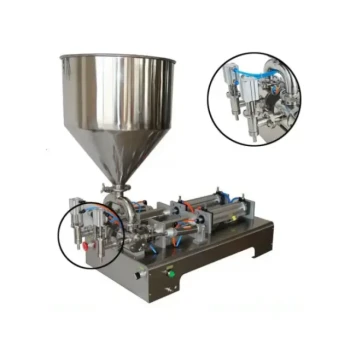
Automated honey-filling machines provide repeatable fill volumes into jars or bottles. This is particularly important for wholesalers, private-label products, export orders, and retail formats where inconsistent dosing creates product, labeling, and customer-service issues.
The filling system should be compatible with the honey’s viscosity, the selected container formats, and the required production changeovers. A machine optimized for one jar size may be less efficient if the operation frequently switches between packaging formats.
Automation reduces labor pressure
Manual bottling becomes increasingly difficult as hive counts rise. Automated filling and associated packaging equipment can reduce repetitive labor, improve throughput, and help maintain consistent hygiene during large harvests.
For distributors and resellers, this makes scalability a central purchasing consideration. Equipment should support the customer’s current operation while allowing reasonable growth, rather than being selected only for today’s average harvest.
Designing a Scalable Commercial Processing Line
Start with a conservative volume model
Use at least three scenarios when planning equipment:
- Conservative yield: approximately 30–40 pounds per hive.
- Favorable yield: approximately 40–70 pounds per hive.
- Strong-season yield: approximately 60–80 pounds or more per hive.
This approach prevents the machinery from being sized only for an average season and then becoming a bottleneck during a strong flowering period.
Match every stage of the process
A balanced system should coordinate:
- Uncapping equipment
- Honey extractors
- Filtration or straining systems
- Pumps and transfer equipment
- Heating or temperature-managed tanks
- Bulk storage tanks
- Honey-filling machines
- Container handling and packaging equipment
A high-speed filler cannot improve total output if the extractor, filter, or storage tank operates more slowly. Commercial efficiency comes from balancing the entire line.
Design around order requirements
Machinery requirements also depend on the sales model. Bulk honey shipments, retail jars, contract filling, and private-label orders create different demands for storage, filling accuracy, changeovers, and packaging flexibility.
Distributors serving commercial beekeepers should therefore evaluate the complete application: hive count, seasonal yield, container range, filling schedule, sanitation expectations, and future expansion plans.
Understanding the Trade-offs
Oversizing increases upfront cost
Larger extractors, tanks, and automated filling lines provide more capacity but require greater capital investment, floor space, utilities, and maintenance. Buying the largest available machine is not automatically the most efficient decision for a small or seasonal apiary.
The equipment should provide enough capacity for expected peak demand without leaving most of its capability unused.
Undersizing creates hidden costs
An undersized system may appear economical initially, but it can lead to extended harvest shifts, higher labor costs, delayed packaging, and processing backlogs. These problems are especially serious when flowering seasons are short or wholesale delivery schedules are fixed.
The lowest purchase price should not be confused with the lowest operating cost.
Average yield can conceal peak-season risk
Planning only from annual averages is a common mistake. A hive may produce its annual surplus in one concentrated harvest period, placing more pressure on extraction and filling equipment than the yearly total suggests.
Commercial operators should ask how much honey must be processed per day or per week during the busiest period, not only how many pounds are produced per year.
Yield projections are not guarantees
Weather, forage availability, colony health, and management practices can change production substantially from one season to another. Machinery decisions should use documented local performance where possible and include a practical growth or peak-volume margin.
Making the Right Choice for Your Goal
Select machinery by combining hive count, realistic yield, peak harvest timing, packaging requirements, and expected business growth.
- If your primary focus is accurate annual capacity planning: Multiply hive count by a conservative 30–40-pound base case, then check the system against the favorable 40–70-pound range.
- If your primary focus is peak-season throughput: Size extraction, filtration, storage, and filling equipment for the volume that may arrive during the shortest harvest window.
- If your primary focus is wholesale or export packaging: Prioritize automated filling, precise dosing, hygienic product handling, and compatibility with required jar or bottle formats.
- If your primary focus is future expansion: Choose a modular, scalable processing line rather than equipment sized only for the current hive count.
- If your primary focus is equipment distribution or resale: Offer coordinated solutions covering extraction, filtration, tanks, filling, and packaging so customers can avoid capacity mismatches between processing stages.
With realistic yield scenarios and balanced processing capacity, commercial apiaries can turn variable hive production into a dependable and scalable honey business.
Summary Table:
| Scenario | Yield per Hive (lbs) | Total Annual Volume (100 hives) | Equipment Considerations |
|---|---|---|---|
| Conservative | 30–40 | 3,000–4,000 lbs | Base-case sizing; manual or small-scale equipment may suffice |
| Favorable | 40–70 | 4,000–7,000 lbs | Mid-range extraction and filling lines; balance all stages |
| Strong Season | 60–80+ | 6,000–8,000+ lbs | High-capacity extractors, filtration, and automated filling needed |
| Peak Harvest | Varies | Up to 20% of annual yield per week | Oversize equipment by 20–30% to handle concentrated harvests |
Maximize your apiary's profitability with HONESTBEE's comprehensive beekeeping equipment. From high-capacity extractors to precise honey-filling machines, we provide one-stop sourcing with rapid delivery and expert support. Ensure your processing line matches your yield potential. Contact us today for tailored solutions for your commercial operation.
Related Products
- Precision Durable Efficient HONESTBEE Rotary Honey Filling Machine
- Economy Small Honey Filling Machine Honey Bottle Filler Packaging Machine
- Semi Automatic Small Honey Bottle Filling Machine Honey Filler
- Fully Automatic Honey Filling Packaging Machine for Processing Line
- Automatic Honey Filling and Filtering Machine for Beekeeping Bottle Filling
People Also Ask
- How do honey filling and processing machines aid native bee product conservation? Boost Value with HONESTBEE Technology
- What are the common types of bottling machines used for honey? Choosing the Right Solution for Your Apiary
- How do high-precision honey filling machines ensure quality? Optimize Your Commercial Production with HONESTBEE
- What quality control role does professional honey filling equipment perform? Ensure Consistency and Product Stability
- How do honey filling machines work? Achieve Precision & Speed for Your Apiary