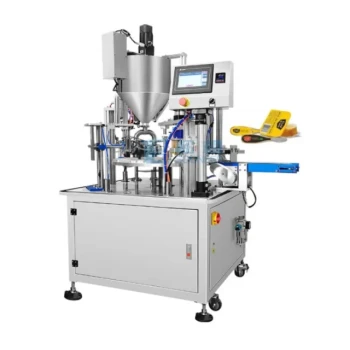
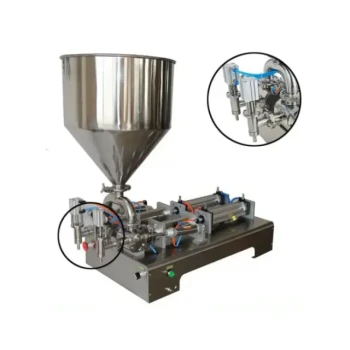
Professional honey filling equipment serves as the primary quality control mechanism in the packaging process by utilizing precision-engineered pumping and metering systems. It rigorously minimizes the honey's exposure to air, thereby preventing the absorption of environmental moisture and the introduction of unsightly air bubbles. This precise physical operation guarantees that every unit maintains a consistent weight while strictly preserving the natural texture and viscosity of the product.
Core Takeaway By automating the delicate balance of flow rate and environmental isolation, professional equipment transforms honey packaging from a variable manual task into a standardized scientific process. It ensures both physicochemical stability and regulatory compliance, effectively bridging the gap between raw apiary production and a shelf-ready commercial brand.
Preserving Physicochemical Stability
Combatting Moisture Absorption
Honey is naturally hygroscopic, meaning it readily attracts and holds water molecules from the surrounding environment. Professional filling systems utilize closed-loop pumping mechanisms to minimize air contact time. This prevents the moisture content from rising, which is critical for inhibiting fermentation and maintaining shelf stability.
Eliminating Visual Defects
The introduction of air bubbles during manual pouring creates a cloudy appearance and potential texture issues. Precision metering systems control the flow dynamics to eliminate turbulence. This ensures a crystal-clear visual consistency that signals high quality to the consumer.
Maintaining Texture and Viscosity
Mechanical stress and improper handling can degrade honey's natural structure. High-quality equipment is designed to move viscous fluids gently. This preserves the honey’s inherent viscosity and mouthfeel, ensuring the product inside the jar matches the quality of the product in the hive.
Ensuring Commercial Standardization
Achieving Weight Precision
In a commercial environment, consistent net weight is a legal necessity, not just a preference. Automated equipment uses volumetric measurement or weighing sensors to fill bottles with high repeatability. This keeps the product within strict legal metrology requirements and prevents revenue loss from overfilling.
Enforcing Hygiene and Sterility
Manual handling is the primary vector for contamination in food packaging. Automated filling machines provide a sterile, touch-free environment for the product. By removing human contact from the critical filling stage, the equipment ensures the product meets rigorous food safety and compliance standards.
Controlling Heat Exposure
While honey must often be warmed to flow efficiently, overheating destroys natural enzymes and raises Hydroxymethylfurfural (HMF) levels. Professional industrial machines utilize precision temperature control systems. This ensures the honey becomes fluid enough to package without cooking out its nutritional value or botanical characteristics.
Understanding the Trade-offs
Complexity of Maintenance
High-precision equipment requires a higher tier of maintenance than manual setups. The specialized valves and anti-drip mechanisms must be cleaned rigorously to prevent crystallization within the lines, which can seize the machinery or cause cross-contamination between batches.
Capital Investment vs. Flexibility
Automated systems are optimized for specific bottle sizes and viscosity ranges. While they offer superior speed and consistency, switching between vastly different container shapes or honey types often requires significant downtime for re-tooling. The initial capital cost is substantial and is best justified by consistent, high-volume production rather than small, varied batches.
Making the Right Choice for Your Goal
- If your primary focus is Regulatory Compliance: Prioritize equipment with integrated weighing sensors and anti-drip mechanisms to ensure strict adherence to legal weight standards and hygiene codes.
- If your primary focus is Brand Protection: Choose systems with advanced vacuum or closed-loop filling technologies to eliminate air bubbles and prevent moisture absorption, ensuring superior visual shelf appeal.
Investing in professional filling equipment is not merely an operational upgrade; it is a commitment to stabilizing the biological and physical integrity of your product for the consumer.
Summary Table:
| Quality Control Factor | Role of Professional Equipment | Benefit to Product |
|---|---|---|
| Moisture Content | Closed-loop pumping systems | Prevents fermentation and maintains stability |
| Visual Clarity | Precision flow metering | Eliminates air bubbles and prevents cloudiness |
| Weight Accuracy | Volumetric/Weighing sensors | Ensures regulatory compliance and prevents product loss |
| Hygiene Standards | Automated, touch-free filling | Reduces contamination risk and meets food safety codes |
| Thermostability | Precision temperature control | Protects natural enzymes and prevents HMF increase |
Elevate Your Honey Brand with Professional Precision
Maintaining the natural integrity of honey requires more than just a container; it requires the right technology. HONESTBEE specializes in supporting commercial apiaries and distributors by providing the industry's most reliable honey-filling machines, hive-making hardware, and essential beekeeping tools.
Whether you are scaling your production or looking to meet strict regulatory standards, our wholesale machinery and industrial consumables are designed to preserve your honey’s viscosity, nutrients, and shelf appeal.
Ready to standardize your packaging process? Contact us today to discover how HONESTBEE’s comprehensive equipment solutions can grow your commercial operation.
References
- Nicholaus Bhikolimana Tutuba, Wim Vanhaverbeke. Beekeeping in Tanzania: why is beekeeping not commercially viable in Mvomero?. DOI: 10.21825/af.v31i1.9047
This article is also based on technical information from HonestBee Knowledge Base .
Related Products
- Precision Durable Efficient HONESTBEE Rotary Honey Filling Machine
- Semi Automatic Small Honey Bottle Filling Machine Honey Filler
- Economy Small Honey Filling Machine Honey Bottle Filler Packaging Machine
- Commercial Rotary Honey Filling Machine for Production
- Fully Automatic Honey Filling Packaging Machine for Processing Line
People Also Ask
- How do honey filling and processing machines aid native bee product conservation? Boost Value with HONESTBEE Technology
- What are the common types of bottling machines used for honey? Choosing the Right Solution for Your Apiary
- What is a key feature of the new generation of the honey filling machine? The Advanced Electronic Control Unit
- How do high-precision honey filling machines ensure quality? Optimize Your Commercial Production with HONESTBEE
- How do honey filling machines work? Achieve Precision & Speed for Your Apiary