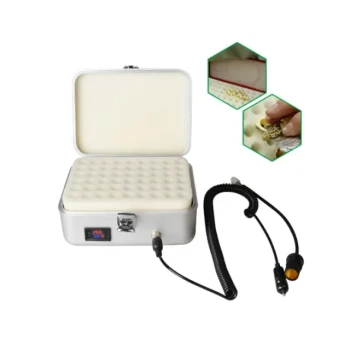
High-precision constant temperature and humidity incubators are essential for simulating the internal microenvironment of a beehive. They maintain specific parameters—typically 34°C and 75% relative humidity—to ensure the successful development and emergence of worker bees and queens from capped brood. By isolating biological development from natural climate fluctuations, these devices produce bees with consistent physiological states and uniform age for commercial rearing or scientific research.
Central Takeaway: High-precision incubators act as a synthetic surrogate for the colony, providing the stability required to minimize mortality and ensure experimental reliability by eliminating environmental stress.
Simulating the Hive Microenvironment
Replicating Natural Biological Conditions
Inside a natural colony, bees work collectively to maintain a stable core temperature. An incubator replaces this social thermoregulation by providing a constant thermal baseline, usually between 32°C and 35°C, depending on the specific developmental stage.
Precise Humidity Regulation
Moisture levels are critical for preventing the desiccation of larvae and ensuring the successful shedding of the pupal skin. By maintaining relative humidity between 60% and 80%, these devices ensure that honeycombs removed from the colony do not lose the moisture necessary for healthy development.
Eliminating Environmental Interference
External weather shifts can lead to developmental abnormalities or death in capped brood. High-precision control removes these variables, allowing for the cultivation of experimental populations that are identical in age and health.
Maximizing Yield and Quality in Bee Cultivation
Improving Emergence Rates
Stability directly correlates to survival; even minor fluctuations in temperature can lead to emergence failure. Utilizing high-precision equipment significantly reduces mortality rates in both worker bees and delicate queen cells.
Ensuring Physiological Consistency
For researchers and breeders, consistency is the highest priority. These incubators ensure that newly emerged bees are in optimal physiological condition, providing high-quality samples for biochemical testing, immune studies, or colony supplementation.
Facilitating Queen Rearing
In artificial queen rearing, the incubator provides a safe environment for queen cells from the capping stage until they hatch. This stable environment is critical for protein accumulation in the ovaries, which determines the future reproductive success of the queen.
The Strategic Advantage for Resellers
Professional Expertise and Reliability
Providing high-precision incubators requires a partner who understands the deep technical needs of apiculture. Our deep professional industry expertise ensures that the equipment provided meets the exact tolerances required by professional apiaries and laboratories.
Efficient Sourcing and Rapid Fulfillment
Distributors benefit from our one-stop sourcing capabilities, which simplify the procurement of specialized equipment. We prioritize ultra-fast delivery and efficient order fulfillment to ensure your customers never face downtime during critical breeding seasons.
Dedicated Customer Support
B2B success relies on more than just hardware; it requires a commitment to service. Our dedicated and exceptional customer service provides the technical backup necessary to handle complex inquiries and rapid response times for all global shipments.
Understanding the Trade-offs
Precision vs. Operating Cost
Higher precision requires more advanced sensors and insulation, which increases the initial investment. However, the reduction in bee mortality and the increase in data reliability generally offer a much higher return on investment for the end-user.
Airflow and Gas Exchange
Maintaining a sealed environment for temperature stability can sometimes lead to CO2 buildup. It is vital to ensure that the incubator balances thermal insulation with adequate gas exchange to prevent respiratory stress in the developing bees.
Calibration Requirements
Even the best sensors can drift over time. To maintain the "high-precision" status, these units require regular calibration, a service that distributors should highlight to ensure long-term customer satisfaction and equipment accuracy.
How to Select the Right Solution
Making the Right Choice for Your Goal
- If your primary focus is scientific research: Prioritize models with the highest sensor accuracy and data logging capabilities to ensure experimental reproducibility.
- If your primary focus is commercial queen rearing: Look for high-capacity units that prioritize rapid recovery of temperature and humidity after the door is opened.
- If your primary focus is dietary or immune studies: Focus on units that offer the most stable humidity control (within ±2%) to minimize baseline stress on the bees.
The right high-precision incubator transforms bee cultivation from a game of environmental chance into a predictable, high-yield process.
Summary Table:
| Key Feature | Target Parameter | Primary Benefit |
|---|---|---|
| Temperature | 32°C - 35°C (Stable) | Replaces social thermoregulation; prevents brood death |
| Humidity | 60% - 80% RH | Prevents desiccation; ensures successful pupal shedding |
| Environment | Controlled Isolation | Eliminates weather risks; ensures physiological consistency |
| Application | Queen Rearing | High-yield production and reproductive success |
Scale Your Success with HONESTBEE’s One-Stop Sourcing
As a dedicated partner to distributors, wholesalers, and commercial apiaries, HONESTBEE offers a comprehensive, full-spectrum portfolio of beekeeping tools and machinery. Whether you need high-precision incubators for queen rearing or specialized honey-filling equipment, our premium trading services are designed to maximize your profit margins and operational reliability.
Why choose HONESTBEE?
- Deep Industry Expertise: Professional-grade hardware tailored for large-scale apiary needs.
- Supply Chain Reliability: Ultra-fast delivery and efficient fulfillment to meet critical seasonal demands.
- Exceptional Support: Rapid response times and dedicated customer service for every B2B partner.
Looking for a reliable wholesale partner to grow your business? Contact Our Experts Today
References
- Ruonan Liang, Guiling Ding. Influence of Different Diets on Growth and Development of Eastern Honey Bee (Apis cerana). DOI: 10.3390/insects16040383
This article is also based on technical information from HonestBee Knowledge Base .
Related Products
- Portable Queen Bee Incubator with 12V Car Adapter for Safe Transport
- Queen Bee Artificial Insemination Instrument Equipment for Instrumental Insemination
- 12V Bee Mite Removal Evaporator Oxalic Acid Vaporizer for Bee Fumigation Treatment 180W Atomization
- Adjustable Formic and Acetic Acid Dispenser for Bee Mite Treatment
- HONESTBEE AC Powered Wire Embedder with Alligator Clips
People Also Ask
- What happens if a colony loses its queen during the nectar flow? A Guide to Salvaging Your Honey Harvest
- How can you tell if the worker bees have accepted the queen? Decode Bee Behavior for a Thriving Hive
- How can the queenless state of a newly created nuc be resolved? Expert Solutions for Colony Growth
- What are the primary reasons for replacing a queen bee? Boost Your Commercial Honeybee Colony's Success
- What queen bee behaviors should be observed after introduction? Ensure Hive Success with Our Expert Monitoring Guide