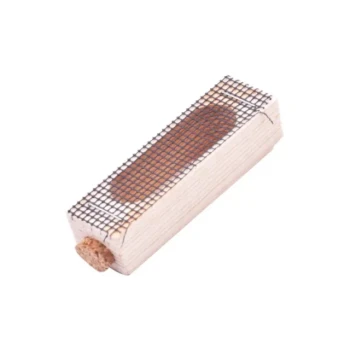
The definitive sign of queen acceptance is the behavior of the worker bees toward her. You must observe whether they are calmly tending to her needs or treating her with aggression. This distinction is the most reliable indicator of a successful introduction.
The core of the issue is communication through scent. A new queen has a foreign scent (pheromones), and the hive's reaction—ranging from care to outright hostility—tells you if they have accepted her as the new mother of the colony.
Reading the Signs: Acceptance vs. Rejection
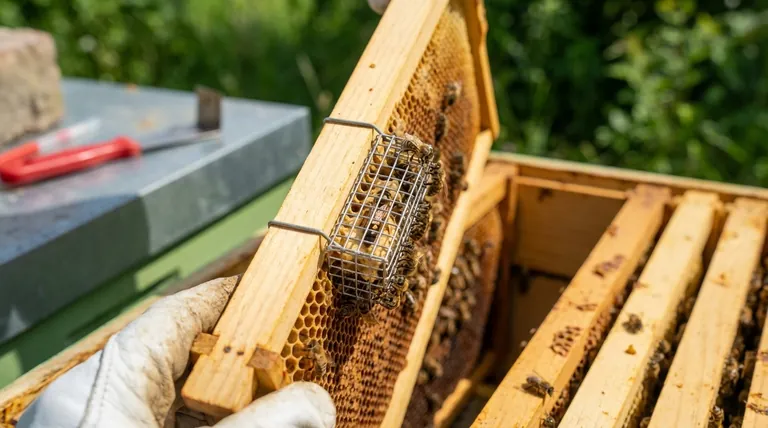
After installing a new queen in her cage, the colony needs a few days to acclimate to her presence. Your inspection should be brief, quiet, and focused entirely on the workers' interactions with the queen cage.
Positive Indicators of Acceptance
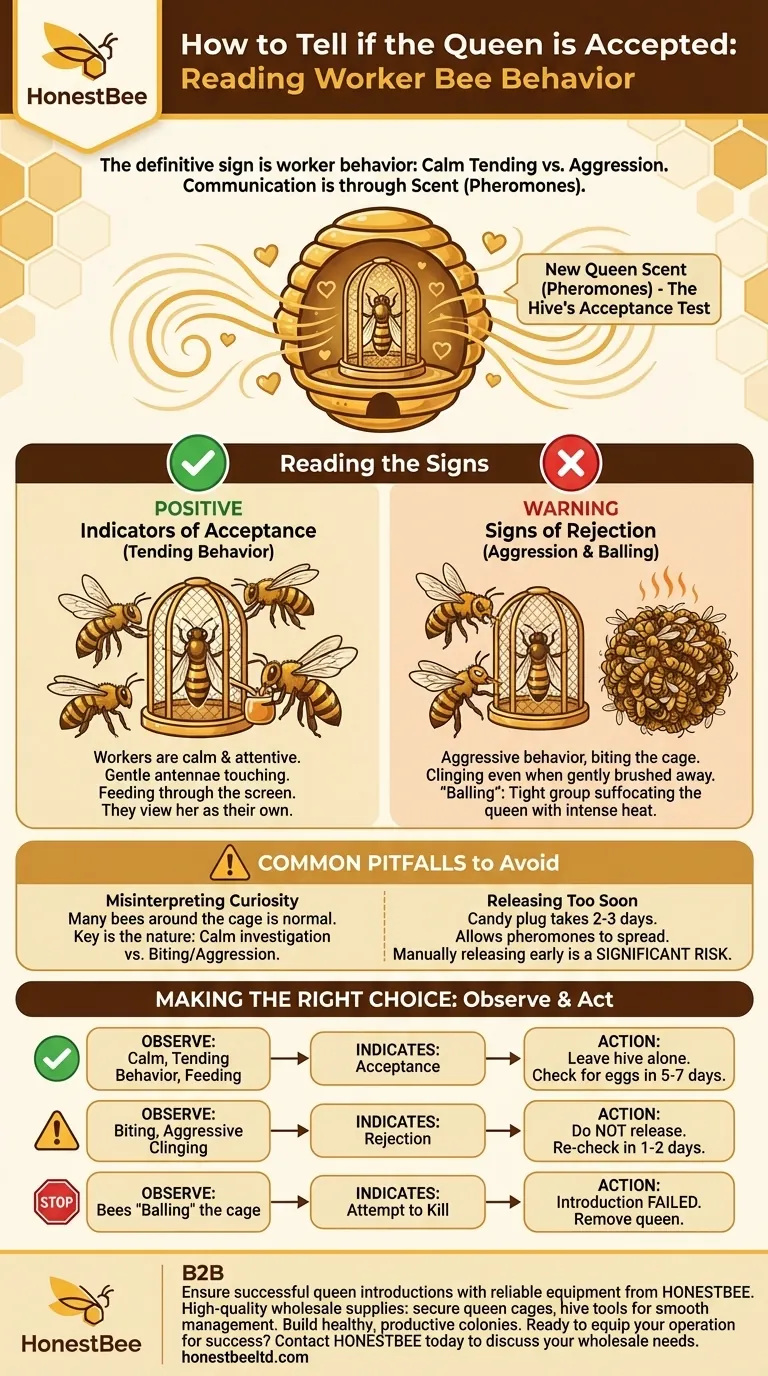
The most common sign of acceptance is tending behavior. The workers will appear calm and attentive.
You may see them gently touching her with their antennae. They might also be seen feeding her through the screen of the cage.
This indicates they have accepted her pheromones and view her as their own. The bees are caring for her, not trying to harm her.
Warning Signs of Rejection
Aggressive behavior is an unmistakable sign of rejection. This is a clear signal that the hive still considers her an intruder.
Look for workers biting at the cage or aggressively clinging to it, even when you gently brush them away.
The most severe form of rejection is "balling." This is when a large group of worker bees surrounds the queen (or her cage) in a tight ball, vibrating their wing muscles to generate intense heat and suffocate her. This is an attempt to kill her.
Common Pitfalls to Avoid
Successfully introducing a queen requires patience. Misinterpreting hive behavior or acting too quickly can lead to the loss of the queen and jeopardize the entire colony.
Misinterpreting Curiosity for Aggression
It is normal for many bees to be on and around the queen cage. Do not immediately assume this is a sign of rejection.
The key is the nature of their behavior. Are they calmly investigating, or are they biting and showing clear signs of aggression? Differentiating between the two is a critical skill.
Releasing the Queen Too Soon
The candy plug in the queen cage is a slow-release mechanism for a reason. It typically takes the workers 2-3 days to chew through it.
This time allows the queen's pheromones to spread throughout the hive, ensuring the workers have fully accepted her scent before she is released. Manually releasing her before you see clear signs of acceptance is a significant risk.
Making the Right Choice for Your Goal
Your actions depend entirely on what you observe at the queen cage.
- If you see calm, tending behavior: Your introduction is likely successful. Leave the hive alone and do not disturb it for another 5-7 days, then check for eggs.
- If you see biting or aggressive clinging: The hive is not ready. Do not release the queen. Close the hive and check again in another 1-2 days.
- If you see the bees "balling" the cage: The hive is actively trying to kill her. The introduction has failed, and you must decide whether to remove her to try again later or leave her and hope the mood changes, which is unlikely.
Ultimately, patient observation is the beekeeper's most valuable tool for ensuring a thriving colony.
Summary Table:
| Behavior | Indicates | Action |
|---|---|---|
| Calm tending, feeding through cage | Acceptance | Leave hive; check for eggs in 5-7 days. |
| Biting, aggressive clinging to cage | Rejection | Do not release queen; re-check in 1-2 days. |
| Bees forming a tight ball around cage | Balling (Attempt to Kill) | Introduction failed; remove queen. |
Ensure your queen introductions are successful with reliable equipment from HONESTBEE.
A thriving apiary starts with a strong, accepted queen. HONESTBEE supplies commercial apiaries and beekeeping equipment distributors with the high-quality, wholesale-focused supplies—like secure queen cages and hive tools—needed for smooth hive management. Our products support the precise, patient work of beekeeping, helping you build healthy, productive colonies.
Ready to equip your operation for success? Contact HONESTBEE today to discuss your wholesale needs.
Visual Guide
Related Products
- Durable Galvanized Steel Spring Queen Bee Cage
- Portable Queen Bee Incubator with 12V Car Adapter for Safe Transport
- Professional Queen Bee Introduction and Transport Cage
- Heavy Duty Stainless Steel Queen Bee Catcher Clip
- Classic Wooden and Mesh California Queen Cage
People Also Ask
- Why are specialized queen bee cages used for the banking of mated queen bees? Maximize Commercial Apiary Storage Efficiency
- What is the mechanism of action for using temporary queen bee cages? Master Successful Queen Introduction
- What is the step-by-step process for installing a queen bee's cage onto a frame? Ensure Hive Acceptance Safely
- What is the optimal placement for a queen bee cage? Essential Strategies for Successful Re-queening
- What are the advantages and disadvantages of introducing a queen bee by embedding the cage? Boost Your Queen Acceptance