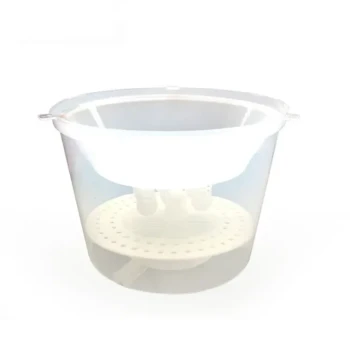
The function of a plastic pollen trap with 5 mm diameter holes is to act as a precise mechanical filter that harvests pollen from returning forager bees. When installed at the hive entrance, the device forces bees to pass through apertures sized exactly to 5 mm. This physical constriction gently strips the pollen pellets from the bees' hind legs, allowing the pellets to fall into a collection container while permitting the bee to enter the hive unharmed.
Core Insight The specific 5 mm diameter is not arbitrary; it is a calibrated specification designed to maximize pollen collection efficiency while ensuring the physical safety of the bee. This precise sizing enables the non-destructive acquisition of clean pollen samples essential for botanical classification and honey source surveys.
The Mechanism of Physical Interception
Controlling the Entrance
The pollen trap utilizes the principle of physical interception. By partially restricting the hive entrance, it creates a mandatory passage for all returning worker bees.
The Stripping Action
As a forager bee navigates the 5 mm hole, the fit is tight enough to impact the pollen "baskets" on her hind legs. The edges of the plastic aperture dislodge the pollen pellets, effectively stripping them from the bee's body.
Collection and Isolation
Once dislodged, gravity takes over. The pollen pellets fall immediately into a designated collection box or drawer below, isolating them from the hive traffic to maintain sample cleanliness.
Why the 5 mm Specification Matters
Preventing Physical Injury
The primary reference highlights that the 5 mm specification is critical for safety. It provides just enough clearance for the worker bee's body to pass without abrasion or compression, preventing physical injury during the stripping process.
Ensuring Sample Purity
Because the pollen is stripped mechanically at the entrance and falls directly into a separate container, the sample remains clean. This prevents secondary contamination from within the hive, which is vital for accurate analysis.
Supporting Botanical Classification
The clean samples obtained through this precise method are standard for regional botanical classification. They allow researchers to accurately survey honey sources and understand the local plant diversity.
Operational Trade-offs and Best Practices
Balancing Collection with Colony Health
While the 5 mm trap is designed to be non-destructive to the individual bee, it does remove a significant portion of the colony's protein source (often 40% to 70%). Continuous use without breaks can impact colony development.
Drone Access Limitations
Drones are larger than worker bees and cannot fit through 5 mm holes. Beekeepers must ensure the trap allows for a bypass or is removed periodically to allow drones to exit and enter, or to allow unimpeded access for all bees during non-collection hours.
Timing for Maximum Efficiency
To balance yield with hive health, traps are often deployed during peak foraging hours (typically 6:00 AM to 11:00 AM). This maximizes the catch of high-quality pollen while allowing the colony to retain necessary resources during other times.
Making the Right Choice for Your Goal
To utilize a 5 mm pollen trap effectively, align your usage pattern with your specific objective:
- If your primary focus is Scientific Surveying: Deploy the trap specifically during peak bloom to obtain pure, contaminant-free samples for botanical classification.
- If your primary focus is Commercial Production: Rotate the trap usage (e.g., on for a few hours, off for the rest of the day) to harvest volume without stunting colony growth.
- If your primary focus is Colony Health: Monitor the hive closely; if brood rearing slows down, remove the trap immediately to restore the full protein supply.
The 5 mm pollen trap is a precision tool that converts a biological foraging process into a systematic data collection method, provided it is managed to respect the colony's nutritional needs.
Summary Table:
| Feature | Specification/Detail | Benefit |
|---|---|---|
| Hole Diameter | 5 mm | Precise fit to strip pollen without injuring worker bees |
| Material | Durable Plastic | Easy to clean, lightweight, and weather-resistant |
| Mechanism | Physical Interception | Strips pellets from hind legs as bees enter the hive |
| Sample Quality | High Purity | Prevents hive contamination; ideal for botanical surveys |
| Usage Window | Peak Foraging Hours | Balances high yield with colony nutritional needs |
Elevate Your Apiary Operations with HONESTBEE
At HONESTBEE, we specialize in empowering commercial apiaries and distributors with high-performance beekeeping solutions. Whether you are conducting botanical surveys or scaling up commercial production, our comprehensive wholesale portfolio has you covered. From precision-engineered pollen traps and hive-making machinery to professional-grade honey-filling machines and essential consumables, we provide the tools you need to succeed.
Ready to optimize your harvest and grow your business?
Contact Us Today to Explore Wholesale Opportunities
References
- Şeref Cınbırtoğlu, Recep Sıralı. The Importance of Plants Belonging to Asteraceae Family as a Pollen Source in Beekeeping. DOI: 10.51458/bstd.2023.32
This article is also based on technical information from HonestBee Knowledge Base .
Related Products
- Removable Plastic Pollen Trap With Ventilated Tray for Bees Pollen Collector
- Plastic Bee Pollen Trap Strips Comb Catcher Collector
- 30 cm Plastic Entrance Hole Bee Pollen Trap and Collector
- Plastic Beetle Blaster Trap Beekeeping Tools and Supplies
- Black Plastic Beetle Barn Hive Beetle Trap for Beehives
People Also Ask
- What are the design principles and advantages of pollen traps in the collection of bee pollen? Boost Your Apiary Yield
- What is the function of professional pollen traps in evaluating honey plants? Quantifying Pollination and Crop Potential
- What functions do pollen traps serve for bee bread production? Optimize Your Raw Material Collection
- What maintenance and pest prevention measures should be taken for pollen traps? Protect Your Hive and Harvest Quality
- How does the use of pollen traps in honeybee hives enhance crop fertilization? Boost Your Yield Through Induced Activity