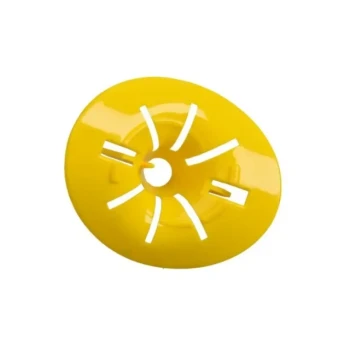
A universal pollen trap functions as a mechanical filter designed to automate the harvesting of raw bee pollen at the hive entrance. By forcing returning worker bees to navigate through a specifically sized physical barrier or grid, the device strips pollen pellets from their hind legs. These dislodged pellets fall directly into a collection tray, enabling apiaries to achieve the efficient, large-scale separation of pure pollen required for commercial supply and research.
The universal pollen trap transforms the natural foraging behavior of bees into an industrial harvesting process. It provides a non-invasive method to collect standardized, high-purity raw materials without requiring manual handling of the bees.
The Mechanics of Automated Harvesting
The Physical Barrier System
The core mechanism of the trap is a grid or fence installed directly at the hive's entrance. This structure features apertures (openings) that are precisely sized—large enough to allow the worker bee to pass through, but too narrow to accommodate the pollen loads attached to their legs.
The Stripping Process
As foraging bees attempt to enter the hive through these restrictions, the physical contact acts as a scraper. The mechanical resistance forces the pollen pellets to detach from the bee’s hind legs (specifically the pollen baskets).
Gravity-Fed Collection
Once dislodged, the pollen falls immediately into a collection tray or drawer positioned beneath the grid. This design ensures that the raw material is physically separated from the bees instantly, preventing contamination and simplifying the retrieval process for the beekeeper.
Role in Commercial Operations
Enabling Industrial Scale
For large-scale apiaries, manual extraction of pollen is impossible. The universal pollen trap serves as a critical hardware component that automates the collection workflow. It allows operators to harvest bulk quantities of pollen simultaneously across hundreds of hives.
Ensuring Purity and Standardization
The trap is designed to deliver "clean" raw materials. By intercepting the pollen before it enters the comb, the device minimizes debris and foreign matter. This results in high-purity granular material that is ready for immediate processing or packaging.
Operational Considerations and Trade-offs
Balancing Harvest vs. Colony Health
While efficient, these traps physically prevent the colony from accessing its primary protein source. Over-use can stunt colony development. It is essential to use the device only during peak foraging periods (often cited as morning hours) or on a rotational basis to ensure the bees retain enough pollen for their own survival.
Drone Access Limitations
Standard grids may be too small for larger drones to pass through. Advanced traps often feature a mechanism to slide the grille out or lift it. This allows for periods of unimpeded access, which is vital for proper hive ventilation and the free movement of drones.
Making the Right Choice for Your Goal
To maximize the utility of a universal pollen trap, align your usage with your specific operational objectives:
- If your primary focus is Commercial Production: Deploy traps during peak seasonal flows to maximize volume, ensuring the collected pollen is removed daily to maintain freshness.
- If your primary focus is Colony Sustainability: Utilize the trap's release mechanisms or limit collection windows (e.g., 6:00 AM to 11:00 AM) to allow the colony to stockpile necessary reserves.
The universal pollen trap is the definitive tool for bridging the gap between biological foraging and industrial production efficiency.
Summary Table:
| Feature | Function in Large-Scale Harvesting |
|---|---|
| Physical Grid System | Mechanically strips pollen pellets from the bees' hind legs as they enter the hive. |
| Gravity-Fed Tray | Automatically separates dislodged pollen from the colony to prevent contamination. |
| Bulk Scalability | Enables simultaneous, non-invasive collection across hundreds of hives for industrial supply. |
| Quality Control | Captures standardized, high-purity raw material before it enters the comb. |
| Bypass Mechanisms | Allows for drone movement and colony health maintenance during non-harvest periods. |
Elevate Your Commercial Beekeeping with HONESTBEE
Maximize your harvest efficiency and product purity with premium beekeeping solutions from HONESTBEE. As a leading partner for commercial apiaries and global distributors, we provide a complete spectrum of wholesale hardware—from universal pollen traps and hive-making machines to advanced honey-filling equipment and industry consumables.
Whether you are scaling up industrial production or expanding your distribution portfolio, our high-performance machinery and honey-themed merchandise are designed to drive your success.
Ready to optimize your apiary’s output? Contact us today to discuss your wholesale needs!
References
- A. A. M. Kamel, Dayem M.R.. SYNERGISTIC ANTIOXIDANT ACTIVITY OF HONEY BEE PRODUCTS AND THEIR MIXTURES. DOI: 10.51470/plantarchives.2023.v23.no1.014
This article is also based on technical information from HonestBee Knowledge Base .
Related Products
- Removable Plastic Pollen Trap With Ventilated Tray for Bees Pollen Collector
- 30 cm Plastic Entrance Hole Bee Pollen Trap and Collector
- Plastic Bee Pollen Trap Strips Comb Catcher Collector
- High-Efficiency Diamond Maze Bee Escape for Clearing Supers
- Professional Multi-Component Bucket Wasp Trap
People Also Ask
- What are the design principles and advantages of pollen traps in the collection of bee pollen? Boost Your Apiary Yield
- What is the function of professional pollen traps in evaluating honey plants? Quantifying Pollination and Crop Potential
- What functions do pollen traps serve for bee bread production? Optimize Your Raw Material Collection
- What maintenance and pest prevention measures should be taken for pollen traps? Protect Your Hive and Harvest Quality
- How does the use of pollen traps in honeybee hives enhance crop fertilization? Boost Your Yield Through Induced Activity