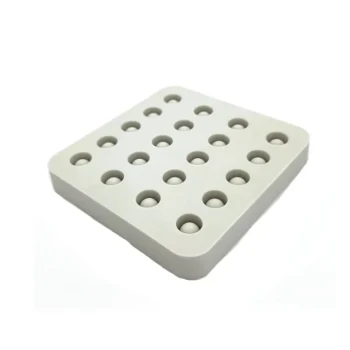
Artificial wax cups are the essential biomimetic foundations used to transition honeybee larvae into high-performing queens. These specialized tools serve as the primary carrier for grafting, mimicking natural queen cell bases to trigger the "rearing impulse" within a colony, ensuring worker bees provide the intensive royal jelly feeding necessary for queen development.
Core Takeaway: Artificial wax cups are the industrial catalyst for professional queen rearing, providing the standardized physical environment required to induce nurse bees to raise larvae as queens rather than workers, thereby enabling large-scale, predictable apiary growth.
The Role of Artificial Cups in Colony Manipulation
Mimicking Natural Hive Architecture
Artificial wax cups are designed to replicate the exact geometric shape and physical characteristics of natural queen cell bases built by honeybees. This biomimetic design is critical because it bypasses the colony’s natural hesitation, leading to a much higher acceptance rate of the transferred larvae.
Stimulating the Queen-Rearing Impulse
When these cups are introduced into a queenless or cell-builder colony, their presence signals the worker bees to begin physiological changes. This structural cue prompts nurse bees to immediately begin secreting royal jelly and surrounding the larvae with the nutrition required for queen differentiation.
Standardizing Large-Scale Production
For professional beekeeping operations, consistency is the key to profitability. These cups act as standardized consumables that allow for the simultaneous cultivation of dozens of queens within a single colony, a feat impossible through natural swarming processes alone.
Functional Benefits for Professional Operations
Facilitating the Grafting Process
During the Doolittle method or other grafting techniques, the cup serves as a secure receptacle for the delicate one-day-old larvae. It provides a stable base that protects the larvae during the transition from the donor frame to the queen-rearing frame, minimizing mechanical stress.
Protecting Larval Development
Beyond the initial feeding stage, these cups provide a protective shell that supports the larvae through the pupation and eclosion stages. This ensures that the developing queen has the physical space and structural integrity needed to develop a sound reproductive system.
Enhancing Management and Tracking
The use of standardized cups allows commercial beekeepers and distributors to track larval acceptance rates with mathematical precision. This data is vital for assessing the health of the cell-builder colony and predicting the final yield of viable queen bees for the season.
Understanding the Trade-offs
Material Integrity and Acceptance
While plastic cups offer durability and reusability, pure beeswax cups often boast higher initial acceptance rates because they carry the natural scent of the hive. However, wax cups are more delicate and require careful handling during transport and storage to prevent deformation.
Sourcing and Contamination Risks
Poorly manufactured cups can contain chemical residues or low-quality paraffin that deter nurse bees from feeding the larvae. For distributors, sourcing from a partner with deep professional industry expertise is essential to ensure the wax is "clean" and will not lead to high rejection rates in the field.
Operational Efficiency vs. Preparation Time
Wax cups often require more manual labor to attach to bars compared to snap-in plastic systems. Wholesalers must balance the end-user's desire for biomimetic performance against the labor-saving benefits of modern, integrated plastic cell systems.
Selecting the Right Inventory for Your Market
How to Apply This to Your Portfolio
- If your primary focus is high-end organic apiaries: Prioritize premium, pure beeswax cups that maximize larval acceptance and align with natural beekeeping philosophies.
- If your primary focus is large-scale commercial queen breeders: Offer high-volume, standardized cell systems that facilitate rapid grafting and efficient order fulfillment.
- If your primary focus is rapid market penetration: Partner with a supplier capable of ultra-fast delivery and a full-spectrum portfolio to meet diverse beekeeping needs on demand.
By providing high-quality queen cell bases, you empower your clients to master the most critical and profitable stage of the beekeeping lifecycle.
Summary Table:
| Key Function | Role in Queen Rearing |
|---|---|
| Biomimetic Design | Replicates natural cell geometry to ensure high larval acceptance rates. |
| Physiological Trigger | Induces worker bees to secrete royal jelly and initiate queen differentiation. |
| Grafting Support | Provides a stable, protective base for delicate larvae during the transfer process. |
| Standardization | Enables large-scale, predictable production for commercial apiary expansion. |
| Data Tracking | Facilitates precise monitoring of acceptance rates and queen health. |
Scale Your Beekeeping Success with HONESTBEE
Maximize your profit margins and supply reliability with HONESTBEE, your premium one-stop partner for commercial beekeeping excellence. We cater specifically to distributors and B2B resellers, offering a comprehensive full-spectrum portfolio—from high-acceptance queen cell bases to advanced honey-filling machinery and specialized hive-making tools.
Partner with us to leverage our deep professional industry expertise, ultra-fast delivery, and dedicated customer service. Whether you need bulk consumables or custom OEM/ODM support, we provide the high-quality inventory your clients demand.
Contact our wholesale experts today to request a catalog!
References
- El-Kazafy A. Taha, Fatma Hegazy. A SUPPLEMENTAL PROTEIN DIET SIGNIFICANTLY IMPROVES MORPHOMETRIC AND REPRODUCTIVE TRAITS OF HONEY BEE QUEENS DURING LATE WINTER. DOI: 10.15666/aeer/2302_25272540
This article is also based on technical information from HonestBee Knowledge Base .
Related Products
- High-Efficiency 20-Cell Silicone Mold for Beeswax Bee Queen Cup Production
- Clear Black Plain Polystyrene Queen Bee Grafting Cell Cups No Lug for Bee Queen Cup
- JZBZ Type Wide Base Plastic Queen Cell Cups for Base Mounting and Queen Rearing
People Also Ask
- What is the first tip for pouring beeswax into a silicone mold? Ensure a Perfect Release
- What are the technical advantages of using precision silicone molds for the manufacturing of beeswax queen cups? - Scale
- How do beeswax queen cell cups function? Optimize Queen Rearing with Biological Mimicry
- What is the biological function of beeswax queen cell cups? Boost Acceptance in Artificial Queen Rearing
- What are the advantages of using tapered wooden dowels for queen cups? Boost Rearing Consistency & Acceptance