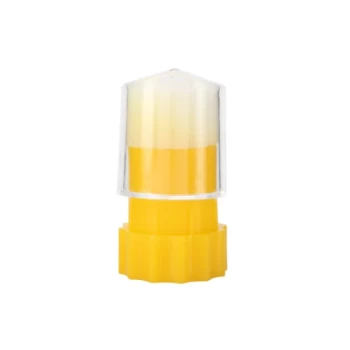
Beeswax queen cell cups serve as the fundamental biological interface in the artificial queen rearing process. They function as direct carriers for grafted larvae and royal jelly, specifically designed to simulate the physical and chemical environment of a naturally constructed queen cell. By providing this controlled mimicry, the cups stabilize the immediate environment, ensuring that the material of the cup supports—rather than disrupts—the pH levels and chemical properties of the royal jelly required for larval survival.
The core function of the beeswax cup is to bridge the gap between artificial manipulation and natural biology. By replicating the hive’s internal substance, these cups trigger the nurse bees' instinct to accept the graft and initiate the intensive feeding required for queen differentiation.
The Mechanics of Biological Mimicry
Simulating the Natural Habitat
The primary role of the beeswax cup is to act as a structural decoy. It replicates the physical shape and texture of a natural queen cell base constructed during swarming or supersedure.
This physical simulation provides a familiar substrate for the colony. It allows the larvae to remain suspended in royal jelly in a standardized space that the bees recognize as "home."
Chemical Consistency and pH Regulation
Beyond physical shape, the material composition of the cup is critical. Beeswax cups offer a chemical profile that is highly consistent with the internal substances of the honeybee colony.
This chemical compatibility is vital for the stability of royal jelly. The cup acts as a controlled interface, minimizing the risk that the container material will alter the chemical properties or pH levels of the jelly, which could otherwise jeopardize larval development.
Driving the Rearing Process
Triggering Nurse Bee Acceptance
Success in artificial rearing relies entirely on the colony's acceptance of the transferred larvae. The beeswax cup functions as a visual and tactile guide for nurse bees.
When a larva is placed inside, the cup's structural characteristics induce the rearing impulse. This prompts nurse bees to recognize the larva as a potential queen and immediately begin secreting large amounts of royal jelly.
Enabling Scalable Production
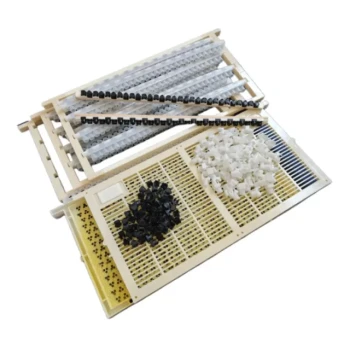
In systems like the Doolittle method, these cups transform a biological process into a manageable production line. They serve as consumable, modular units that can be mounted on grafting frames.
This allows beekeepers to manage dozens of developing queens simultaneously within a single cycle. The cups protect the larvae during the mechanical transfer (grafting) and provide a fixed base for the bees to build out the completed cell.
Understanding the Trade-offs
The Sensitivity of the Interface
While beeswax cups maximize biological compatibility, they introduce a variable regarding the chemical interaction with royal jelly.
Because the cup is an active part of the environment, its quality directly influences the "micro-climate" of the larva. If the wax is contaminated or of poor quality, it can negatively impact the pH balance of the royal jelly, leading to lower survival rates despite the bees' initial acceptance.
Fragility and Handling
As a natural consumable, beeswax cups require precise handling to avoid damaging the delicate grafting environment.
Unlike synthetic alternatives, natural wax is softer and more susceptible to deformation. This requires the use of precision tools to ensure the "simulated environment" remains intact during the transfer from the grafting room to the hive.
Making the Right Choice for Your Goal
To maximize your success in queen rearing, align your use of beeswax cups with your specific operational objectives.
- If your primary focus is Maximum Acceptance Rates: Prioritize high-quality beeswax cups to leverage their chemical consistency, ensuring nurse bees recognize the scent and texture immediately.
- If your primary focus is Scientific Observation: Use the beeswax cup as a "controlled interface" to monitor how slight variations in cup material affect the pH stability of royal jelly and subsequent larval health.
- If your primary focus is Scalable Production: Treat the cups as essential, standardized consumables that allow you to replicate superior genetics without relying on the bees to build bases from scratch.
By utilizing beeswax cups as a biologically active interface rather than just a passive container, you ensure the seamless integration of grafted larvae into the colony’s natural lifecycle.
Summary Table:
| Function | Mechanism | Impact on Queen Rearing |
|---|---|---|
| Biological Mimicry | Replicates natural cell shape & texture | Triggers nurse bees' instinct to accept & feed larvae |
| Chemical Stability | Maintains pH levels of royal jelly | Ensures larval survival through chemical consistency |
| Structural Support | Provides a standardized grafting base | Enables scalable production via modular frame mounting |
| Interface Role | Serves as a tactile & visual guide | Induces the rearing impulse for intensive feeding |
Elevate Your Queen Rearing Success with HONESTBEE
To achieve industry-leading acceptance rates, commercial apiaries and distributors require precision-engineered consumables. At HONESTBEE, we specialize in supplying a comprehensive spectrum of beekeeping tools, machinery, and essential consumables designed for scalable production.
Whether you are looking for high-quality beeswax queen cell cups, hive-making machinery, or specialized honey-filling equipment, our wholesale portfolio is tailored to meet the rigorous demands of your operations. Let us help you bridge the gap between artificial manipulation and natural biology with equipment that protects your investment and enhances your yield.
Ready to scale your apiary? Contact us today to explore our full wholesale catalog!
References
- Magdalena Chęć, Mariusz Gagoś. Effect of stearin and paraffin adulteration of beeswax on brood survival. DOI: 10.1007/s13592-020-00833-7
This article is also based on technical information from HonestBee Knowledge Base .
Related Products
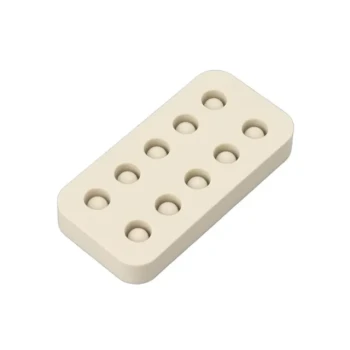
- 10-Cell Silicone Beeswax Bee Queen Cups Forming Mold
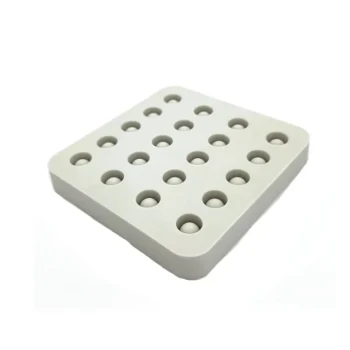
- High-Efficiency 20-Cell Silicone Mold for Beeswax Bee Queen Cup Production
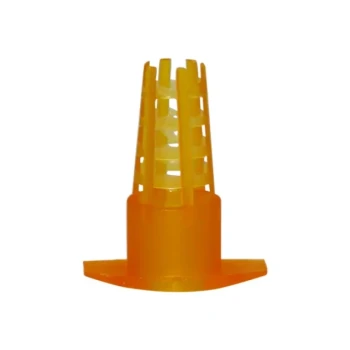
- Brown Nicot Queen Cell Cups for Breeding Queen Bees Beekeeping
- Clear Black Plain Polystyrene Queen Bee Grafting Cell Cups No Lug for Bee Queen Cup
- JZBZ Push-In Queen Cell Cups for Beekeeping
People Also Ask
- What is the biological function of beeswax queen cell cups? Boost Acceptance in Artificial Queen Rearing
- What role do specialized queen rearing tools play in developing mite-resistant honeybee stock? Master Genetic Selection
- What materials are used to make artificial queen cell cups for grafting? Beeswax vs. Plastic Guide
- What roles do specialized queen cell cups play in royal jelly production? Optimize Your Hive's Secretion and Yield
- How does the standardized depth of queen cell cups affect larval acceptance? Boost Success with 6mm Precision