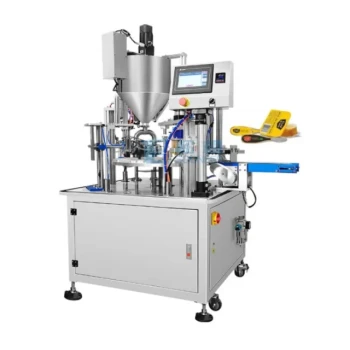
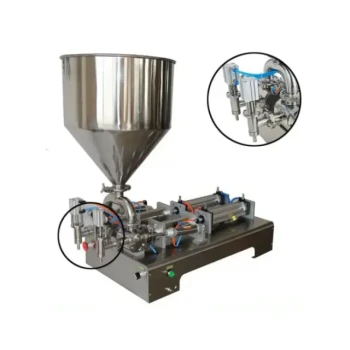
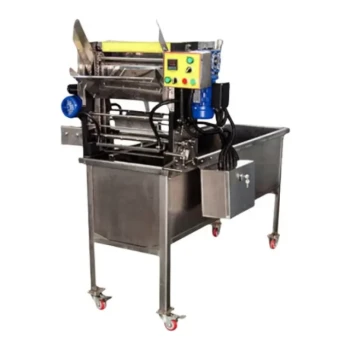
Automatic honey-filling machines serve as the critical bridge between bulk storage and retail-ready products. These machines use precise metering pumps and filtration systems to transfer mature honey from large-scale storage tanks into containers with absolute volume consistency. By operating in a closed environment, they eliminate secondary contamination, ensuring every unit meets the rigorous food safety standards required for global commercial distribution.
Core Takeaway: Automatic filling machines are the engine of commercial scalability, converting raw honey into standardized, market-compliant units while protecting product integrity through automation and high-precision flow control.
The Role of Precision in Commercial honey Production
High-Precision Volumetric Control
The primary function of these machines is to ensure that every container receives an exact weight or volume of honey. Utilizing high-precision metering pumps and flow control systems, the machinery eliminates the variances common in manual filling. This precision is vital for maintaining regulatory compliance and ensuring that consumers receive exactly what is advertised on the label.
Maintaining Hygiene in a Closed System
Commercial honey production demands strict adherence to food safety protocols. Automated machines operate within a closed environment, which acts as a barrier against external pollutants and airborne particles. This isolation prevents secondary contamination, which is essential for maintaining the shelf stability and purity of high-value bee products.
Handling High-Viscosity Liquids
Honey presents unique challenges due to its thickness and tendency to crystallize. Automatic fillers are specifically engineered with specialized filling heads designed to handle high-viscosity liquids without clogging or dripping. This ensures a clean packaging process that enhances the visual quality and market competitiveness of the final product.
Driving Operational Efficiency for Distributors
Rapid Order Fulfillment and Scalability
For wholesalers and distributors, speed is a competitive advantage. These machines significantly increase packaging efficiency, allowing for the rapid processing of large volumes to meet tight delivery schedules. This hardware is the link between laboratory-grade development and large-scale market supply, enabling a "one-stop" response to sudden shifts in demand.
Minimizing Product Waste and Loss
Manual handling often leads to overfilling or spills, which erode profit margins over time. Automated systems provide consistent dosing, which reduces product loss and ensures maximum yield from every batch of raw honey. By minimizing waste, businesses can offer more competitive pricing while maintaining high-quality standards.
Professional Standardization for Branding
In the retail market, uniformity is synonymous with quality. Automatic filling ensures that every jar is filled to the same level, providing a professional aesthetic across the entire product line. This standardization is crucial for establishing regional honey brands and building trust with high-end retail partners.
Understanding the Trade-offs
Equipment Maintenance and Sanitation
While automation increases speed, it also requires a dedicated sanitation protocol. The complex metering pumps and internal lines must be thoroughly cleaned between batches to prevent cross-contamination. This requires a level of technical expertise and downtime that must be factored into the production schedule.
Viscosity Sensitivity to Temperature
Honey's flow rate changes dramatically with temperature. If the environment is too cold, the machine's precision metering may struggle, potentially leading to mechanical strain. Proper integration requires a controlled environment or integrated heating elements, adding to the initial capital expenditure and operational complexity.
How to Apply This to Your Business Strategy
When evaluating honey-filling solutions as part of a full-spectrum sourcing strategy, consider how the hardware aligns with your specific logistics and branding goals.
- If your primary focus is Rapid Market Expansion: Prioritize high-speed, multi-head automated systems that facilitate ultra-fast delivery and efficient order fulfillment for high-volume contracts.
- If your primary focus is Premium Brand Integrity: Invest in machines with the highest-grade filtration and closed-loop systems to guarantee the purity and hygiene standards expected by high-end consumers.
- If your primary focus is Operational Cost Control: Select equipment with integrated precision-metering to minimize product waste and maximize the yield from every bulk shipment.
By leveraging automated precision, distributors can transform raw honey into a consistent, safe, and highly marketable asset that meets the demands of modern global commerce.
Summary Table:
| Key Feature | Functional Role | Business Impact for Distributors |
|---|---|---|
| Precision Metering | Ensures exact volume/weight per container | Guarantees regulatory compliance & reduces product waste |
| Closed-Loop System | Operates in a sterile, isolated environment | Maintains high food safety standards & product purity |
| Viscosity Handling | Specialized heads manage thick, sticky honey | Prevents clogging and ensures a professional, clean finish |
| Automated Flow | Transitions bulk honey to retail-ready units | Enables rapid order fulfillment and large-scale scalability |
Scale Your Honey Business with HONESTBEE
As a leading one-stop sourcing partner for commercial apiaries and B2B distributors, HONESTBEE provides the full spectrum of beekeeping technology—from high-precision honey-filling machines to specialized hive-making hardware.
Why partner with us?
- Maximize Profit Margins: High-efficiency equipment designed to minimize waste.
- Rapid Fulfillment: Ultra-fast delivery to keep your supply chain moving.
- Expert Support: Deep industry knowledge with dedicated customer service and OEM/ODM capabilities.
Ready to enhance your production capacity and market competitiveness?
Contact Our Export Experts Today
References
- Ashley N. Mortensen, Jamie Ellis. European Honey Bee Apis mellifera Linnaeus and subspecies (Insecta: Hymenoptera: Apidae). DOI: 10.32473/edis-in1005-2013
This article is also based on technical information from HonestBee Knowledge Base .
Related Products
- Fully Automatic Honey Filling Packaging Machine for Processing Line
- Automatic Honey Filling and Filtering Machine for Beekeeping Bottle Filling
- Precision Durable Efficient HONESTBEE Rotary Honey Filling Machine
- Automatic Single-Dose Snap & Squeeze Honey Sachets Packing Machine
- Semi Automatic Small Honey Bottle Filling Machine Honey Filler
People Also Ask
- Why are fully automatic honey filling and packaging lines essential? Boost Your Honey's Market Value and Quality
- What is a fully-automatic honey filler? Streamline Your Production with High-Precision Automation
- How do automated honey filling and packaging machines affect profitability? Boost Margins with HONESTBEE Technology
- How do automated honey filling and packaging machines contribute to the market value of honey products? Maximize Your ROI
- How do industrial-grade automated honey filling and packaging machines mitigate the risk of physical contamination?