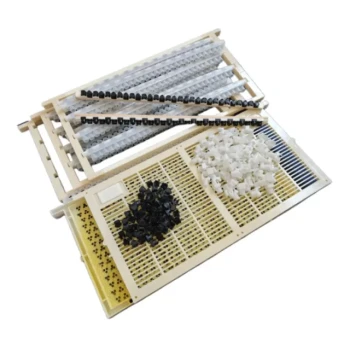
In the wet grafting process, the primary function of royal jelly is to act as a protective, physiological buffer placed at the bottom of the artificial cell cup. This droplet of diluted jelly prevents the extremely delicate larvae from dehydrating during the transfer from worker cells to queen cups. Additionally, it provides an immediate nutritional reserve and acts as a chemical signal to the colony, significantly increasing the rate at which nurse bees accept and rear the larvae.
Core Takeaway While the grafting needle provides the mechanical precision for transfer, royal jelly acts as the essential life-support system. It mitigates the shock of transfer by maintaining moisture and signaling the colony to initiate targeted feeding, directly resulting in higher larval survival and acceptance rates.
The Physiological Role of Royal Jelly
Prevention of Desiccation
The most immediate risk to one-day-old larvae during grafting is drying out. Exposure to air, even for a few seconds, can compromise the larva's viability. The droplet of royal jelly envelops the larva, maintaining the necessary moist environment to prevent dehydration.
Immediate Nutritional Continuity
Larvae require constant feeding for optimal development. The diluted royal jelly ensures there is no gap in nutrition during the transfer process. It acts as a bridging food source until the nurse bees take over.
Chemical Signaling for Acceptance
Beyond nutrition, the royal jelly acts as an induction signal. It chemically mimics the environment of a queen cell. This ensures nursing bees recognize the grafted larvae as future queens, triggering them to accept the cell and begin their own secretion of royal jelly.
Operational Impact on Production
Boosting Survival Rates
The application of royal jelly is a key variable in the "take" or success rate of grafts. By reducing physical stress and hunger stress, a higher percentage of larvae survive the initial hours after grafting. This efficiency is critical when using standardized frames holding up to 60 cups.
Enabling Large-Scale Efficiency
Wet grafting facilitates high-volume production. It allows beekeepers to run royal jelly collection alongside traditional honey production. This integration transforms the operation, increasing the economic return per colony.
Understanding the Trade-offs
The Necessity of Precision Tools
Royal jelly creates the right environment, but it cannot fix physical injury. The flexibility and accuracy of the grafting needle remain the primary factors in survival. If the tool crushes or rolls the larva, the presence of royal jelly will not save the graft.
Proper Preparation Required
The royal jelly used must be properly diluted to function as a buffer. If the consistency is incorrect, it may not provide the correct surface tension or hydration. Success relies on balancing the chemical medium (jelly) with mechanical skill (grafting).
Making the Right Choice for Your Goal
To maximize the effectiveness of your grafting operations, align your method with your specific production targets:
- If your primary focus is high acceptance rates: Ensure every cell cup is primed with diluted royal jelly to prevent dehydration and trigger immediate nurse bee attention.
- If your primary focus is economic efficiency: Utilize specialized grafting frames and high-precision needles to standardize the process and reduce larval injury.
By combining the biological buffer of royal jelly with the mechanical precision of proper tools, you ensure the consistent production of high-quality queens.
Summary Table:
| Function | Mechanism | Impact on Production |
|---|---|---|
| Desiccation Prevention | Acts as a physiological buffer to keep larvae moist | Significantly boosts larval survival rates |
| Nutritional Continuity | Provides immediate bridging food source post-transfer | Ensures uninterrupted development |
| Chemical Signaling | Mimics queen cell environment to attract nurse bees | Triggers higher acceptance & feeding response |
| Operational Scaling | Facilitates high-volume cell cup management | Increases economic return per colony |
Scale Your Apiary with HONESTBEE Precision Equipment
To achieve consistent success in queen rearing, you need a perfect balance of biological knowledge and professional-grade tools. HONESTBEE specializes in supporting commercial apiaries and distributors with a comprehensive wholesale range of beekeeping essentials. From high-precision grafting needles that minimize larval injury to specialized hive-making machinery and honey-processing equipment, we provide the hardware you need for large-scale efficiency.
Maximize your production today—Contact HONESTBEE for wholesale solutions and discover how our specialized beekeeping tools can optimize your honey and royal jelly yields.
References
- H. T. Abou El-Enain, Montaser Elsayed Ali. MORPHOMETRICAL STUDIES ON QUEEN BEES REARED FOR HIGH QUALITY AND QUANTITY. DOI: 10.21608/jppp.2007.219402
This article is also based on technical information from HonestBee Knowledge Base .
Related Products
- Plastic Chinese Queen Grafting Tool for Bee Queen Rearing
- No Grafting Queen Rearing Kit: System for Royal Jelly Production and Queen Rearing
People Also Ask
- Why is it necessary for migratory beekeeping enterprises to utilize professional queen bee rearing tools? Boost Resilience
- What specialized tools and frame configurations are needed for larval grafting during queen rearing, and how are queen cells properly spaced? Master the essentials for efficient queen production
- What are the benefits of using a queen grafting tool for queen rearing? Master Precision for Superior Bee Genetics
- What is grafting in queen rearing? Take Control of Your Apiary's Genetics
- What are the steps involved in using a queen grafting tool? A Guide to Successful Queen Rearing