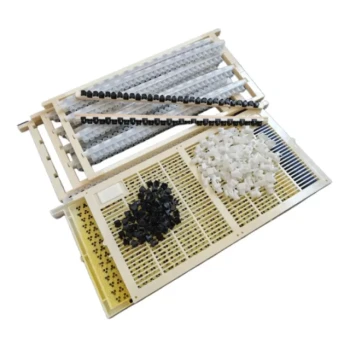
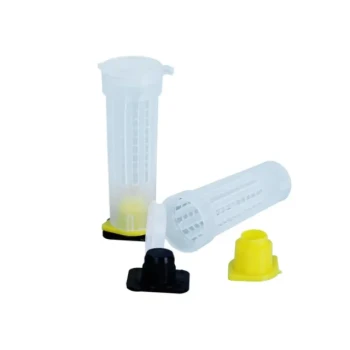
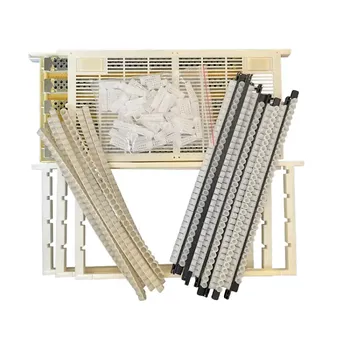
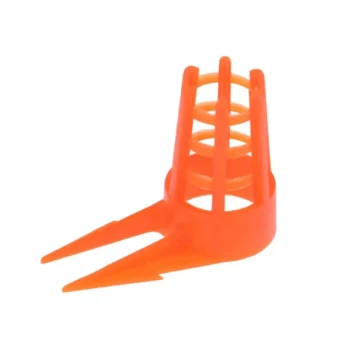
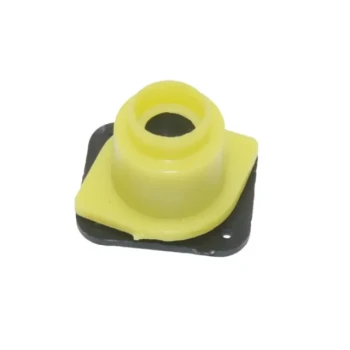
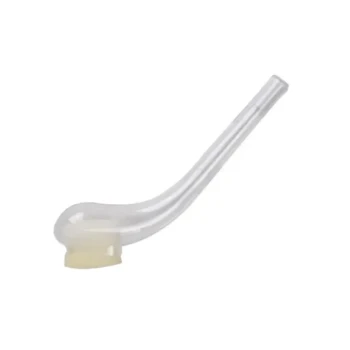
Queen-rearing tools and stock-management equipment help control Israeli Acute Paralysis Virus (IAPV) by supporting clean queen production, breeder screening, and separation of potentially infected stock. Their value is not that the equipment neutralizes the virus directly, but that it enables the management practices that reduce vertical transmission and protect newly established colonies.
The central control point is the queen. Because infected queens may carry IAPV in their ovaries and spermatheca, rigorous screening, hygienic queen rearing, and effective stock isolation can prevent infected queens from passing the virus to the next generation.
Why Queen Management Matters in IAPV Control
Infected Queens Can Spread Virus Vertically
IAPV is significant in breeding programs because infected queens can carry the virus in reproductive tissues and lay infected eggs. This creates a route for the virus to enter a colony before workers have developed normally.
Queen-rearing equipment therefore supports a preventive strategy: propagate queens only from carefully screened breeder stock.
Young Bees Are Particularly Vulnerable
Newly emerged bees can be highly sensitive to oral infection during food sharing. If infected brood or adult bees enter a developing colony, transmission can occur through normal colony interactions.
Producing clean queens and establishing them with healthy stock helps reduce the chance that a new colony begins with an existing systemic infection.
The Virus Affects More Than One Organ System
IAPV can infect the gut, hypopharyngeal glands, and nervous system. Reported effects include disorientation, impaired homing, leg paralysis, and mortality.
These symptoms can undermine foraging and colony development, making prevention during queen production and stock selection more practical than relying only on later symptom recognition.
How Queen-Rearing Tools Support Disease Prevention
Hygienic Grafting Environments
Grafting equipment is used to transfer larvae during queen production. Maintaining a clean grafting environment helps reduce the opportunity for contaminated material or handling practices to introduce infection into queen-rearing operations.
The equipment should be part of a broader hygiene protocol that includes disciplined handling and careful control of the breeding environment.
Controlled Propagation of Selected Stock
Queen-rearing tools allow beekeepers and commercial breeders to reproduce queens from selected breeder colonies. When breeder queens are screened before propagation, the same equipment becomes part of a program for expanding cleaner stock.
This is especially important for distributors and resellers supplying queen-production operations: equipment quality matters, but the operational protocol determines whether it contributes to disease control.
Separation Between Breeding Groups
Isolation gear and dedicated queen-rearing setups can help keep breeder colonies, grafting areas, and developing colonies separate. This reduces unnecessary contact between potentially infected and clean stock.
Separation is most effective when it is consistently applied across the full workflow, from breeder selection through colony establishment.
How Stock-Management Equipment Reduces Transmission Risk
Screening and Identification
Stock-management systems help apiary managers identify which queens and colonies are being used for breeding. Clear identification supports the removal or exclusion of questionable breeder queens from propagation programs.
Without reliable stock records, a single unsuitable queen can be distributed across multiple colonies and increase the scale of a disease problem.
Isolation of Higher-Risk Stock
Isolation equipment and dedicated housing give managers a way to keep suspect or unverified stock apart from clean breeding groups. This limits the chance that infected material is unknowingly introduced into queen-rearing colonies.
The objective is controlled movement: clean stock should remain distinguishable and operationally separate from stock of uncertain status.
Protecting New Colonies
Newly established colonies represent a major opportunity for prevention. Introducing a screened queen into carefully managed, healthy stock reduces the likelihood that IAPV is carried forward during colony formation.
Stock-management equipment supports this process by making separation, identification, and controlled introduction more practical at apiary scale.
Why Equipment Must Be Matched With Protocol
Tools Do Not Replace Screening
Queen-rearing tools cannot determine whether a breeder queen carries IAPV unless they are used within a screening program. Selecting equipment without controlling breeder-stock quality leaves the main transmission pathway unresolved.
The essential sequence is screen breeder queens, maintain hygienic rearing conditions, and control how stock is introduced and moved.
Consistency Matters Across the Workflow
A clean grafting area is not enough if stock is later mixed without proper control. Disease prevention must cover breeding colonies, tools, isolation areas, and newly established colonies.
For commercial operations, standardized procedures are particularly important because higher production volume increases the consequences of inconsistent handling.
Product Selection Should Support Operational Control
For wholesalers and B2B resellers, a useful product portfolio should cover the complete workflow rather than focus on isolated tools. Queen-rearing equipment, isolation gear, and stock-management supplies are most valuable when they help customers implement a coherent biosecurity process.
Reliable availability, rapid order fulfillment, and knowledgeable technical support also matter when apiaries need to replace equipment or respond quickly to suspected disease risk.
Understanding the Trade-offs
More Separation Requires More Management
Maintaining isolated breeding groups and dedicated equipment can increase labor, space requirements, and inventory complexity. These costs must be weighed against the risk of spreading infected stock through a larger operation.
For professional apiaries, the trade-off generally favors clearer separation because the potential impact extends beyond a single colony.
Equipment Quality Does Not Guarantee Clean Stock
Premium equipment may improve handling and workflow control, but it does not guarantee that queens or colonies are free from IAPV. Product performance and disease status are separate issues.
Purchasing decisions should therefore consider both equipment suitability and the customer’s screening and hygiene practices.
Overlooking Stock Records Creates Risk
If breeder identity, colony status, or movement history is unclear, managers may be unable to trace where questionable stock originated or where it was distributed. This weakens containment.
Stock-management equipment should be paired with accurate identification and disciplined records so that decisions are based on known stock history rather than assumption.
Making the Right Choice for Your Goal
Queen-rearing and stock-management equipment should be selected according to the disease-control task it needs to support.
- If your primary focus is producing healthy queens: Prioritize hygienic grafting equipment, breeder-queen screening procedures, and tools that support controlled propagation.
- If your primary focus is preventing transmission between colonies: Use isolation gear and stock-management systems that keep clean, suspect, and unverified groups clearly separated.
- If your primary focus is supplying commercial apiaries: Offer a full-spectrum product range supported by rapid response, technical expertise, and dependable fulfillment across the queen-rearing and isolation workflow.
- If your primary focus is protecting newly established colonies: Combine screened queens with carefully managed, healthy stock and controlled introduction procedures.
The most effective IAPV strategy uses equipment as part of a disciplined system for screening, hygiene, isolation, and controlled stock movement.
Summary Table:
| Tool/Equipment | Role in IAPV Control | Key Practices |
|---|---|---|
| Queen-Rearing Tools | Propagate from screened stock; hygienic grafting | Screen breeder queens; maintain clean grafting environments |
| Stock Management Equipment | Track, isolate, and protect stock | Use identification systems; separate suspect stock |
| Isolation Gear | Prevent intermixing of clean and infected bees | Dedicated housing; controlled movement |
Protect your apiary from IAPV with our comprehensive range of queen-rearing and stock management equipment. At HONESTBEE, we supply all the tools you need, from grafting kits to isolation gear, ensuring you can implement effective biosecurity. Benefit from our full-spectrum portfolio, rapid fulfillment, and expert support. For distributors and resellers, we offer OEM/ODM options and competitive margins. Contact us today to discuss your requirements and secure reliable supply!
Related Products
- Retractable Chinese Queen Rearing Grafting Tools Equipment
- Plastic Chinese Queen Grafting Tool for Bee Queen Rearing
- Stainless Steel Beekeeping Queen Grafting Tool for Honey Bee Rearing
- Stainless Steel Queen Grafting Tool for Beekeeping and Bee Queen Grafting
- Plastic Beekeeping Honey Bee Larvae Grafting Tools for Queen Rearing and Chinese Grafting
People Also Ask
- Which specialized tools are necessary for implementing standardized queen rearing? Scale Your High-Yield Apiary
- What biological requirements govern queen caste development, and how do specialized queen rearing tools facilitate commercial queen production? Discover Essential Equipment
- What biological window allows worker bee larvae to develop into queens, and how does this dictate the use of commercial queen rearing tools? Discover the critical first 48 hours and the equipment that supports it.
- How does selective queen rearing benefit an apiary? Discover Essential Tools for High-Quality Queen Bees
- Why are specialized queen rearing tools necessary to mitigate winter hive losses? Boost Apiary Survival and Recovery