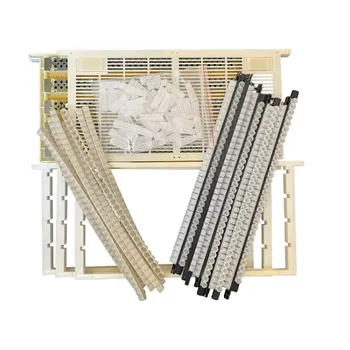
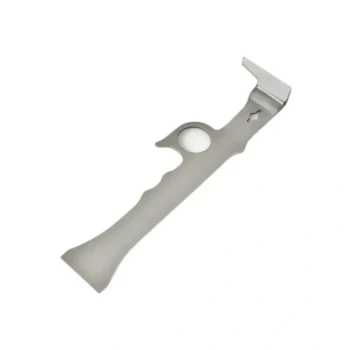
For larval grafting, you need precision tools, purpose-built cell bars, artificial queen cups, and controlled spacing. A practical setup includes a flexible Chinese-style grafting tool or fine grafting needle, cell bar frames, wax or plastic queen cups, a wax-heating vessel, a cell-forming dowel, a sharp scalpel, and magnification. Attach queen cups to the cell bars 25–50 mm (1–2 inches) apart so nurse bees can build strong, downward-hanging queen cells and operators can remove them safely.
Successful queen rearing depends on two forms of precision: careful larval handling and correct cell-bar layout. The equipment must protect the larva during transfer, while the frame configuration must give each developing queen cell enough room for construction, inspection, and harvest.
What Equipment Is Needed for Larval Grafting?
Grafting tools
A flexible Chinese-style grafting tool is commonly used because its fine tip or spatula can lift a delicate larva from a worker brood cell and place it into an artificial queen cup.
Fine needles, probes, or other specialized grafting tools can also be used. The essential requirement is a tip that allows precise, non-destructive handling of very small larvae.
Artificial queen cups
Queen cups may be made from molded plastic or artificial beeswax. They provide the starting structure into which the grafted larva is placed and over which nurse bees build the completed queen cell.
Plastic cups offer standardized dimensions and efficient handling for commercial operations. Wax cups can integrate naturally with the colony but may require more preparation and careful attachment.
Cell bars and grafting frames
A cell bar is a horizontal bar fitted with multiple queen cups. Several bars are installed in a dedicated cell-bar frame, which is then placed into a queen-rearing or queenless nurse colony.
These frames standardize cup placement and allow multiple larvae to be grafted and managed in one operation.
Wax-heating vessel
A small wax-heating vessel or bain-marie is used to melt wax safely for attaching queen cups to the cell bars. Indirect heating helps maintain workable wax without exposing it to unnecessarily high temperatures.
A stable, controlled wax supply is particularly important when preparing multiple frames for commercial queen production.
Cell-forming dowel
A cell former dowel is used to shape or smooth wax queen cups and maintain consistent cup dimensions. This is most relevant when producing cups from wax rather than using ready-made molded plastic cups.
Scalpel
A sharp scalpel is useful for trimming excess wax, cleaning cup attachments, and preparing cell bars. It should be reserved for clean, precise work so the cups remain securely fixed without rough edges.
Magnification and lighting
Magnification equipment and strong, even lighting improve visibility when locating larvae and positioning them inside the cups. These are not substitutes for technique, but they reduce handling errors during delicate transfers.
How Should the Frame Be Configured?
Use horizontal cell bars
A dedicated frame should contain horizontal cell bars designed to hold artificial queen cups. The grafted cups are positioned so that, after acceptance, nurse bees can extend them into the characteristic downward-hanging queen cells.
The frame should provide enough working room for inspecting, feeding, protecting, and removing individual cells.
Space cups 25–50 mm apart
Attach queen cups 25–50 mm, or approximately 1–2 inches, apart along the bar. This spacing gives nurse bees sufficient room to draw out each queen cell properly.
It also leaves enough clearance for tools and fingers when inspecting or cutting out mature cells.
Typical bar capacity
A Langstroth frame cell bar can hold up to 12 queen cells under the stated spacing arrangement. A British Standard frame bar typically holds 8–10 queen cells.
Actual capacity depends on the bar’s usable length, cup diameter, end clearances, and the spacing standard being applied. Capacity should not be increased at the expense of adequate cell development or safe removal.
Keep cup placement consistent
Cups should be aligned and securely attached with molten wax. Consistent positioning helps nurse bees work the cells evenly and makes inspection, cell protection, and harvesting more efficient.
Misaligned or loosely attached cups can complicate handling and may increase the risk of damaging adjacent cells.
How Does the Grafting Workflow Use This Equipment?
Prepare the cups and frame
Fit the artificial queen cups to the cell bars using molten wax. Confirm that each cup is firmly attached and that the 25–50 mm spacing is maintained across the bar.
Inspect the frame before grafting so loose cups, excess wax, or uneven spacing can be corrected in advance.
Transfer larvae carefully
Use the grafting tool to lift the larva delicately from its worker cell and place it into the artificial queen cup. The goal is to avoid physical damage and maintain the larva’s correct orientation during transfer.
Magnification and lighting are especially useful at this stage because even small placement errors can reduce grafting success.
Place the frame in a rearing colony
After grafting, the cell-bar frame is placed into a suitable queen-rearing or queenless nurse colony, where nurse bees accept and feed the larvae and extend the cups into full queen cells.
Nucleus hives and other specialized queen-rearing setups can support this process, depending on the scale and production system.
Inspect and remove cells carefully
The spacing between cups should allow technicians to inspect individual cells and remove them without contacting neighboring queen cells. This is important because developing cells are vulnerable to physical damage.
For larger operations, queen cell protectors or push-in cages may also be used to protect mature cells during handling and introduction.
Understanding the Trade-offs
Higher capacity versus better access
Placing more cups on a bar can increase the number of grafts handled per frame. However, reducing the recommended spacing can restrict cell construction and make removal more difficult.
The practical objective is not maximum cup count; it is maximum usable queen-cell production.
Plastic cups versus wax cups
Plastic cups provide repeatable dimensions, consistent attachment, and efficient preparation for commercial use. Wax cups can offer a natural material choice but require additional forming and wax-handling work.
For distributors and commercial apiaries, the better choice depends on customer preference, production volume, and the need for standardized replacement parts.
Basic tools versus professional setup
A basic grafting kit may be sufficient for occasional queen rearing. Commercial operators generally benefit from ergonomic grafting tools, dedicated cell-bar frames, consistent cups, magnification, and reliable wax-heating equipment.
Investing in compatible components is more valuable than simply purchasing more tools. Cell cups, bars, frames, and protective accessories should work together as one system.
Standard frames versus specialized rearing equipment
Standard hive frames may be available throughout an operation, but dedicated cell-bar frames provide better control over cup layout and workflow. Specialized frames are particularly valuable when producing queens repeatedly or at scale.
Mating nucs, queen cell protectors, and push-in cages support later production stages, but they do not replace the core grafting and cell-bar equipment.
Making the Right Choice for Your Goal
Select equipment based on production volume, frame standard, and the level of handling precision required.
- If your primary focus is occasional queen rearing: Use a flexible grafting tool, artificial cups, one compatible cell-bar frame, a controlled wax-heating setup, and magnification.
- If your primary focus is commercial queen production: Standardize cell-bar frames, cups, grafting tools, and protective accessories across the operation to simplify training, replenishment, and order fulfillment.
- If your primary focus is Langstroth production: Plan for up to 12 queen cells per bar while maintaining 25–50 mm spacing and adequate end clearance.
- If your primary focus is British Standard production: Plan for approximately 8–10 queen cells per bar and verify compatibility between the bar, frame, and cup system.
- If your primary focus is reliable sourcing: Work with a supplier able to provide a complete, compatible range of grafting tools, cups, cell bars, frames, wax equipment, and replacement accessories rather than isolated products.
With the correct tools and disciplined 25–50 mm cell spacing, larval grafting becomes a more repeatable and scalable queen-rearing process.
Summary Table:
| Item | Description | Purpose |
|---|---|---|
| Grafting tool | Flexible Chinese-style tool or fine needle | Transfer larvae precisely without damage |
| Queen cups | Molded plastic or beeswax cups | Provide starting structure for queen cells |
| Cell bars & frame | Horizontal bars with cups, installed in frame | Standardize cup placement and manage multiple grafts |
| Wax-heating vessel | Indirect heating to melt wax | Melt wax safely for attaching cups |
| Cell-forming dowel | Shaped tool | Shape and smooth wax cups |
| Scalpel | Sharp blade | Trim wax, clean attachments |
| Magnification & lighting | Magnifiers, strong light | Improve visibility for accurate transfers |
Elevate your queen rearing with top-tier grafting tools and cell bar systems from HONESTBEE. As a comprehensive wholesale supplier for commercial apiaries and distributors, we provide everything from precision grafting instruments to full beekeeping machinery. Our one-stop sourcing, rapid response, and dedicated service ensure your operations run smoothly. Contact us today to discuss your needs and benefit from our expertise and fast fulfillment!
Related Products
- Plastic Chinese Queen Grafting Tool for Bee Queen Rearing
- Stainless Steel Beekeeping Queen Grafting Tool for Honey Bee Rearing
- Stainless Steel Queen Grafting Tool for Beekeeping and Bee Queen Grafting
- Retractable Chinese Queen Rearing Grafting Tools Equipment
- Black 2 Pack Beekeeper Queen Grafting Tool for Bee Queen Larva Transferring Needle
People Also Ask
- Why is it necessary for migratory beekeeping enterprises to utilize professional queen bee rearing tools? Boost Resilience
- What are the benefits of using a queen grafting tool for queen rearing? Master Precision for Superior Bee Genetics
- What is grafting in queen rearing? Take Control of Your Apiary's Genetics
- What are the steps involved in using a queen grafting tool? A Guide to Successful Queen Rearing
- What is the primary function of a queen grafting tool? Master Precise Larval Transfer for High Queen Acceptance