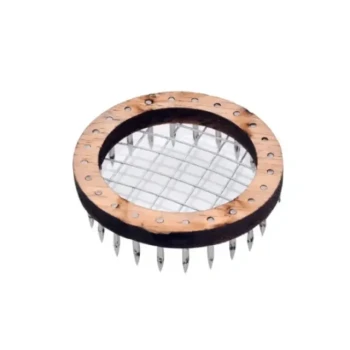
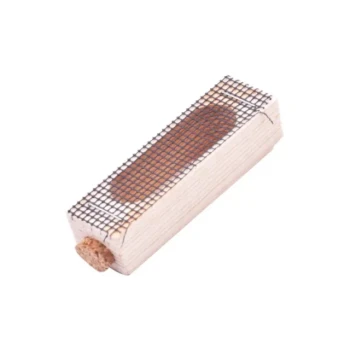
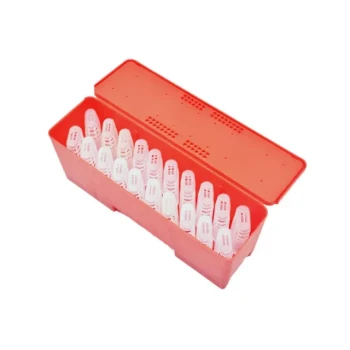
Specialized rearing cages serve as a controlled bioassay environment designed to isolate the effects of plant-based substances on honeybee mortality.
By confining adult bees in a standardized setting, researchers can simulate post-exposure survival states. This allows for the precise delivery of plant extracts and the rigorous monitoring of survival rates over a critical 24 to 48-hour observation window.
Core Takeaway These cages act as the fundamental tool for verifying the safety of botanical pesticides. They enable a clear distinction between toxicity to target pests and safety for beneficial pollinators through precise, quantitative feeding experiments.
The Mechanics of Safety Assessment
Creating a Standardized Environment
The primary function of specialized rearing cages is to provide a standardized, enclosed feeding environment.
By isolating the bees, researchers eliminate external environmental variables that could skew survival data. This ensures that the observed effects are strictly a result of the plant extract exposure.
Facilitating Quantitative Feeding
To accurately assess safety, researchers must control exactly how much of a substance a honeybee consumes.
These cages are designed to facilitate precise quantitative feeding. This capability is essential for establishing dose-response relationships and determining specific toxicity thresholds.
The Critical Observation Window
The cages are specifically utilized to monitor honeybee survival rates over a distinct period, typically 24 to 48 hours.
This timeframe allows researchers to capture acute mortality data immediately following exposure. It serves as a rapid, reliable metric for the initial safety screening of plant-based compounds.
Distinguishing Toxicity Profiles
Protecting Beneficial Insects
The ultimate goal of using these cages is to ensure the safety of beneficial insects.
While plant extracts are developed to target pests, they must not harm the pollinators that ecosystems rely on. The rearing cage provides the isolation necessary to verify this selectivity.
Comparative Analysis
The data gathered from these cages allows for a direct comparison between the toxic effects on target pests and the survival of honeybees.
This comparative analysis helps researchers distinguish effective biopesticides from those that pose unacceptable risks to non-target organisms.
Understanding the Trade-offs
Simulation vs. Field Reality
It is important to recognize that rearing cages provide a simulation of survival states, not a perfect replication of the natural world.
While they offer high control, they strip away the complex behaviors and environmental interactions bees experience in the field.
Short-Term Focus
The standard use of these cages focuses on a 24 to 48-hour observation period.
This is highly effective for measuring acute toxicity (immediate death). However, it may not capture chronic, long-term effects that could develop over weeks of exposure.
Applying This to Experimental Design
To maximize the utility of specialized rearing cages, align your usage with your specific research goals:
- If your primary focus is Acute Toxicity Screening: Use these cages to determine the immediate survival rate within the first 48 hours of exposure.
- If your primary focus is Selective Safety: Use the quantitative feeding data to prove that a dose lethal to pests is safe for honeybees.
By leveraging the controlled environment of specialized rearing cages, you ensure that your safety assessments are both scientifically rigorous and ecologically responsible.
Summary Table:
| Feature | Function in Safety Assessment | Key Benefit |
|---|---|---|
| Controlled Environment | Isolates bees from external environmental variables | Ensures data accuracy by removing noise |
| Quantitative Feeding | Enables delivery of precise substance dosages | Establishes clear dose-response relationships |
| Observation Window | Focuses on 24-48 hour survival rates | Captures critical acute toxicity data |
| Comparative Analysis | Distinguishes pest toxicity vs. pollinator safety | Verifies selectivity of botanical pesticides |
Elevate Your Apiary Operations with HONESTBEE
At HONESTBEE, we understand that the safety of your pollinators is the foundation of a thriving beekeeping business. As a premier provider for commercial apiaries and distributors, we offer more than just equipment; we provide the precision tools necessary for modern beekeeping success.
From specialized hardware and hive-making machinery to a full spectrum of essential industry consumables, our wholesale portfolio is designed to meet the rigorous demands of large-scale operations. Whether you are conducting safety assessments or scaling up honey production, HONESTBEE delivers the expertise and equipment you need to protect your bees and maximize your yield.
Ready to upgrade your equipment? Contact us today to explore our comprehensive wholesale offerings!
References
- Deressa Kebebe, Gemechis Leggese. Evaluating the Effect of Plants Extracts Against Varroa Mites (Varroa Destructors) of Honeybees (Apis Mellifera). DOI: 10.7176/cmr/14-2-03
This article is also based on technical information from HonestBee Knowledge Base .
Related Products
- Twin Queen Styrofoam Honey Bee Nucs Mating and Breeding Box
- Professional Multi-Functional Queen Bee Cage
- Automatic Heat Preservation 6 Frame Pro Nuc Box for Honey Bee Queen Mating
- Premium Nicot Style Queen Rearing Kit with Hair Roller Bee Cages
- Langstroth Honey Bee Box Hive Boxes for Different Depths
People Also Ask
- What are the benefits of using double nuc boxes in beekeeping? Boost Apiary Resilience & Growth
- What are the practical advantages of a double nuc box? Maximize Efficiency with Standardized Beekeeping Gear
- What is the frame capacity of each side in a double nuc box? Master Queen Rearing & Colony Starts
- What are the advantages of double nuc boxes in winter? Boost Survival Rates & Apiary Resilience
- What is the purpose of exploring double nuc boxes in beekeeping? Boost Apiary Resilience & Growth