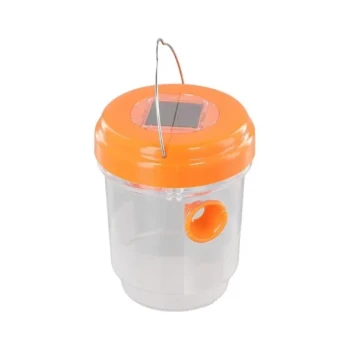
Swarm traps function as a passive safety net designed to intercept and secure honeybee colonies that have naturally separated from their original hive. By deploying specific lures within purpose-built structures, these devices allow beekeepers to recover "lost" livestock, ensuring that a natural biological event does not result in a permanent loss of capital or productivity.
Core Insight: In a comprehensive strategy, swarm traps act as an automated insurance policy; they convert a potential management failure—an escaped swarm—into an asset recovery opportunity, preserving both the workforce and valuable genetics.
The Strategic Role of Swarm Traps
Preemptive Resource Recovery
The primary function of a swarm trap is loss prevention.
When a colony swarms, the apiary risks losing a significant portion of its workforce and a queen. Swarm traps serve as a preemptive measure, positioned to capture these departing bees before they leave the apiary's range permanently.
Protecting Apiary Productivity
Swarming events naturally depress honey production because the original colony loses its foraging force.
By capturing the swarm, you retain that labor force within your operation. This mitigates the negative impact on overall yield and allows for the rapid establishment of a new, productive colony using the captured bees.
Expansion Through Natural Division
Swarm traps allow for low-labor apiary scaling.
While professional division boards and queen cages are used for active, scientific splitting, swarm traps capitalize on the bees' natural reproductive drive. They enable even inexperienced beekeepers to expand their apiary size by "catching" new colonies rather than purchasing them.
Distinctions and Trade-offs
Passive Traps vs. Active Catchers
It is critical to distinguish between swarm traps and swarm catchers.
Swarm traps are stationary, passive devices that wait for bees to arrive via attraction. Swarm catchers are specialized manual tools designed to physically contain a swarm that is already clustered on a branch or structure, requiring the beekeeper's active presence.
Target Specificity
A comprehensive strategy often employs multiple trap types, but they are not interchangeable.
Swarm traps target honeybees for recovery. Conversely, bait traps, wire mesh traps, and hive beetle traps are designed to capture and eliminate predators like wasps, hornets, and beetles. Confusing these tools can lead to effective pest control but failed colony recovery.
The Management Gap
Relying solely on traps is not a complete strategy.
While traps reduce losses, they do not prevent the swarming impulse itself. They should be used alongside proactive management techniques, such as colony splitting and population balancing, to maintain control over hive dynamics.
Making the Right Choice for Your Goal
To deploy swarm traps effectively within your wider management plan, consider your immediate objectives:
- If your primary focus is Asset Protection: Deploy swarm traps around the apiary perimeter to act as a "catch-fence" for any swarms that escape your active management.
- If your primary focus is Rapid Expansion: Use swarm traps in conjunction with active swarm catchers to maximize the intake of natural swarms for new colony establishment.
- If your primary focus is Pest Reduction: Ensure you are using bait or wire mesh traps specifically for wasps and beetles, not swarm traps, to lower predation pressure.
Ultimately, a swarm trap transforms the inevitable biological volatility of bees into a manageable, recoverable asset.
Summary Table:
| Feature | Swarm Traps (Passive) | Swarm Catchers (Active) | Pest Traps (Bait/Mesh) |
|---|---|---|---|
| Primary Function | Intercept & secure departing swarms | Manual capture of clustered swarms | Eliminate predators (wasps, beetles) |
| Operational Mode | Stationary / Automated | Requires manual intervention | Passive / Lure-based |
| Strategic Value | Loss prevention & asset recovery | Immediate colony retrieval | Colony health & protection |
| Labor Intensity | Low | High | Low |
| Target | Honeybee colonies | Clustered honeybees | Hornets, wasps, & beetles |
Scale Your Apiary Operations with HONESTBEE
Maximize your honey production and minimize colony loss by integrating professional-grade equipment into your management strategy. At HONESTBEE, we specialize in supporting commercial apiaries and distributors with high-volume wholesale solutions. Whether you need specialized hive-making machinery, honey-filling systems, or a complete supply of beekeeping tools and consumables, our portfolio is designed to enhance your efficiency and profitability.
Ready to upgrade your apiary’s performance? Contact our expert team today to discuss how our hardware and industry-leading supplies can serve your business needs.
Related Products
- HONESTBEE Collapsible Tiered Bee Swarm Catcher for Beekeeping
- HONESTBEE Professional Telescopic Pole Bee Swarm Catcher
- Reusable Clear Small Hive Beetle Traps for Beehives Beetle Trapping Tools
- Professional Bucket Style Wasp and Moth Pheromone Trap
- Compact Multi-Funnel Hanging Wasp Trap
People Also Ask
- What should be done if the swarm is situated on the bottom of a tree limb? A Guide to Methodical Bee Capture
- What role do swarm catchers play in maintaining the production scale of an apiary? Turn Colony Loss into Growth.
- What role does a Swarm Catcher play in the process of expanding apiary colony scale? Optimize Growth & Reduce Costs
- What information should be gathered before attempting to catch a swarm of bees? A Safe and Successful Guide
- What precautions can be taken to prevent a newly captured swarm from absconding? Secure Your Swarm with Proven Methods