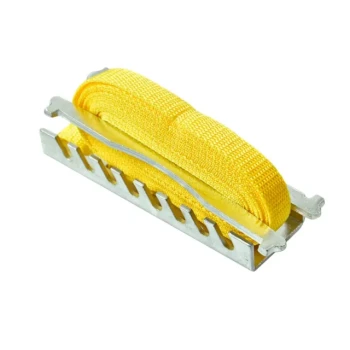
Textile strips serve as distinct physical carriers designed to administer supplements, such as CBD oil, to honeybee colonies through contact rather than direct feeding. These strips are uniformly wetted with a prepared mixture and placed inside the hive to act as a delivery mechanism that functions independently of the bees' appetite.
Core Takeaway The primary function of textile strips is to facilitate non-direct ingestion by exploiting the honeybees' natural grooming and foreign body removal instincts. This method allows researchers to isolate and compare the metabolic effects of contact-based exposure against direct oral consumption.
The Mechanics of Administration
Acting as a Passive Carrier
The textile strip functions effectively as a sponge or vehicle for the supplement. By uniformly wetting the fabric, researchers ensure the active substance (such as CBD oil) is distributed meant for gradual interaction with the colony.
Triggering Instinctive Responses
The efficacy of this method relies on the biological imperative of the hive to maintain hygiene. When the strip is introduced, the bees perceive it as a foreign object that must be addressed.
Facilitating Contact-Based Ingestion
As bees attempt to remove the strip or clean the area, they physically contact the supplement. Through subsequent grooming of themselves and nestmates, the substance is ingested indirectly, simulating a contact-based transmission route.
Experimental Utility
Simulating Contact Transmission
This administration method mimics environmental scenarios where bees encounter substances through physical touch rather than foraging. It provides a controlled setting to observe how contact exposure affects hive dynamics.
Enabling Route Comparison
Textile strips provide a necessary counter-variable to direct ingestion methods. Researchers use them to compare metabolic differences between substances absorbed via grooming versus those eaten directly in sugar syrup.
Understanding the Methodological Distinction
Non-Direct vs. Direct Ingestion
It is critical to distinguish that textile strips are not intended as a food source. Unlike sugar syrup, which targets the digestive system immediately through feeding, strips target non-direct ingestion.
Dependence on Bee Behavior
This method introduces a variable based on colony behavior. The dosage intake depends on the intensity of the bees' grooming and removal efforts, rather than a quantifiable volume of syrup consumed.
Application for Research Design
To determine if textile strips are the correct administration tool for your specific study, consider the following biological goals:
- If your primary focus is simulating environmental contact: Use textile strips to mimic how bees naturally encounter and groom off foreign substances or contaminants.
- If your primary focus is comparative metabolic analysis: Use textile strips alongside a sugar syrup control group to isolate the physiological differences between contact absorption and direct eating.
This approach transforms the colony's natural hygiene instincts into a precise scientific delivery system.
Summary Table:
| Feature | Function & Purpose |
|---|---|
| Mechanism | Serves as a passive physical carrier for supplements (e.g., CBD oil) |
| Primary Goal | Facilitates non-direct ingestion via grooming and hygiene behavior |
| Research Use | Mimics environmental contact exposure and enables route comparison |
| Interaction | Functions independently of the bees' appetite for food |
| Ingestion Type | Indirect (contact-based) vs. Direct (sugar syrup feeding) |
Scale Your Apiary Research and Operations with HONESTBEE
At HONESTBEE, we understand the precision required for professional honeybee administration. Whether you are a commercial apiary or a global distributor, our comprehensive wholesale offering provides the specialized tools you need to succeed.
From industrial honey-filling machines and hive-making equipment to high-quality beekeeping consumables, we supply the full spectrum of hardware and specialized merchandise to streamline your business. Partner with us to access expert-grade equipment designed for the modern beekeeping industry.
Ready to elevate your efficiency? Contact us today to explore our wholesale solutions!
References
- Patrycja Skowronek, Aneta Strachecka. Cannabidiol (CBD) Supports the Honeybee Worker Organism by Activating the Antioxidant System. DOI: 10.3390/antiox12020279
This article is also based on technical information from HonestBee Knowledge Base .
Related Products
- Versatile Ratchet Hive Strap with S-Hooks for Secure Fastening
- Heavy-Duty Nylon Beehive Hive Strap with Stainless Steel Cinch Buckle
- Endless Loop Ratchet Hive Strap
- Heavy Duty Ratchet Hive Strap
- Plastic Bee Pollen Trap Strips Comb Catcher Collector
People Also Ask
- How do you loosen a ratchet strap? Master the 180-Degree Release for Easy Unloading
- How is a ratchet strap loosened and removed? Master the 180-Degree Release Technique
- What is the correct way to install a ratchet strap to reduce freezing in cold weather? Prevent Seizure with Proper Drainage
- Why is the use of ratchet straps or high-strength ropes necessary for hive protection? Secure Your Colony Now
- Why install ratchet straps below the hive top in freezing weather? Prevent a frozen, useless strap.