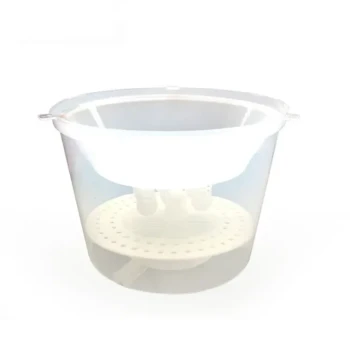
The fundamental mechanism of a pollen trap is physical separation via a size-restricted barrier. Worker bees returning to the hive are forced to enter through a wire mesh, punched plate, or precision grid with specifically sized holes. These apertures are large enough to allow the bee's body to pass through but too narrow to accommodate the pollen pellets packed on their hind legs, causing the pellets to be scraped off and collected in a tray below.
The core principle is mechanical interception: by installing a precise physical barrier at the hive entrance, beekeepers can dislodge and collect pollen loads from foraging bees without harming the insect or disrupting the colony's traffic flow.
The Mechanics of Collection
The Target: Pollen Baskets
Worker bees transport pollen in packed pellets located in pollen baskets (corbicula) on their rear legs.
This biological transport system is the specific target of the trap. The device relies on the fact that the pollen payload significantly increases the width of the bee's hind legs.
The Barrier Principle
The trap functions by placing a grid, wire mesh, or punched plate directly across the hive entrance.
This barrier features precision-engineered apertures. These holes are strictly dimensioned to permit the passage of the bee's body but block the protruding pollen pellets.
The Separation Action
As the bee forces its way through the mesh to enter the hive, the edges of the aperture physically contact the pollen loads.
The friction from the mesh scrapes or dislodges the pellets from the bee's legs. Once separated, gravity causes the pellets to fall directly into a protected collection tray beneath the entryway.
Applications and Utility
Commercial Production
Traps allow for the automated, large-scale collection of bee pollen for human consumption or supplements.
The mechanism ensures immediate physical separation, maintaining the cleanliness of the raw material. This serves as the starting point for the industrial production of bee products.
Environmental Monitoring
Researchers use these devices to monitor colony foraging intensity and evaluate the richness of surrounding floral sources.
By analyzing the trapped pollen, scientists can identify specific plant sources (like sesame, maize, or sunflowers) and track environmental factors such as pesticide exposure or virus transmission risks.
Understanding the Trade-offs
Nutritional Balance
While the process is mechanically simple, it directly removes protein resources from the colony.
Overuse of traps can deprive the hive of essential nutrition required for rearing brood. It is vital to manage the frequency of trapping to ensure the colony retains enough pollen for its own survival.
Physical Stress
Passing through the grid requires physical effort from the bees and can slow down entry into the hive.
If the apertures are not sized correctly, the trap may cause congestion at the entrance or damage the bees. High-quality traps balance high pollen yield with minimal disruption to the bees' movement.
Making the Right Choice for Your Goal
When employing pollen traps, your operational strategy should align with your end goal:
- If your primary focus is commercial production: Prioritize traps with high-efficiency grids that maximize yield while offering easy access to the collection tray to maintain freshness.
- If your primary focus is environmental monitoring: Ensure the trap captures a representative sample of all returning foragers to accurately reflect the diversity of local flora and potential contaminants.
By leveraging the simple mechanics of physical exclusion, you can turn a standard beehive into a powerful tool for both production and data collection.
Summary Table:
| Component | Function | Mechanism |
|---|---|---|
| Sized Grid/Mesh | Physical Barrier | Specifically sized apertures (approx. 5mm) to scrape pollen loads from bee legs. |
| Corbicula Target | Biological Target | Targets the pollen baskets on the hind legs of returning worker bees. |
| Collection Tray | Storage & Hygiene | Gravity-fed container located below the mesh to catch and protect dislodged pellets. |
| Entrance Plate | Traffic Control | Directs all incoming foragers through the separation barrier for maximum yield. |
Elevate Your Apiary Production with HONESTBEE
Are you looking to expand your commercial bee product line? HONESTBEE specializes in supporting commercial apiaries and distributors with premium, high-efficiency beekeeping equipment. From precision-engineered pollen traps to industrial-grade honey-filling machines and hive-making hardware, we provide the full spectrum of tools needed for large-scale success.
Why partner with us?
- Wholesale Excellence: Comprehensive inventory of essential industry consumables.
- Industrial Solutions: Specialized machinery for honey processing and hive manufacturing.
- Market Growth: Enhance your portfolio with our honey-themed cultural merchandise.
Ready to optimize your yield and scale your distribution? Contact our experts today to discuss your wholesale needs!
Related Products
- Removable Plastic Pollen Trap With Ventilated Tray for Bees Pollen Collector
- 30 cm Plastic Entrance Hole Bee Pollen Trap and Collector
- Plastic Bee Pollen Trap Strips Comb Catcher Collector
- High-Efficiency Diamond Maze Bee Escape for Clearing Supers
- Professional Bucket Style Wasp and Moth Pheromone Trap
People Also Ask
- What are the design principles and advantages of pollen traps in the collection of bee pollen? Boost Your Apiary Yield
- What is the function of professional pollen traps in evaluating honey plants? Quantifying Pollination and Crop Potential
- What functions do pollen traps serve for bee bread production? Optimize Your Raw Material Collection
- What maintenance and pest prevention measures should be taken for pollen traps? Protect Your Hive and Harvest Quality
- How does the use of pollen traps in honeybee hives enhance crop fertilization? Boost Your Yield Through Induced Activity