The necessity of using industrial-grade plastic sealing bags lies in their ability to provide a hermetic secondary barrier that standard screw caps cannot guarantee during long-term experiments. Because honey is highly hygroscopic, this additional layer is critical to completely isolate the sample from environmental humidity fluctuations, preventing moisture exchange that would otherwise compromise the accuracy of your experimental data.
Core Insight: While primary containers prevent spills, they are often insufficient for blocking microscopic moisture exchange over extended periods. Secondary sealing creates a controlled isolation chamber, ensuring that any changes observed in the honey are due to thermal stress, not external atmospheric contamination.
The Hygroscopic Nature of Honey
Understanding Moisture Absorption
Honey possesses strong hygroscopic properties, meaning it naturally and aggressively absorbs moisture from the surrounding atmosphere.
Without a perfect barrier, honey will pull water vapor from humid air or release its own moisture into dry air until it reaches equilibrium.
The Impact on Stability
This exchange of moisture is not benign; it fundamentally alters the honey's physicochemical properties.
Uncontrolled moisture fluctuation can trigger fermentation, alter viscosity, and compromise the chemical composition required for accurate analysis.
Limitations of Primary Packaging
Why Screw Caps fall Short
In standard storage, a bottle equipped with a screw cap is generally sufficient to prevent leakage.
However, for long-term temperature and humidity tolerance testing, relying solely on screw caps is a vulnerability.
Over extended periods, microscopic gaps in standard closures can allow ambient air to penetrate, rendering the container permeable to humidity.
The Role of Secondary Sealing
Industrial-grade plastic sealing bags serve as a secondary sealing mechanism that addresses the deficits of the primary container.
This layer acts as a fail-safe, ensuring that even if the primary cap allows gas exchange, the external environment remains completely locked out.
Ensuring Data Integrity
Isolating Variables
The goal of scientific testing is to measure specific variables without interference.
By completely isolating the honey, you ensure that the data reflects the sample's inherent tolerance to temperature, rather than its reaction to an uncontrolled humidity leak.
Simulating Harsh Environments
Using industrial-grade sealing allows researchers to simulate moisture-proof protection solutions intended for extremely harsh environments.
This proves whether a specific preservation method can withstand rigorous conditions without compromising the sample.
Understanding the Risks and Trade-offs
The Risk of False Negatives
Omitting the secondary seal introduces a significant risk of data corruption.
If a sample degrades during testing, you will not know if the failure was caused by the temperature stress (the variable you are testing) or a simple seal failure (an experimental error).
Material Quality is Critical
Not all plastic bags are sufficient; the requirement is specifically for industrial-grade materials.
Standard consumer-grade plastic bags may still possess high moisture vapor transmission rates, effectively failing to provide the necessary isolation and leading to a false sense of security.
Making the Right Choice for Your Goal
To ensure your honey analysis yields valid, publishable results, apply the following standards to your packaging strategy:
- If your primary focus is routine transport: A dedicated plastic container with a high-quality sealing lid is sufficient to prevent leakage and secondary contamination.
- If your primary focus is long-term tolerance testing: You must implement a dual-layer strategy, placing the sealed jar inside an industrial-grade plastic sealing bag to eliminate humidity variables.
Summary: Secondary sealing is not merely a storage precaution; it is a fundamental requirement for experimental control that guarantees the moisture content of your honey remains a constant, rather than a variable.
Summary Table:
| Feature | Primary Container (Screw Cap) | Secondary Sealing (Industrial Bag) |
|---|---|---|
| Primary Function | Prevents spills and leaks | Hermetic barrier against humidity |
| Moisture Protection | Minimal (prone to gas exchange) | High (isolates ambient air) |
| Risk Mitigation | High risk of moisture fluctuation | Eliminates external variables |
| Best Use Case | Routine transport and storage | Long-term environmental tolerance testing |
| Impact on Data | Potential for false negatives | Ensures high data integrity |
Maximize Your Beekeeping Operation with HONESTBEE
At HONESTBEE, we understand that precision is the backbone of a successful commercial apiary. From advanced honey-filling machines to specialized beekeeping tools, we provide the industrial-grade equipment needed to maintain the highest quality standards from hive to shelf.
Whether you are a growing distributor or a large-scale commercial operation, our comprehensive wholesale portfolio offers the specialized hardware and essential consumables your business demands. Secure your product integrity and streamline your production today.
Contact our experts for customized beekeeping solutions
References
- J. Radtke, Birgit Lichtenberg‐Kraag. Long-term changes in naturally produced honey depending on processing and temperature. DOI: 10.1080/00218839.2018.1494893
This article is also based on technical information from HonestBee Knowledge Base .
Related Products
- Food Grade Plastic Honey Bucket Pail for Beekeeping
- Conical Nylon Honey Strainer Filter Bag for Beekeeping and Honey Filtration
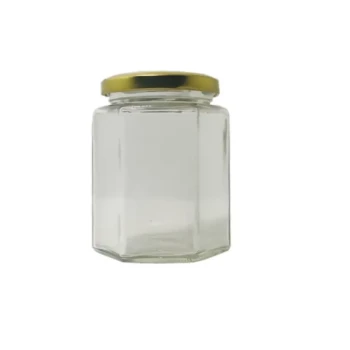
- Hexagonal Glass Honey Jars with Metal Lug Caps Elegant Versatile Packaging
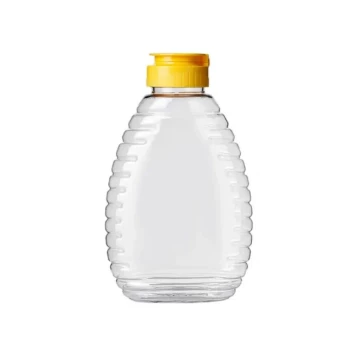
- Squeezable No-Drip Beehive-Shaped Honey Jars with Flip-Top Cap
People Also Ask
- What key operational precautions should be taken when using honey buckets and extractors fitted with bottom drain taps?
- What functions do food-grade honey buckets perform? Safeguard Your Harvest and Optimize Apiary Logistics
- Why are food-grade plastic buckets preferred for honey? Protect Quality with Modern Honey Collection Tools
- What is the significance of food-grade plastic honey collection buckets? Boost Quality in Forest Honey Logistics
- What is a honey pail? The Essential Container for Protecting Your Honey's Value