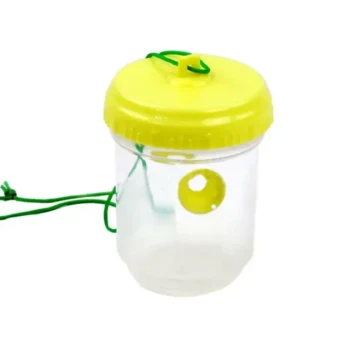
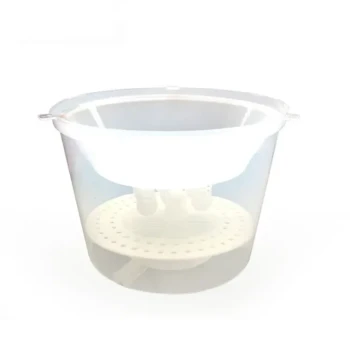
Pollen Traps are specialized mechanical devices installed at the hive entrance designed to physically intercept and collect pollen pellets from returning forager bees. In the context of sampling processes, their primary function is to secure large quantities of fresh pollen that represent the external environment, ensuring samples remain free from internal hive contamination.
Core Takeaway The distinct value of a Pollen Trap lies in its ability to isolate pollen before it enters the hive ecosystem. This ensures that samples used for analyzing heavy metals or pesticides reflect accurate environmental conditions, rather than being skewed by the colony's internal biological processing or storage.
The Mechanism of Action
To understand why these traps are relied upon for sampling, it is necessary to understand how they mechanically filter incoming resources.
Physical Separation via Apertures
The trap operates on a simple principle of mechanical friction.
It utilizes a specific grid or screen structure with precise aperture sizes.
As foraging bees return to the hive, they are forced to squeeze through these grids to enter.
Stripping the Pollen Load
This passage dislodges the pollen pellets packed into the "pollen baskets" on the bees' hind legs.
The dislodged pellets fall through a screen into a designated collection tray below, inaccessible to the bees.
This process allows for continuous, passive collection without requiring the beekeeper to manually handle individual bees or open the hive.
Strategic Value in Sampling Quality
While the mechanism is physical, the goal is data integrity. Using traps addresses specific challenges in environmental monitoring.
Eliminating Internal Contamination
The primary reference highlights that pollen traps provide samples not contaminated by the internal hive environment.
Once pollen enters the hive, it may be stored, moved, or mixed with nectar and bee secretions (enzyme processing).
Traps capture the pollen in its raw state, making it the standard for monitoring environmental heavy metal content or pesticide residues.
Representative Environmental Sampling
Because the trap collects from thousands of foragers returning from various locations, the resulting sample offers a broad snapshot of the surrounding ecosystem.
This makes the device critical for tracking the diversity of pollen sources and analyzing plant origin across large geographical areas.
Operational Trade-offs
While Pollen Traps are essential for obtaining clean samples, they introduce physical variables that must be managed.
Impact on Colony Dynamics
The installation of a trap is a physical intervention in the colony's daily life.
Research suggests that the high-frequency contact and forced entry through grids can induce stress or affect colony health.
Pathogen Transmission Risks
In research contexts, these traps are evaluated not just for collection, but for their potential role in disease spread.
The congestion at the hive entrance can potentially influence the transmission of pathogens, such as the Chronic Bee Paralysis Virus, due to the close physical contact required to pass through the trap.
Making the Right Choice for Your Goal
When incorporating Pollen Traps into your apiary management or research project, align the usage with your specific data requirements.
- If your primary focus is Environmental Monitoring: Prioritize the use of traps to obtain raw data on heavy metals and pesticides, as this excludes internal hive variables that could skew toxicity results.
- If your primary focus is Colony Health Research: Use the trap cautiously to measure pollen diversity, but monitor the hive closely for signs of stress or mechanical damage to the foragers.
Pollen Traps are not merely harvesting tools; they are filtration systems that ensure the chemical accuracy of environmental data.
Summary Table:
| Feature | Function & Benefit |
|---|---|
| Mechanism | Mechanical friction via precision grids to dislodge pollen pellets from bees' hind legs. |
| Sampling Quality | Captures raw pollen before internal hive processing, preventing enzyme or hive contamination. |
| Data Integrity | Essential for accurate monitoring of heavy metals, pesticides, and plant biodiversity. |
| Passive Collection | Continuous, hands-free collection without the need to manually handle bees or open hives. |
Maximize Your Apiary’s Analytical Accuracy with HONESTBEE
At HONESTBEE, we understand that commercial success depends on the purity and quality of your products. We provide a comprehensive range of professional-grade beekeeping tools, machinery, and equipment designed specifically for commercial apiaries and global distributors.
Whether you need specialized pollen traps for environmental monitoring, advanced honey-filling machines, or durable hive-making hardware, our wholesale portfolio is built to scale your operations and protect your data integrity.
Ready to upgrade your equipment and ensure the highest standards of production?
Contact HONESTBEE Today to discuss our wholesale solutions and discover how our expertise can drive your business forward.
References
- Grzegorz Borsuk, M. Jędryczka. Capacity of honeybees to remove heavy metals from nectar and excrete the contaminants from their bodies. DOI: 10.1007/s13592-021-00890-6
This article is also based on technical information from HonestBee Knowledge Base .
Related Products
- Removable Plastic Pollen Trap With Ventilated Tray for Bees Pollen Collector
- 30 cm Plastic Entrance Hole Bee Pollen Trap and Collector
- Plastic Bee Pollen Trap Strips Comb Catcher Collector
- High-Efficiency Diamond Maze Bee Escape for Clearing Supers
- Professional Bucket Style Wasp and Moth Pheromone Trap
People Also Ask
- What are the design principles and advantages of pollen traps in the collection of bee pollen? Boost Your Apiary Yield
- What is the function of professional pollen traps in evaluating honey plants? Quantifying Pollination and Crop Potential
- What functions do pollen traps serve for bee bread production? Optimize Your Raw Material Collection
- What maintenance and pest prevention measures should be taken for pollen traps? Protect Your Hive and Harvest Quality
- How does the use of pollen traps in honeybee hives enhance crop fertilization? Boost Your Yield Through Induced Activity