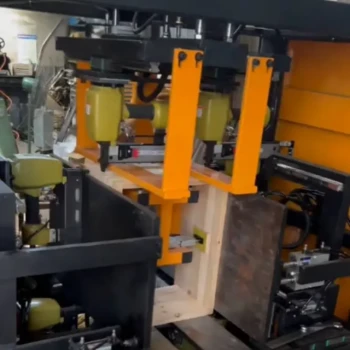
The primary function of standardized bee boxes is to serve as the essential hardware foundation for large-scale, industrial honey production. By providing a controlled artificial environment, these boxes protect colonies from environmental disturbances and enable efficient, mobile daily management compared to traditional wild harvesting.
Standardized boxes transform beekeeping from a passive activity into a controllable industry by stabilizing the physical environment, preventing colony loss, and ensuring equipment interchangeability for mass operations.
The Shift from Wild Harvesting to Industrial Management
Creating a Controlled Environment
Standardized hives replace unpredictable natural habitats with a consistent, artificial structure. This protects the colony from external stressors, predators, and extreme weather conditions.
Stabilizing Production Yields
By offering a protected breeding space and thermal insulation, these boxes significantly reduce the likelihood of colonies absconding. This stability is critical for converting volatile wild harvesting into a predictable, annual commercial output.
Improving Colony Health
The structure provides a secure micro-climate that supports essential pollination activities and larval development. This physical protection is the first line of defense in maintaining high productivity across a commercial apiary.
The Mechanics of Efficiency and Mobility
Facilitating Mobile Beekeeping
The uniform design of these boxes allows for the efficient transportation of colonies to different geographic locations. This mobility is a requirement for professional pollination services and chasing seasonal blooms.
Streamlining Daily Operations
Standardization supports a modular design, typically featuring removable frames. This allows beekeepers to perform non-destructive inspections, efficiently extract honey, and conduct routine maintenance without dismantling the entire colony.
Enabling Interchangeability and Mechanization
Because the internal dimensions adhere to biological principles like "bee space," components are interchangeable across the entire operation. This uniformity permits the use of hive-making machinery and mechanized honey harvesting, which is impossible with traditional, random rearing methods.
Quantifying Apiary Data
Uniform specifications allow beekeepers to accurately record colony size and production capacity at specific locations. This converts dispersed sites into quantifiable spatial data, which is essential for ecological modeling and long-term resource planning.
Understanding the Operational Requirements
The Necessity of Precision
While standardization boosts efficiency, it relies heavily on precise manufacturing adhering to biological "bee space." Deviations in these dimensions can lead to cross-combing or propolization, negating the benefits of movable frames and complicating inspections.
The Shift to Intensive Management
Adopting standardized boxes implies a transition to intensive apiculture. Unlike passive wild collection, this hardware requires active, routine human intervention to maximize the benefits of the controlled environment.
Optimizing Your Apiary Strategy
To leverage standardized equipment effectively, align your usage with your specific operational goals:
- If your primary focus is large-scale production: Prioritize equipment interchangeability and mechanization to streamline harvesting and reduce labor costs per hive.
- If your primary focus is pollination services: Focus on the modularity and mobility aspects of the boxes to ensure safe, efficient transport between agricultural sites.
- If your primary focus is ecological research: Utilize the uniform specifications to generate consistent, quantifiable data regarding colony health and resource distribution.
Standardization is not just about the box itself; it is the strategic tool that allows you to scale biological processes into a reliable commercial enterprise.
Summary Table:
| Key Feature | Primary Function | Impact on Operations |
|---|---|---|
| Controlled Environment | Protects colony from external stressors | Stabilizes yields & prevents colony loss |
| Modular Design | Enables removable frames & inspections | Streamlines daily maintenance & harvesting |
| Uniformity | Ensures equipment interchangeability | Permits use of hive-making & honey machinery |
| Mobility | Facilitates colony transportation | Essential for pollination services & seasonal blooms |
| Data Standardization | Quantifies colony size & output | Allows for precise spatial planning & modeling |
Scale Your Commercial Apiary with HONESTBEE
Transitioning to industrial-scale apiculture requires more than just boxes; it requires precision-engineered solutions. At HONESTBEE, we specialize in supporting commercial apiaries and distributors by providing a comprehensive wholesale ecosystem.
Our portfolio includes:
- Precision Machinery: Hive-making and honey-filling machines to automate your production line.
- Durable Hardware: Standardized beekeeping tools and equipment built to biological "bee space" specifications.
- Essential Consumables: A wide array of supplies to keep your colonies productive.
- Cultural Merchandise: Unique honey-themed products to expand your brand's reach.
Ready to enhance your operational efficiency and maximize yields? Contact HONESTBEE today to discover how our wholesale offerings can empower your business growth.
References
- Ramashrit Singh. CURRENT HONEY MARKET IN INDIA - VOLUME AND VALUE. DOI: 10.47070/ijapr.v9i8.2050
This article is also based on technical information from HonestBee Knowledge Base .
Related Products
- Plastic Transporting Bee Packages and Nuc Boxes for Beekeeping
- JZBZ Style Professional Battery Box with 20 Shipping Cages
- Metal Bee Hive Stand Bee Box Stand for Beekeeping
- Portable Bee Mating Hive Boxes Mini Mating Nucs 8 Frames for Queen Rearing
- 5 Frame Wooden Nuc Box for Beekeeping
People Also Ask
- What role do bee package boxes play in the commercial transport and expansion of honeybee colonies? - Logistic Essentials
- What are beekeeping boxes called? A Guide to Hive Bodies and Box Types
- How do standardized bee packages serve as a recovery mechanism for commercial beekeeping? Ensure Business Continuity
- What is the commercial value of using standardized bee packages? Drive Scalability in Large-Scale Apiaries
- Why is the timely introduction of high-quality bee packages critical? Save Your Apiary from Asian Hornet Invasions