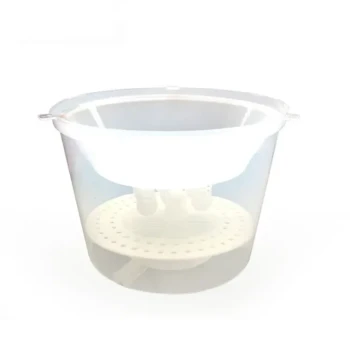
Specialized Pollen Traps are precision mechanical devices installed at the entrance or base of a beehive to intercept and harvest pollen from returning foragers. These devices function by forcing bees to pass through specific grids or screens that mechanically strip pollen pellets from the baskets on their hind legs, depositing the material into a secure collection tray.
These devices serve a dual mandate: they provide the standard hardware for commercial pollen harvesting and offer a controlled environment for researchers to study the impacts of physical intervention and pathogen transmission within the colony.
Mechanisms and Commercial Utility
The Physical Barrier Method
The core mechanism of action is the mechanical dislodgment of pollen. Whether mounted at the entrance or on the bottom board, the trap positions a mesh or grid directly in the bees' flight path.
As foragers squeeze through these restricted openings, the friction brushes the pollen loads off their legs. The spacing is calibrated to allow the bee to pass while detaching the payload.
Commercial Production Standards
For commercial operations, these traps are the industry standard for high-volume pollen acquisition. They allow for the efficient, non-destructive collection of raw materials.
Beekeepers use this harvested pollen to create commercial products for human consumption. Alternatively, it is stored and fed back to the hives as a nutritional supplement during periods of protein scarcity.
The Role in Scientific Research
Studying Pathogen Transmission
Beyond harvesting, these traps are critical tools for investigating colony health and disease dynamics. The primary reference highlights their use in evaluating how physical interventions affect the hive.
Specifically, researchers use the traps to observe the effects of high-frequency contact among bees. This is essential for understanding the transmission vectors of pathogens, such as the Chronic Bee Paralysis Virus.
Nutritional and Environmental Analysis
Pollen traps enable systematic sampling of the environment surrounding the apiary. By collecting daily samples, scientists can analyze the protein value of the available forage.
This data provides insight into vegetation diversity and helps monitor the nutritional levels of the colony over time.
Understanding the Trade-offs
Impact of High-Frequency Contact
While traps are effective for collection, they introduce a distinct physical variable to the hive environment. The primary reference notes that the traps force high-frequency contact at the entrance.
This increased physical interaction is not just a collection method but a stressor that must be accounted for, as it can influence colony health and disease spread.
Nutritional Balancing
The mechanism works by removing the colony's incoming protein source. Continuous use without monitoring can lead to nutritional deficits within the hive.
Operators must balance the duration of trapping with the colony's immediate need for food to ensure the "non-destructive" acquisition remains truly harmless.
Making the Right Choice for Your Goal
Whether you are managing a commercial apiary or conducting biological research, the application of these traps varies by intent.
- If your primary focus is Commercial Production: Prioritize traps with high-capacity bottom-mounted collection drawers to maximize yield for sale or supplemental feed storage.
- If your primary focus is Apicultural Research: Use the trap to control and measure physical contact rates to study the correlation between entrance congestion and pathogen transmission (like Chronic Bee Paralysis Virus).
- If your primary focus is Environmental Monitoring: Deploy standard traps for short intervals to systematically sample vegetation diversity and analyze pollen protein content without depleting the colony.
By controlling the hive entrance, you gain the ability to measure the environment outside and influence the health dynamics inside.
Summary Table:
| Feature | Commercial Purpose | Research Application |
|---|---|---|
| Mechanism | High-volume pollen harvesting for sale/feed | Controlled physical intervention & contact study |
| Key Benefit | Efficient, non-destructive protein collection | Monitoring pathogen transmission (e.g., CBPV) |
| Data Output | Total weight & yield per colony | Nutritional analysis & vegetation diversity |
| Design Type | High-capacity bottom-mounted drawers | Entrance-restricted grids for contact frequency |
Maximize Your Apiary’s Potential with HONESTBEE
Are you looking to scale your commercial pollen production or enhance your apicultural research capabilities? HONESTBEE specializes in serving commercial apiaries and distributors with a full spectrum of professional beekeeping tools. From high-capacity pollen traps to advanced honey-filling machines and hive-making hardware, we provide the industrial-grade equipment you need to succeed.
Why partner with HONESTBEE?
- Comprehensive Wholesale Offering: A one-stop shop for machinery, hardware, and essential consumables.
- Built for Professionals: Our equipment is designed for durability and precision in high-output environments.
- Industry Expertise: We understand the needs of large-scale operations and research institutions.
Take your beekeeping business to the next level. Contact our expert team today to discuss your wholesale requirements!
References
- Éric Dubois, Magali Ribière-Chabert. Effect of pollen traps on the relapse of chronic bee paralysis virus in honeybee (Apis mellifera) colonies. DOI: 10.1007/s13592-017-0547-x
This article is also based on technical information from HonestBee Knowledge Base .
Related Products
- Removable Plastic Pollen Trap With Ventilated Tray for Bees Pollen Collector
- 30 cm Plastic Entrance Hole Bee Pollen Trap and Collector
- Plastic Bee Pollen Trap Strips Comb Catcher Collector
- High-Efficiency Diamond Maze Bee Escape for Clearing Supers
- Professional Bucket Style Wasp and Moth Pheromone Trap
People Also Ask
- What are the design principles and advantages of pollen traps in the collection of bee pollen? Boost Your Apiary Yield
- What is the function of professional pollen traps in evaluating honey plants? Quantifying Pollination and Crop Potential
- What functions do pollen traps serve for bee bread production? Optimize Your Raw Material Collection
- What maintenance and pest prevention measures should be taken for pollen traps? Protect Your Hive and Harvest Quality
- How does the use of pollen traps in honeybee hives enhance crop fertilization? Boost Your Yield Through Induced Activity