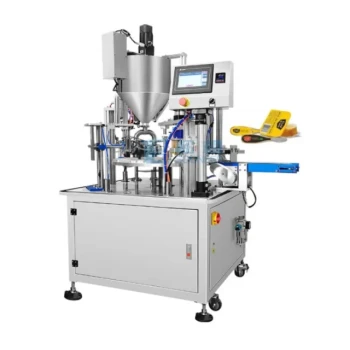
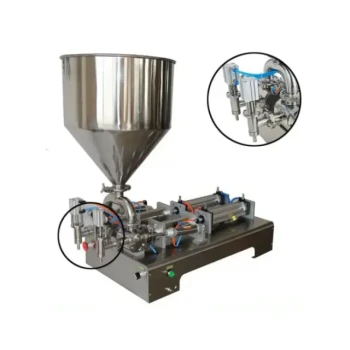
Industrial honey filling machines are the essential bridge between raw apiary production and the global retail market. These machines automate the precise dispensing of honey into containers, ensuring that every unit meets strict regulatory and commercial weight standards. By replacing manual processes with high-speed, hygienic automation, they enable honey to be treated as a consistent, scalable commodity rather than a variable agricultural byproduct.
Core Takeaway: Industrial filling machines serve as the critical infrastructure for honey commercialization by standardizing product weight, ensuring biological safety through closed-system dispensing, and providing the scalability required for high-volume distribution and wholesale fulfillment.
Standardizing Product for Global Distribution
Achieving High-Precision Quantitative Control
Industrial-grade machines utilize high-precision piston pumps or advanced weighing systems to ensure each container has a consistent volume. For distributors, this precision is vital to meet international trade weights and measures regulations, preventing costly legal discrepancies.
Ensuring Brand Consistency
Uniformity is the foundation of brand trust in the B2B sector. Automated filling ensures that every jar on a pallet is identical, which enhances brand credibility and market competitiveness when honey is placed alongside synthetic or imported alternatives.
Transforming Raw Materials into Commodities
Without industrial filling, honey remains a raw material with high variability. These machines facilitate the transition to a market-ready commodity, allowing wholesalers to move large volumes through supply chains with predictable specifications and packaging quality.
Safeguarding Purity and Product Integrity
Preventing Secondary Contamination
Commercial honey must meet rigorous food safety standards. Industrial filling machines operate in a fully enclosed environment, which effectively shields the product from external impurities, dust, and environmental pathogens during the bottling phase.
Preserving Natural Biological Activities
Quality honey often contains sensitive antibacterial and moisturizing properties. Professional machinery uses precise pressure and temperature control to move the honey without degrading the active ingredients or natural enzymes derived from medicinal nectar plants.
Extending Shelf Life through Hygiene
By maintaining a sterile and automated workflow, these machines minimize the risk of spoilage and fermentation. This process is essential for improving product shelf life, a critical factor for distributors who manage long-distance shipping and extended warehousing.
Scaling Production for High-Volume Fulfillment
Transitioning from Manual to Automated Systems
For beekeeping operations looking to enter the commercial tier, automation is the only path to scale. Industrial filling machines significantly increase production efficiency, allowing a facility to process thousands of units per hour compared to the limited output of manual labor.
Meeting Rapid Response Requirements
In the B2B world, the ability to fulfill large orders quickly is a competitive advantage. Sophisticated filling lines enable ultra-fast delivery and efficient order fulfillment, ensuring that resellers can maintain stock levels even during peak seasonal demand.
One-Stop Sourcing and Integration
Modern filling machines are often part of a comprehensive full-spectrum portfolio of processing equipment. Integrating filling with capping and labeling creates a streamlined "one-stop" production line that minimizes downtime and simplifies technical maintenance for the operator.
Understanding the Trade-offs
The Challenge of High Viscosity
Honey is a non-Newtonian fluid with high viscosity that changes significantly with temperature. Operators must balance heating for flowability against the risk of heat damage to the honey’s flavor profile and nutritional value.
Capital Investment vs. Operational Scale
The initial cost of industrial-grade machinery is substantial. While it lowers the per-unit cost over time, it requires a guaranteed throughput volume to justify the investment, making it more suitable for established wholesalers than boutique producers.
Maintenance and Technical Complexity
Automated systems require specialized knowledge to calibrate and clean. Frequent sanitization cycles are mandatory to prevent sugar crystallization within the pumps, which can lead to mechanical failure or inaccurate filling volumes if not managed correctly.
Strategic Recommendations for Your Business Goal
How to Apply This to Your Project
Whether you are a distributor vetting suppliers or a wholesaler investing in your own facility, your choice of machinery must align with your specific commercial objectives.
- If your primary focus is entering the medical or premium sector: Prioritize machines with high-precision quantitative control and sterile, closed-loop systems to preserve delicate active ingredients.
- If your primary focus is high-volume wholesale distribution: Invest in fully automated lines that emphasize speed, rapid response times, and integration with downstream labeling and palletizing systems.
- If your primary focus is supply chain reliability: Seek out equipment manufacturers known for deep professional industry expertise and robust technical support to minimize production downtime.
By integrating advanced filling technology, businesses can transform local apiary yields into standardized, safe, and highly competitive commercial assets for the global market.
Summary Table:
| Key Role | Technical Feature | Commercial Impact |
|---|---|---|
| Standardization | High-precision piston pumps | Global trade compliance & brand trust |
| Safety & Purity | Fully enclosed systems | Extended shelf life & biological integrity |
| Scalability | High-speed automated lines | Rapid order fulfillment & high-volume output |
| Integration | One-stop processing lines | Reduced downtime & simplified maintenance |
Elevate Your Honey Supply Chain with HONESTBEE
Are you a distributor or B2B reseller looking to scale your operations? HONESTBEE specializes in providing commercial apiaries and wholesalers with a comprehensive full-spectrum portfolio of beekeeping tools, honey-filling machinery, and essential consumables.
Why partner with us?
- One-Stop Sourcing: From specialized honey-filling machines to hive-making hardware and cultural merchandise.
- OEM/ODM Support: Tailored solutions to maximize your profit margins and brand presence.
- Reliable Fulfillment: Deep industry expertise combined with ultra-fast delivery and rapid response times.
Ready to transform your production efficiency? Contact our expert team today to discuss how our premium trading services can grow your business!
References
- José Luis Pantoja Terán, Jhovana Ckoso Mamani. PRODUCCIÓN Y COMERCIALIZACIÓN DE MIEL EN EL MUNICIPIO DE MONTEAGUDO. DOI: 10.56469/nt.v1i1.1248
This article is also based on technical information from HonestBee Knowledge Base .
Related Products
- Commercial Rotary Honey Filling Machine for Production
- Precision Durable Efficient HONESTBEE Rotary Honey Filling Machine
- Fully Automatic Honey Filling Packaging Machine for Processing Line
- Precision Automated Packaging Turntable Honey Spoon Filling Sealing Packing Machine
- Automatic Honey Filling and Filtering Machine for Beekeeping Bottle Filling
People Also Ask
- What role do commercial honey filling machines play in honey distribution? Scaling Efficiency and Quality Control
- What technical support do commercial-grade filling machines provide? Convert Honey NTFPs into Marketable Commodities
- What is the significance of specialized honey filling equipment? Scaling from Beekeeping to Commercial Success
- Why is professional honey filling machinery critical for honey production? Scale Your Apiary's Profit & Efficiency
- Why is high-capacity honey filling machinery necessary for Giant Honey Bees? Solve the Apis dorsata Volume Crisis