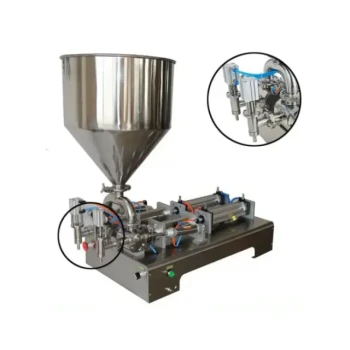
Honey-filling machines and automated processing equipment are the essential bridge between raw apiary production and global retail markets. These systems provide high-precision quantitative filling and standardized packaging that ensure rigorous hygiene, safety, and brand consistency. By automating the transition from bulk extraction to retail-ready goods, this equipment enables commercial operations to achieve the scale, speed, and professional compliance necessary for modern international distribution.
Automated processing equipment transforms raw agricultural yields into high-value commercial assets by ensuring precision, hygiene, and efficiency. For distributors and resellers, these machines represent the technical foundation for brand development and the primary driver of economic value in the modern honey supply chain.
Driving Economic Value Through Industrialization
Transitioning from Bulk to Retail Goods
Automated machinery allows beekeepers and distributors to transform bulk honey into standardized retail products through precise weighing, sealing, and labeling. This process converts primary agricultural yields into consumer goods, significantly increasing the added value of the product.
Maximizing Economies of Scale
High-quality hardware is the core requirement for achieving economies of scale in commercial beekeeping. These machines allow for the rapid processing of high-yielding honeybee colonies, ensuring that biological assets are efficiently converted into industrial products without bottlenecks.
Supporting Brand Development
Standardized packaging production lines provide the technical foundation for brand identity in a competitive marketplace. Consistent filling levels and professional sealing enhance market competitiveness, allowing distributors to meet the growing demand for premium, branded honey products.
Ensuring Quality and Global Compliance
Preserving Product Integrity
Automated systems use precision metering and physical filtration to ensure that the natural biological activity of honey is preserved during packaging. This technological precision protects the enzyme content and nutritional profile that premium buyers demand.
Meeting International Hygiene Standards
Modern filling machines operate in closed environments to prevent secondary contamination. This guarantees that final products meet stringent food safety standards and market requirements for export and large-scale commercial distribution.
Precision and Standardization
High-precision metering pumps ensure rapid and consistent filling, which is critical for meeting regulatory requirements regarding net weight. This standardization reduces product waste and ensures that every unit in a shipment meets exact specifications.
Optimizing the Distribution Supply Chain
Accelerating Market Fulfillment
Automated equipment significantly increases the efficiency of moving honey from the production site to the marketplace. For distributors, this results in ultra-fast delivery and more efficient order fulfillment, allowing for rapid response to shifting market demands.
Strengthening One-Stop Sourcing
A comprehensive equipment portfolio—ranging from precision filtration to standardized packaging—enables a one-stop sourcing model. Resellers can rely on a full-spectrum product line to provide end-to-end solutions for their clients, from extraction to retail.
Leveraging Logistics Advantages
Standardized packaging created by automated lines is easier to palletize and ship. This creates logistics advantages that accelerate the distribution of bee products into the global marketplace, reducing transit risks and costs.
Understanding the Trade-offs and Pitfalls
Capital Investment vs. Operational Scale
The primary trade-off for implementing automated equipment is the significant initial capital expenditure. While these machines reduce long-term labor costs and increase output, they require a specific volume of production to justify the investment and ensure a positive ROI.
Technical Expertise and Maintenance
Automated systems demand a higher level of technical expertise for operation and routine maintenance. Without a dedicated support structure or local technical knowledge, equipment downtime can halt the entire supply chain, negating the efficiency gains of automation.
Flexibility Limitations
High-speed automated lines are often optimized for specific bottle shapes or sizes. Switching between different packaging formats can be time-consuming, potentially reducing the agility of smaller operations that deal with diverse, niche product lines.
Strategic Recommendations for Distributors and Resellers
How to Apply This to Your Portfolio
- If your primary focus is maximizing profit margins: Prioritize equipment that offers high-precision metering and automated labeling to maximize the added value of retail-ready units.
- If your primary focus is rapid market expansion: Invest in high-capacity automated filling lines that support large-scale standardized production and fast logistics fulfillment.
- If your primary focus is premium quality and compliance: Select machines with closed-system processing and advanced filtration to ensure the highest hygiene standards and preservation of biological activity.
By integrating advanced automation into the beekeeping value chain, distributors can transform raw production into a sophisticated, high-growth commercial enterprise.
Summary Table:
| Key Benefit | Strategic Impact | Business Value |
|---|---|---|
| Value Addition | Bulk to retail transformation | Higher profit margins & brand equity |
| Standardization | High-precision filling & sealing | Global compliance & reduced product waste |
| Supply Chain | Accelerated order fulfillment | Ultra-fast delivery & logistics efficiency |
| Hygiene Control | Closed-system processing | Guaranteed food safety & export readiness |
Scale Your Honey Distribution with HONESTBEE
At HONESTBEE, we empower commercial apiaries and distributors with a one-stop sourcing solution for the entire beekeeping value chain. From high-precision honey-filling machines to hive-making hardware and essential industry consumables, our full-spectrum portfolio is designed for rapid growth.
Why partner with us?
- Deep Industry Expertise: Specialized machinery tailored for high-volume B2B operations.
- Supply Reliability: Consistent fulfillment to maintain your profit margins.
- Global Logistics: Efficient order processing and ultra-fast delivery times.
Ready to enhance your portfolio with premium beekeeping equipment and professional OEM/ODM support?
References
- Yator Caroline Jemase, Lilian Chesikaw. Nexus between Land Tenure and Women Participation in Bee Keeping in Baringo South Sub-County, Baringo County. DOI: 10.21275/sr21406235704
This article is also based on technical information from HonestBee Knowledge Base .
Related Products
- Precision Durable Efficient HONESTBEE Rotary Honey Filling Machine
- Economy Small Honey Filling Machine Honey Bottle Filler Packaging Machine
- Fully Automatic Honey Filling Packaging Machine for Processing Line
- Commercial Rotary Honey Filling Machine for Production
- Semi Automatic Small Honey Bottle Filling Machine Honey Filler
People Also Ask
- What is a key feature of the new generation of the honey filling machine? The Advanced Electronic Control Unit
- What are the common types of bottling machines used for honey? Choosing the Right Solution for Your Apiary
- How do high-precision honey filling machines ensure quality? Optimize Your Commercial Production with HONESTBEE
- How do honey filling machines work? Achieve Precision & Speed for Your Apiary
- How do honey filling and processing machines aid native bee product conservation? Boost Value with HONESTBEE Technology