Structural integrity in masonry niches like bee boles depends entirely on effective load distribution. By utilizing sill and lintel stones that extend beyond the width of the opening, builders ensure that vertical pressure is diverted away from the void and onto the solid side walls. This design prevents localized stress that would otherwise lead to structural deformation or the eventual collapse of the niche.
The use of oversized sill and lintel stones creates a structural "bridge" that transfers gravitational weight into the surrounding masonry, ensuring the long-term stability and safety of the bee bole installation.
Engineering Load Distribution in Bee Boles
Diverting Gravitational Weight
The primary purpose of a wider lintel and sill is to act as a weight-bearing bridge for the masonry above. By extending into the adjacent wall, these stones move the weight of the structure away from the empty space of the bee bole.
This transfer of force ensures that the vertical load is supported by the solid side walls, rather than placing direct pressure on the air-filled niche. This is a fundamental principle of durable masonry construction.
Preventing Localized Stress Concentrations
Without wider stones, the corners of the bee bole opening become "stress points" where pressure is highest. Over time, this concentrated weight can cause the surrounding stones to crack or shift.
Using oversized components allows for even pressure distribution across a larger surface area. This prevents the "pinching" effect that causes rectangular openings to bow or warp under the weight of the primary wall.
The Commercial Value of Technical Specification
Ensuring Professional Grade Quality
For distributors and resellers, understanding these structural nuances is essential for identifying high-quality masonry products. Sourcing components that meet these specific dimensions ensures your clients receive materials that are fit for purpose.
Our deep professional industry expertise ensures that every product in our portfolio is vetted for these critical engineering standards. This commitment to quality minimizes product failure and enhances your reputation as a reliable supplier.
Optimizing Maintenance and Durability
Structural failures in niche construction often lead to costly repairs and liability issues. By prioritizing correctly sized lintels and sills, you offer a solution that maximizes the aesthetic and functional longevity of the masonry.
Providing components that are engineered for stability allows for a "set and forget" installation. This reliability is a key selling point for B2B partners who value efficient order fulfillment and long-term performance.
Common Pitfalls to Avoid
Undersized Lintel Selection
A common mistake is using a lintel that is exactly the same width as the opening. This fails to provide an "anchor" into the side walls, which can lead to the stone snapping under the weight of the masonry above.
Neglecting Material Thickness
Even a wider stone can fail if it lacks the necessary thickness to resist shear forces. Distributors must ensure that the depth and thickness of the stone are proportional to the weight of the wall it is expected to support.
Making the Right Choice for Your Goal
When selecting masonry components for bee boles or similar niches, your sourcing strategy should align with the specific needs of your project or client base.
- If your primary focus is Structural Longevity: Prioritize lintels and sills that extend at least 10-15cm beyond the opening on each side to ensure maximum load transfer.
- If your primary focus is Supply Chain Efficiency: Leverage our one-stop sourcing capabilities to acquire pre-sized, standardized stones that meet professional engineering requirements without the need for custom cutting.
- If your primary focus is Rapid Response: Utilize our ultra-fast delivery services to secure high-specification structural components for time-sensitive construction projects.
By prioritizing correctly engineered stones, you ensure that every bee bole installation remains a testament to professional craftsmanship and structural permanence.
Summary Table:
| Feature | Structural Function | Key Benefit | Recommended Extension |
|---|---|---|---|
| Lintel Stone | Acts as a weight-bearing bridge | Diverts vertical load to side walls | 10-15 cm per side |
| Sill Stone | Provides foundational support | Prevents stress at opening corners | 10-15 cm per side |
| Material Depth | Resists shear forces | Prevents snapping under heavy weight | Proportional to wall load |
Scale Your Business with HONESTBEE Professional Sourcing
At HONESTBEE, we empower distributors, wholesalers, and B2B resellers with a comprehensive, full-spectrum product portfolio—ranging from precision hive-making and honey-filling machines to essential beekeeping tools and industry consumables.
Why partner with us?
- Maximize Profit Margins: High-quality wholesale offerings with dedicated OEM/ODM support and certifications.
- Deep Industry Expertise: Our professional-grade equipment ensures long-term reliability and structural performance for your clients.
- Efficient Fulfillment: Benefit from our rapid response times and ultra-fast delivery to stay ahead of market demand.
Ready to enhance your inventory with premium beekeeping solutions? Contact our expert team today!
References
- Gene Kritsky. Bee Bole Architecture. DOI: 10.1080/0005772x.2010.11417346
This article is also based on technical information from HonestBee Knowledge Base .
Related Products
- Professional Beekeeper Suit with Square Folding Cotton Veil
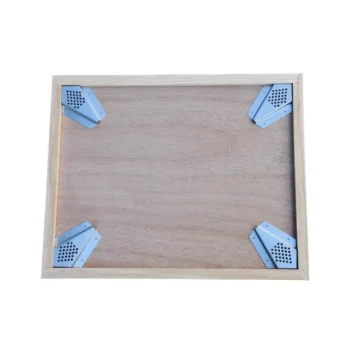
- HONESTBEE 4-Way Metal Corner Wooden Bee Escape Board
- Heavy-Duty Bee Smoker with Durable Plastic Bellows for Beekeeping
- Assembled Wooden Bee Frames with Beeswax Foundation Ready to Use by HONESTBEE
- Assembled Wooden Bee Frames with Plastic Foundation for Durability and Convenience by HONESTBEE
People Also Ask
- What material and design specifications are recommended for a high-quality beekeeper suit? Top Gear Selection Guide
- Why is mobility crucial when wearing a beekeeping suit? Essential Fit Guide for Optimal Safety and Performance
- When is it recommended to wear a beekeeping suit? Essential Safety Guide for Every Beekeeper
- How does climate influence the choice of a beekeeping suit? Stay Safe and Comfortable in Any Weather
- What are the preparatory steps before washing a beekeeping suit? Maintain Peak Safety and Durability