The use of natural wax cups is a specific biological trigger, not merely a structural choice. The technical necessity lies in the material’s ability to simulate the exact environment of a natural queen cell. Because natural wax offers high biocompatibility, it successfully deceives worker bees into accepting the artificial cups, inducing their innate instinct to secrete royal jelly. Without this specific material recognition, the colony would likely reject the cups, halting production.
Natural wax cups bridge the gap between artificial production and biological instinct. By offering high biocompatibility, these cups effectively "unlock" the worker bees' behavior, transforming a man-made frame into a recognized environment for large-scale royal jelly secretion.
The Mechanism of Biocompatibility
Simulating the Natural Environment
To a worker bee, the material of the cell is a critical signal. Artificial cups made from natural wax are designed to replicate the texture and chemical properties of the hive itself. This biocompatibility ensures the bees do not perceive the production frame as a foreign object.
Triggering the Rearing Instinct
The primary technical goal is to activate specific behaviors. Once the worker bees accept the wax cup as a genuine environment, their queen-rearing instincts are induced. This instinct is the biological "switch" that turns on the production of royal jelly.
Achieving Scale in Production
The Foundation for Mass Collection
Natural wax cups provide the necessary physical foundation for industrial-level yields. By standardizing these cups on a frame, producers can synchronize the colony’s behavior. This allows for the large-scale collection of jelly, as the bees are triggered to deposit it simultaneously across many cells.
Driving Active Secretion
The material choice directly impacts the volume of production. Because the bees are fully engaged by the natural wax, they actively secrete and deposit large quantities of jelly. A less compatible material would result in hesitation or refusal to fill the cups.
Critical Considerations for Material Selection
The Risk of Material Rejection
It is crucial to understand that bee behavior is binary in this context: they either accept the cup or they do not. If the material lacks the biocompatibility of natural wax, the bees will not perform the necessary work.
Dependence on Biological Feedback
The system relies entirely on the bees' voluntary response. You cannot force the secretion of royal jelly; you can only induce it. Therefore, the "technical" success of the equipment is entirely dependent on its biological acceptance.
Optimizing Your Production Frames
To ensure maximum yield, you must prioritize material authenticity in your equipment setup.
- If your primary focus is colony acceptance: Ensure your artificial cups are made of natural wax to maximize biocompatibility and prevent the bees from rejecting the frame.
- If your primary focus is production volume: Utilize these wax cups to trigger the strong queen-rearing instincts required for the bees to actively deposit large quantities of jelly.
By aligning your tools with the bees' natural instincts, you turn biological behavior into a reliable production process.
Summary Table:
| Feature | Technical Benefit | Impact on Production |
|---|---|---|
| Material | Natural Beeswax | Ensures high biocompatibility and hive acceptance |
| Biological Trigger | Simulates Queen Cell | Activates worker bees' innate queen-rearing instincts |
| Behavoiral Response | Active Secretion | Induces bees to deposit large volumes of royal jelly |
| Scalability | Standardized Frames | Enables synchronized, large-scale industrial collection |
Elevate Your Commercial Apiary with HONESTBEE
At HONESTBEE, we understand that successful royal jelly production relies on the perfect harmony between technology and honeybee biology. As a premier provider for commercial apiaries and distributors, we offer a comprehensive wholesale range of beekeeping tools, from specialized hardware like honey-filling machines to high-quality consumables designed for maximum colony acceptance.
Why partner with HONESTBEE?
- Full Spectrum Supply: Access everything from hive-making machinery to essential industry consumables.
- Industry Expertise: Our equipment is engineered to align with natural instincts, ensuring higher yields and operational efficiency.
- Global Distribution: We cater to large-scale operations and retailers with reliable, professional-grade solutions.
Ready to optimize your production and scale your business? Contact us today to explore our wholesale offerings!
References
- Kayke Almeida Gloria, Letícia Liandra de Souza Barbos. BEEKEEPING IN THE LEGAL AMAZON: ROYAL JELLY PRODUCTION IN ARAGUAÍNA-TO. DOI: 10.22533/at.ed.813432421037
This article is also based on technical information from HonestBee Knowledge Base .
Related Products
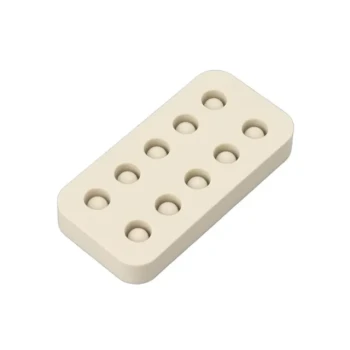
- 10-Cell Silicone Beeswax Bee Queen Cups Forming Mold
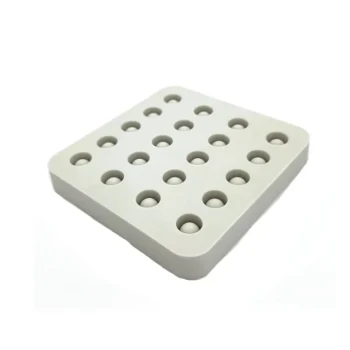
- High-Efficiency 20-Cell Silicone Mold for Beeswax Bee Queen Cup Production
- Clear Black Plain Polystyrene Queen Bee Grafting Cell Cups No Lug for Bee Queen Cup
- Brown Nicot Queen Cell Cups for Breeding Queen Bees Beekeeping
- Premium Nicot Style Cell Bar Holder and Queen Cell Cup Holder System
People Also Ask
- How do beeswax queen cell cups function? Optimize Queen Rearing with Biological Mimicry
- What is the biological function of beeswax queen cell cups? Boost Acceptance in Artificial Queen Rearing
- What role do specialized queen rearing tools play in developing mite-resistant honeybee stock? Master Genetic Selection
- What materials are used to make artificial queen cell cups for grafting? Beeswax vs. Plastic Guide
- What roles do specialized queen cell cups play in royal jelly production? Optimize Your Hive's Secretion and Yield