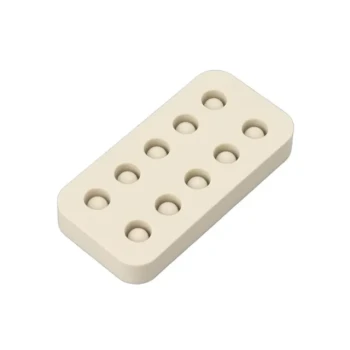
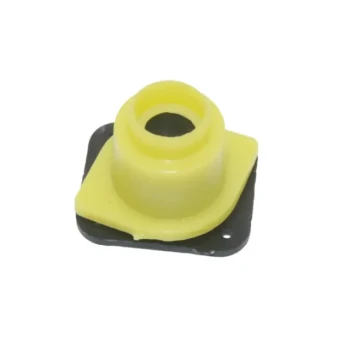
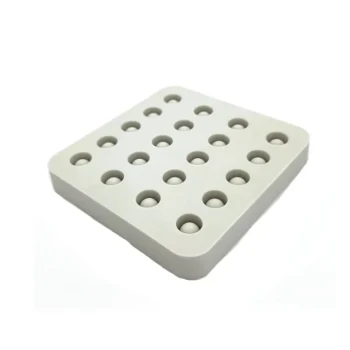
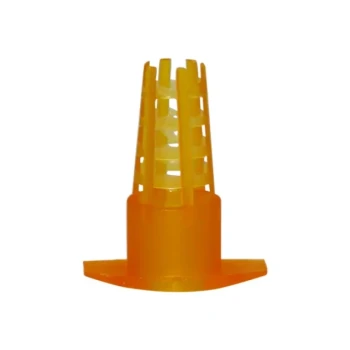
Specialized queen cell cups function as both biological triggers and precision engineering tools. By transferring larvae into these artificial cups, producers effectively simulate the environment of a natural queen cell, compelling worker bees to instinctively secrete voluminous amounts of royal jelly. Beyond their biological role, the standardized structure of these cups turns a variable natural process into a measurable workflow, allowing for precise yield weighing and the lossless extraction of the final product.
The core value of specialized queen cups lies in their dual ability to induce a biological instinct—the rearing of queens—and standardize the harvest, transforming a hive's complex behavior into a scalable production line.
The Mechanism of Biological Induction
Simulating the Natural Environment
The primary role of the queen cell cup is deception. When a larva of the appropriate age is grafted into the cup, the cup’s specific shape and orientation mimic a natural queen cell.
Triggering Instinctive Secretion
This simulation triggers an immediate biological response in nursing worker bees. They perceive the larva within the cup as a potential queen.
Volume Accumulation
Consequently, the workers shift their behavior to secrete large quantities of royal jelly into the cup. This volume is significantly higher than what is provided to standard worker larvae, creating a pool of harvestable product.
Engineering for Production Efficiency
Standardization for Measurement
Unlike natural wax cells, which vary in size and shape, specialized cups are manufactured to precise specifications. This uniformity allows producers to perform precise yield weighing, ensuring consistent data tracking per colony.
Lossless Extraction
The structural integrity of these cups is critical during the harvest phase. Their standardized design ensures that the jelly can be extracted—often by mechanical or semi-mechanical means—without leaving valuable residue behind.
Material Hygiene
Modern cups are typically made from food-grade plastics or acrylics. This protects the royal jelly from contamination and facilitates easier cleaning of the larvae and residue after extraction.
Understanding the Trade-offs
The Dimension Factor
Not all cups yield the same results. The specific dimensions and depth of the cup directly influence the secretion efficiency of the worker bees. If the dimensions deviate too far from the biological norm, acceptance rates by the hive will drop.
Material Acceptance
While plastic offers durability, it must be of high quality to ensure hive acceptance. Bees may reject cups that carry chemical odors or have textures that make it difficult to deposit wax and jelly, leading to wasted grafting effort.
Making the Right Choice for Your Goal
To optimize your royal jelly production, select your equipment based on your specific operational priorities:
- If your primary focus is Commercial Scalability: Prioritize standardized plastic cups compatible with mechanical extractors to maximize throughput and minimize labor during the collection phase.
- If your primary focus is Data and Breeding: Focus on cups with highly consistent weights and dimensions, allowing for the precise measurement of yield per colony to identify superior breeding stock.
Success in royal jelly production relies on using the cup not just as a container, but as a tool to precisely guide the biological instincts of the colony.
Summary Table:
| Feature | Biological Role | Engineering Benefit | Impact on Production |
|---|---|---|---|
| Standardized Shape | Mimics natural queen cells | Enables mechanical extraction | Increases consistency & throughput |
| Material Quality | Ensures hive acceptance | Prevents contamination | Higher success rates in grafting |
| Precise Dimensions | Triggers worker secretion | Allows accurate yield weighing | Optimized volume per cell |
| Structural Integrity | Protects developing larvae | Facilitates lossless harvest | Minimized waste of royal jelly |
Elevate Your Commercial Apiary with HONESTBEE
At HONESTBEE, we understand that precision is the difference between a hobby and a high-yield enterprise. Whether you are a large-scale commercial apiary or a global distributor, our comprehensive wholesale offering provides the specialized tools you need to master royal jelly production.
We supply everything from high-acceptance queen cell cups and precision grafting tools to advanced honey-filling and hive-making machinery. Our mission is to empower your business with a full spectrum of beekeeping hardware and essential industry consumables that drive efficiency and scalability.
Ready to scale your production? Contact us today to discuss our wholesale solutions and discover how HONESTBEE can streamline your operations from hive to harvest.
References
- S. El-Awady, Eman M. Saleh. COMPARATIVE STUDIES ON DIFFERENT HONEYBEE POLLEN TYPES AND THEIR EFFECT ON ROYAL JELLY PRODUCTION. DOI: 10.21608/jppp.2007.220596
This article is also based on technical information from HonestBee Knowledge Base .
Related Products
- Brown Nicot Queen Cell Cups for Breeding Queen Bees Beekeeping
- JZBZ Type Wide Base Plastic Queen Cell Cups for Base Mounting and Queen Rearing
- 10-Cell Silicone Beeswax Bee Queen Cups Forming Mold
- Clear Black Plain Polystyrene Queen Bee Grafting Cell Cups No Lug for Bee Queen Cup
- JZBZ Push-In Queen Cell Cups for Beekeeping
People Also Ask
- What role do specialized queen rearing tools play in developing mite-resistant honeybee stock? Master Genetic Selection
- What materials are used to make artificial queen cell cups for grafting? Beeswax vs. Plastic Guide
- How does the standardized depth of queen cell cups affect larval acceptance? Boost Success with 6mm Precision
- Why is a diluted royal jelly solution applied to queen cell cups? Boost Acceptance in Artificial Grafting
- What happens to the brown cell cups after the eggs hatch into larvae? The Critical Grafting Step for Queen Rearing