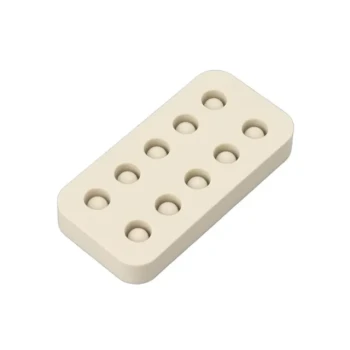
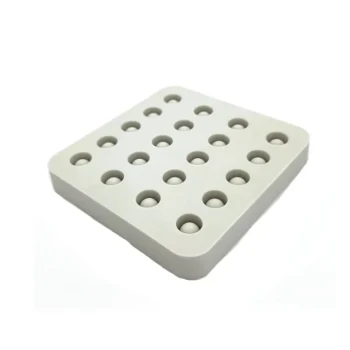
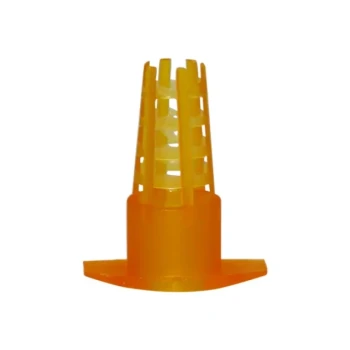
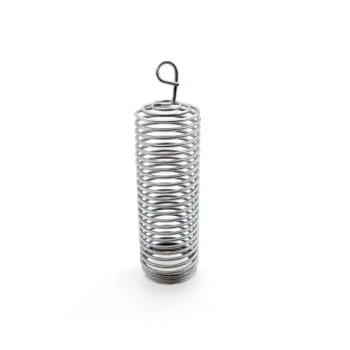
Specialized queen rearing tools act as the precision instruments of genetic selection. By utilizing devices such as artificial queen cell cups and grafting needles, beekeepers can physically isolate and propagate larvae that exhibit specific defense traits, such as cell recapping behavior. This moves mite management from a reactive chemical approach to a proactive biological strategy, allowing for the consistent development of stock that is naturally resistant to Varroa mites.
These tools do more than just produce new queens; they allow for the standardized replication of superior genetics. By controlling the rearing environment, breeders can solidify biological traits that disrupt the mite life cycle, reducing the long-term dependency on synthetic treatments.
The Mechanics of Genetic Selection
Targeting Specific Behaviors
The primary function of a grafting needle is to select larvae from colonies that demonstrate specific hygienic behaviors.
Traits like cell recapping—where bees detect and disrupt mites in capped brood—are genetic.
To expand this trait across an apiary, one must manually transfer these specific larvae into artificial cups to raise them as queens.
Facilitating Biological Control
Using these tools allows for the propagation of biological control strategies rather than chemical ones.
When you breed specifically for mite resistance, you are equipping the colony to manage the parasite load independently.
This systematic approach directly reduces the frequency and intensity of chemical interventions required to keep the hive alive.
Ensuring Consistency in Development
Standardizing the Environment
Professional rearing frames combined with artificial cups simulate the natural queen-rearing process but remove the chaos of nature.
They ensure that every experimental queen develops under identical conditions regarding age and nutrition.
Eliminating Variables for Analysis
To prove a stock is truly resistant, you must rule out other factors.
This technical approach eliminates variations in individual development that could otherwise look like virus susceptibility.
By ensuring sample backgrounds are consistent, breeders can rely on statistical analysis to confirm that resistance is genetic, not accidental.
Understanding the Trade-offs
The Learning Curve
While grafting needles and cell cups are powerful, they require significant manual dexterity and technical skill.
Successful grafting is a learned art form that requires excellent vision and steady hands.
Improper handling during this phase can damage the larvae, resulting in graft failure regardless of genetic potential.
Tools vs. Immediate Control
It is crucial to distinguish between long-term breeding tools and immediate control devices.
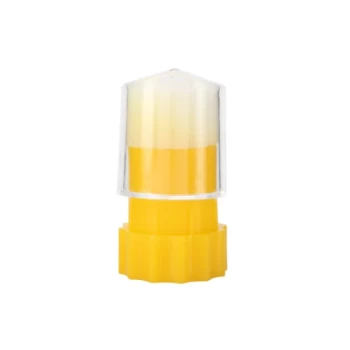
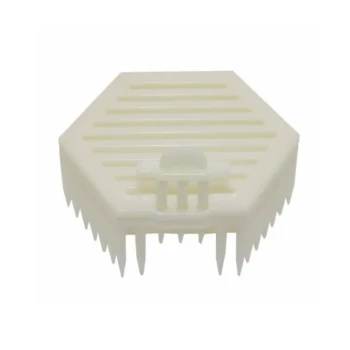
While cups and needles build long-term resistance, tools like queen cages are used for immediate mite interruption.
Queen cages restrict egg-laying to create a broodless period, forcing mites like Tropilaelaps or Varroa out of protection, but this is a management tactic, not a genetic solution.
Making the Right Choice for Your Goal
To select the correct equipment, you must define your timeline and objective.
- If your primary focus is long-term genetic resilience: You must utilize grafting needles and artificial cups to propagate traits like cell recapping and reduce chemical dependence.
- If your primary focus is immediate mite clearance: You should utilize queen cages to induce broodless periods, which exposes mites to treatment and interrupts their reproductive cycle.
Mastering these tools shifts your role from a keeper of bees to a manager of their evolution.
Summary Table:
| Tool Type | Primary Function | Breeding Objective | Outcome |
|---|---|---|---|
| Grafting Needles | Precise larvae transfer | Selection of hygienic traits | Propagation of superior genetics |
| Queen Cell Cups | Controlled rearing environment | Standardized queen production | Uniform development & trait consistency |
| Queen Cages | Temporary egg-laying restriction | Immediate mite interruption | Broodless period for pest management |
| Rearing Frames | Scaling production | Large-scale stock development | Consistent colony-wide resistance |
Elevate Your Apiary's Genetic Resilience with HONESTBEE
Transition from reactive pest management to proactive biological resistance. HONESTBEE specializes in supporting commercial apiaries and distributors with high-quality, professional-grade beekeeping tools and machinery. Whether you are scaling your breeding program with precision grafting needles and cell cups or streamlining production with our hive-making and honey-filling machines, we provide the comprehensive wholesale solutions you need.
Partner with us to supply your operation with essential industry consumables and specialized hardware designed for the modern breeder. Contact HONESTBEE today to discuss our wholesale offerings and see how we can help you develop the next generation of mite-resistant honeybee stock.
References
- Robert Brodschneider. Varroa Survival and Control Revisited. DOI: 10.1080/0005772x.2021.1910771
This article is also based on technical information from HonestBee Knowledge Base .
Related Products
- Brown Nicot Queen Cell Cups for Breeding Queen Bees Beekeeping
- JZBZ Type Wide Base Plastic Queen Cell Cups for Base Mounting and Queen Rearing
- Clear Black Plain Polystyrene Queen Bee Grafting Cell Cups No Lug for Bee Queen Cup
- 10-Cell Silicone Beeswax Bee Queen Cups Forming Mold
- JZBZ Push-In Queen Cell Cups for Beekeeping
People Also Ask
- What materials are used to make artificial queen cell cups for grafting? Beeswax vs. Plastic Guide
- What roles do specialized queen cell cups play in royal jelly production? Optimize Your Hive's Secretion and Yield
- How does the standardized depth of queen cell cups affect larval acceptance? Boost Success with 6mm Precision
- Why is a diluted royal jelly solution applied to queen cell cups? Boost Acceptance in Artificial Grafting
- What happens to the brown cell cups after the eggs hatch into larvae? The Critical Grafting Step for Queen Rearing