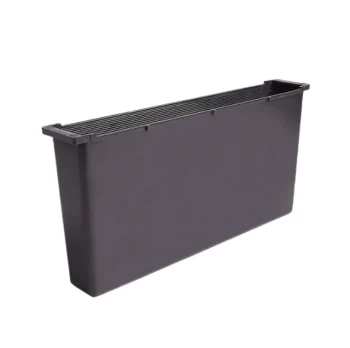
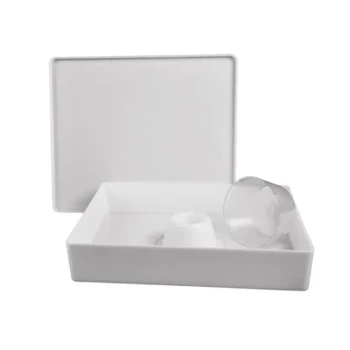
The inclusion of disinfected support structures within a feeding box is a technical necessity designed to maximize the effective attachment area for bees. By providing these physical "landing strips," beekeepers ensure that a larger population of bees can access the food source simultaneously without overcrowding. This orderly distribution minimizes friction between individual bees and provides a vital takeoff platform, significantly increasing the overall foraging efficiency and safety of the colony.
Core Takeaway: Support structures serve as essential biological traffic management tools that prevent bee mortality through drowning and optimize the speed of nutrient uptake by providing a stable, high-capacity feeding environment.
Optimizing Biological Traffic and Intake Speed
Expanding the Effective Attachment Area
Inside a standard liquid feeder, surface area is the primary limiting factor for feeding capacity. Support structures like wooden strips or rods artificially increase the available "standing room" for the colony.
This allows hundreds of bees to feed in parallel rather than competing for space along the narrow perimeter of the container. Increased surface area directly correlates to faster depletion of the feed, which is critical during high-stress dearth periods.
Reducing Colony Friction and Stress
Without internal supports, bees often pile on top of one another, leading to heat stress and physical exhaustion. Orderly distribution, facilitated by these rods, ensures that bees can enter and exit the feeding zone without colliding.
By reducing physical contact and friction, the colony maintains a lower stress level during supplemental feeding. This organized movement prevents the chaotic "clumping" behavior that often leads to accidental drowning in heavy syrups.
Safety and Mobility Enhancement
Providing a Reliable Takeoff Platform
A bee's ability to transition from a liquid food source back into flight is a high-energy movement. Support structures act as a dry, stable platform that allows bees to gain the necessary traction for takeoff.
This mobility is essential for maintaining a high turnover rate at the feeder. When bees can depart quickly after satiation, they make room for the next wave of foragers, maximizing the feeder’s throughput.
Maintaining Hygienic Standards Through Disinfection
The requirement for these structures to be disinfected is non-negotiable for maintaining hive health. Pathogens can easily spread through shared feeding sites, making the sterility of internal components a critical safety metric.
Using treated or sterilized materials prevents the introduction of mold, fungi, or bacteria into the syrup. Clean supports ensure that the nutritional supplement remains a benefit to the colony rather than a vector for disease.
Understanding the Trade-offs
The Risk of Volume Displacement
While more supports increase safety, they also displace the volume of liquid feed available in the box. Distributors must balance the density of internal structures with the total capacity of the feeder to ensure long-term utility.
Material Durability and Maintenance
Wooden strips are excellent for grip but can be difficult to fully sterilize compared to textured plastic rods. The trade-off lies between the superior "foot-feel" of natural wood and the long-term durability and ease-of-cleaning provided by synthetic alternatives.
Selecting the Right Equipment for Your Portfolio
As a distributor or wholesaler, your reputation rests on the efficacy of the tools you provide. Deep professional industry expertise reveals that the most successful feeding systems are those that prioritize bee safety and foraging logic over simple container volume.
- If your primary focus is high-volume commercial operations: Prioritize feeders with integrated, easy-to-clean synthetic rods that offer rapid response and ultra-fast delivery options for large-scale deployments.
- If your primary focus is premium, hobbyist-grade equipment: Stock feeding boxes that include high-quality, pre-disinfected wooden supports to appeal to customers seeking natural materials and superior bee attachment.
- If your primary focus is maintaining colony health during dearths: Select specialized top-feeders that combine support structures with spill-proof designs to prevent robbing behavior and hive contamination.
By offering products that incorporate these technical design principles, you empower your customers to maintain stronger, more efficient colonies through superior nutritional management.
Summary Table:
| Feature | Technical Purpose | Impact on Colony |
|---|---|---|
| Increased Surface Area | Provides more "standing room" for bees | Enables simultaneous feeding and faster nutrient uptake |
| Takeoff Platform | Offers a dry, stable grip for flight transition | Reduces physical exhaustion and speeds up feeder turnover |
| Disinfected Materials | Eliminates pathogens (mold, fungi, bacteria) | Prevents disease transmission at shared feeding sites |
| Traffic Management | Reduces physical clumping and friction | Lowers colony stress and prevents accidental drowning |
| Material Selection | Balances grip (wood) vs. hygiene (plastic) | Ensures long-term durability and equipment maintenance |
Elevate Your Wholesale Inventory with HONESTBEE
Partner with HONESTBEE to provide your customers with technically superior beekeeping solutions. We cater specifically to commercial apiaries, distributors, and B2B resellers, offering a comprehensive one-stop sourcing experience for the entire beekeeping lifecycle.
Why Choose HONESTBEE for Your Supply Chain?
- Full-Spectrum Portfolio: From specialized hive-making and honey-filling machinery to essential consumables and feeding systems.
- Unmatched Efficiency: Benefit from our ultra-fast delivery, rapid response times, and efficient order fulfillment to keep your shelves stocked.
- Deep Industry Expertise: Our products are designed with biological logic to ensure high performance and reliability in the field.
- Support for Growth: We offer competitive wholesale margins and dedicated customer service to help you scale your business.
Ready to optimize your product offering? Contact our professional team today to discuss wholesale pricing and customized equipment solutions.
References
- Naznin Sultana, Md. Mashiur Rahman. Evaluating the efficiency of supplementary feeding as a management strategy for enhancing honeybee (Apis mellifera L.) colony growth and productivity. DOI: 10.3389/frbee.2024.1386799
This article is also based on technical information from HonestBee Knowledge Base .
Related Products
- Metal Bee Hive Stand Bee Box Stand for Beekeeping
- Australian Langstroth Beehive Boxes for Beekeeping Wholesales
- Professional In-Hive Bee Feeder HONESTBEE Frame for Beekeeping
- HONESTBEE Professional Hive Top Bee Feeder Feeding Solution
People Also Ask
- What height should a bee hive stand be? Optimize for Your Back and Hive Health
- What are the potential risks of plastic bee hive stands? Avoid Structural Failure in Your Apiary
- What are the essential technical specifications for a high-quality bee hive stand? Maximize Stability and Hive Safety
- What are the benefits of elevating a bee hive with a stand or base? Protect Your Colony and Your Back
- Why are specialized beehive stands or protective barriers necessary for pest management in apiaries? Secure Your Colony