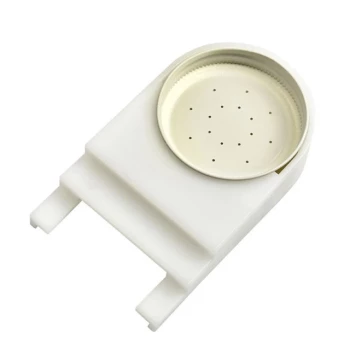
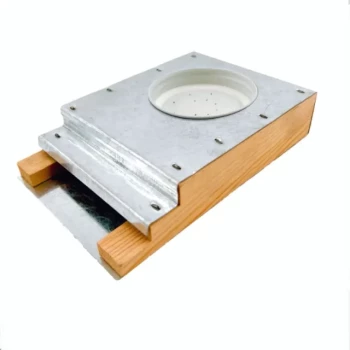
The technical utility of a hive-top feeder lies in its ability to administer high-volume liquid treatments while isolating the colony from external environmental stress. By positioning the delivery system above the brood chamber, it allows for the continuous ingestion of probiotic or prebiotic syrups without necessitating the frequent, disruptive opening of the hive body.
Core Takeaway In field-scale trials, the hive-top feeder is essential for decoupling dosage delivery from hive disturbance. It allows researchers to maintain a stable therapeutic baseline over extended periods while preserving the critical experimental variables of internal temperature and humidity.
Preserving Hive Homeostasis
Mitigating Environmental Shock
Field trials often fail when the act of measuring or dosing alters the subject's behavior or health. Opening a hive box to administer treatments disrupts the colony’s tightly controlled internal climate.
This disruption causes fluctuations in temperature and humidity, which can stress the bees and skew trial data. A hive-top feeder eliminates this variable by allowing access to the colony without exposing the brood nest to the elements.
Reducing Physical Disturbance
Beyond climate control, minimizing physical intrusion is critical for accurate data.
By feeding from the top, the colony is not agitated by smoke or frame manipulation. This ensures that the biological responses observed are due to the probiotic or prebiotic treatment, not stress from the intervention itself.
Ensuring Consistent Therapeutic Dosage
High-Volume Capacity
Field-scale trials often require sustained exposure to a treatment to measure efficacy. Hive-top feeders are designed to accommodate large volumes, typically up to 2 liters of liquid.
This capacity is technically significant because it reduces the labor frequency required to refill the treatment. It ensures the colony has access to the solution for a longer duration between maintenance visits.
Continuous Availability
Effective probiotic or prebiotic uptake requires that the solution be available when the bees are ready to consume it.
Because the feeder is accessible directly from the brood chamber, bees can consume the pre-mixed treatment at their own pace. This creates a continuous and stable therapeutic dose, rather than a "pulse" dose that might occur with smaller, rapid-consumption methods.
Understanding the Methodological Trade-offs
Liquid vs. Solid Delivery Constraints
While the hive-top feeder excels at delivering syrups, it limits the researcher to liquid-soluble treatments.
The utility described relies entirely on pre-mixed syrups. If a probiotic formulation is not stable in a sugar syrup solution, or requires a solid substrate (pollen patty), this equipment is technically unsuitable despite its volume benefits.
Dependence on Colony Positioning
The feeder's effectiveness relies on the bees' ability to move upward from the brood chamber.
While the text notes this allows consumption "without leaving the brood chamber," it assumes the cluster is strong enough and positioned correctly to access the top of the hive. In extreme cold or with weak colonies, the distance to the feeder can arguably become a limiting factor compared to direct frame application.
Making the Right Choice for Your Goal
When designing your field trial, the choice of feeder determines the integrity of your data.
- If your primary focus is Environmental Control: Choose the hive-top feeder to strictly limit the frequency of opening the hive box, thereby preserving temperature and humidity data.
- If your primary focus is Dosage Stability: Use this feeder to ensure a continuous, high-volume supply (up to 2L) that creates a steady therapeutic baseline over time.
Ultimately, the hive-top feeder is the superior technical choice when the stability of the hive environment is just as critical as the delivery of the treatment itself.
Summary Table:
| Technical Feature | Benefit for Field Trials | Impact on Data Quality |
|---|---|---|
| High-Volume Capacity | Supports up to 2L of treatment | Ensures stable therapeutic baseline |
| Top-Entry Access | No need to open the brood chamber | Preserves internal temperature & humidity |
| Minimal Disturbance | Reduces colony agitation/smoke use | Eliminates stress-induced data skew |
| Continuous Supply | Liquid-soluble syrup availability | Facilitates natural uptake rates |
Scaling Your Apiary Research with HONESTBEE
Maximize your field-trial accuracy and hive productivity with premium equipment from HONESTBEE. As a dedicated partner to commercial apiaries and distributors, we provide a comprehensive wholesale range, including high-capacity feeders, specialized hive-making machinery, and precision honey-filling systems.
Whether you are conducting scientific trials or managing large-scale operations, our portfolio of beekeeping tools and essential consumables is designed for durability and performance. Ready to elevate your beekeeping business? Contact us today to discuss our wholesale solutions and bulk pricing!
References
- Shane S. Klassen, Ernesto Guzmán‐Novoa. Nosema ceranae Infections in Honey Bees (Apis mellifera) Treated with Pre/Probiotics and Impacts on Colonies in the Field. DOI: 10.3390/vetsci8060107
This article is also based on technical information from HonestBee Knowledge Base .
Related Products
- HONESTBEE Professional Hive Top Bee Feeder Feeding Solution
- Professional Hive Top Bee Feeder for Beekeeping
- HONESTBEE Square Top Hive Bee Feeder Top Bee Feeder
- HONESTBEE Round Hive Top Bee Feeder for Syrup
- Rapid Bee Feeder White Plastic 2L Round Top Feeder for 8 or 10-Frame Bee Hives
People Also Ask
- How does a bee hive top feeder work? A Guide to Efficient, Protected Feeding
- What is a hive top feeder? A Guide to Efficient, Low-Stress Beekeeping
- Do I need an inner cover with a hive top feeder? Optimize Your Hive Setup for Healthy Bees
- What is a hive top feeder, and how does it work? A Complete Guide to Efficient In-Hive Feeding
- What are the characteristics, advantages, and disadvantages of hive top feeders? Optimize Your High-Volume Feeding