The uncapping stage is the critical preparatory phase where a beekeeper removes the protective wax seal from ripe honeycombs. This action physically opens the cells, allowing the honey inside to be released during the subsequent extraction process.
The uncapping stage serves as the vital transition point from a sealed physical state to an extractable state. It involves shaving or scratching off the wax "cappings" to expose the honey, ensuring it can be expelled by centrifugal force without destroying the frame structure.
The Mechanics of Uncapping
The Purpose of the Wax Seal
When honey reaches the appropriate level of ripeness, bees seal the honeycomb cells with a thin layer of wax, known as capping. This seal protects the honey and maintains its quality within the hive.
Why Uncapping is Mandatory
Honey cells are naturally sloped downward to prevent leakage. Because of this geometry and the airtight wax seal, honey cannot exit the cell on its own.
The Role of Extraction
Uncapping is essential because it creates an opening for the honey to flow. Without removing this barrier, the centrifugal force applied by a honey extractor would be ineffective, leaving the harvest trapped inside the frame.
Operational Methods and Tools
The Uncapping Knife
The most common tool for this stage is the uncapping knife. These knives can be cold or heated (using steam or electricity) to slice smoothly through the wax.
Precision Slicing
The goal is to slice off the very top layer of the wax cappings. A clean cut across the frame face exposes the maximum surface area of honey while minimizing damage to the comb walls.
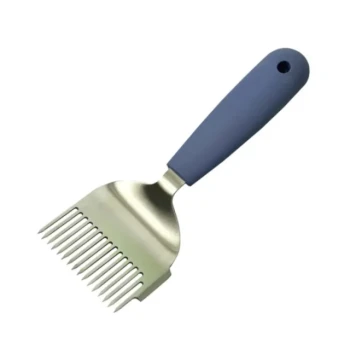
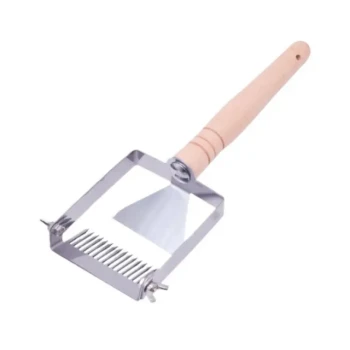
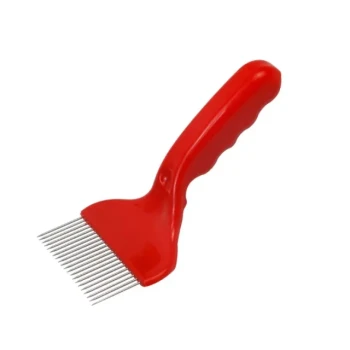
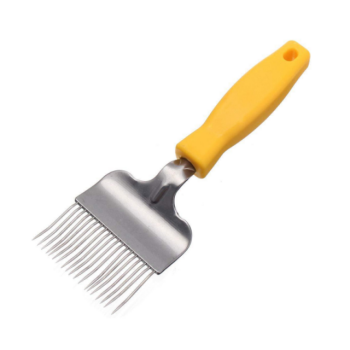
The Uncapping Fork
For areas the knife misses, or for combs with uneven surfaces, an uncapping fork is used. The tines of the fork scratch open the cappings rather than slicing them, ensuring no cells remain sealed.
The Uncapping Tank
This process can be messy, so it is performed over an uncapping tank. This vessel holds the frames in place and collects the wax cappings and dripping honey, often separating them for later filtration.
Understanding the Trade-offs
Comb Integrity vs. Efficiency
A sharp, heated knife is fast and efficient, but if the operator cuts too deep, they remove excess comb. This forces the bees to expend more energy rebuilding the wax foundation before they can store honey again. Conversely, using a fork is gentler on the comb structure but significantly slower and more labor-intensive.
Wax Purity vs. Honey Recovery
The mixture of wax and honey that falls into the uncapping tank requires separation. While this "capping wax" is highly prized for its purity, recovering the significant amount of honey adhering to it requires time and gravity (draining) or additional processing.
Making the Right Choice for Your Goal
To ensure a successful harvest, choose the uncapping method that aligns with your volume and equipment.
- If your primary focus is small-scale or hobby beekeeping: Use a cold knife and an uncapping fork to maximize precision and preserve comb structure, even if it takes more time.
- If your primary focus is speed and volume: Utilize a heated knife or a steam uncapper to process frames quickly, but ensure you have an uncapping tank large enough to manage the increased flow of wax and honey.
The most effective uncapping stage is one that exposes the honey completely while leaving the underlying comb intact for the bees to reuse.
Summary Table:
| Tool Type | Best For | Pros | Cons |
|---|---|---|---|
| Uncapping Knife | Large-scale/High speed | Fast, clean slicing across frames | Can damage comb if too deep |
| Uncapping Fork | Uneven combs/Hobbyist | High precision, preserves comb structure | Labor-intensive and slow |
| Uncapping Tank | All levels | Organizes workflow, collects wax/honey | Requires storage space |
| Heated Knife | Commercial volume | Smoothly cuts through thick wax | Requires power source/safety care |
Maximize Your Honey Harvest with HONESTBEE
At HONESTBEE, we specialize in empowering commercial apiaries and distributors with the industry's most reliable honey extraction technology. From precision-engineered uncapping knives and tanks to high-capacity honey-filling machines and specialized hardware, our comprehensive wholesale offering is designed to streamline your production.
Whether you are scaling your operations or supplying the next generation of beekeepers, our portfolio of tools, machinery, and honey-themed cultural merchandise provides the competitive edge you need.
Ready to elevate your extraction efficiency?
Contact our experts today to discuss our wholesale solutions and discover how HONESTBEE can optimize your apiary’s performance.
Related Products
- Professional Multi-Function Uncapping Fork with Ergonomic Rubber Grip
- Adjustable Stainless Steel Honey Uncapping Fork with Scraper for Beekeeping
- Professional Wide Head Honey Uncapping Fork for Beekeeping
- Wide Adjustable Stainless Steel Honey Uncapping Fork with Scraper
- All-Stainless Steel Pivoting Honey Uncapping Fork for Beekeeping
People Also Ask
- What is the primary use of an uncapping fork in beekeeping? A Guide to Precision Honey Harvesting
- What is the use of an uncapping fork? A Precision Tool for Hive Management and Honey Harvesting
- What is the original purpose of an uncapping fork? Mastering Precision Honey Extraction and Comb Preservation
- How is an uncapping fork used to uncap honey frames? Precision Techniques for Perfect Honey Extraction
- What is an uncapping fork? A Precision Tool for Efficient Honey Harvesting