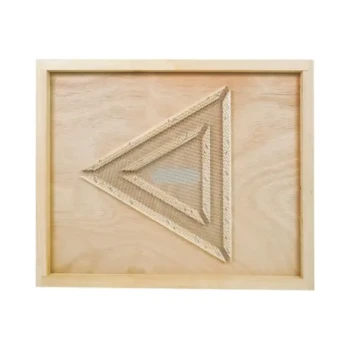
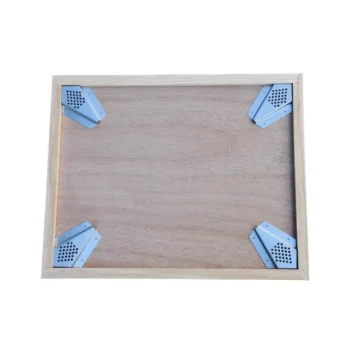
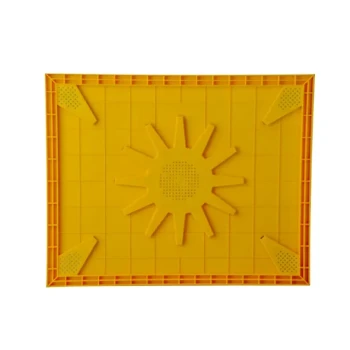
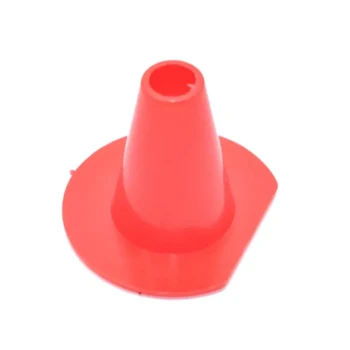
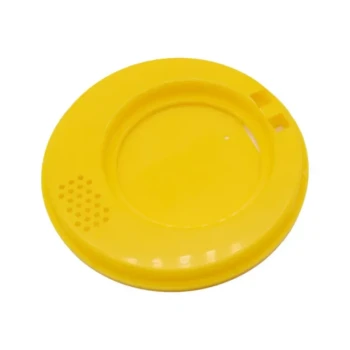
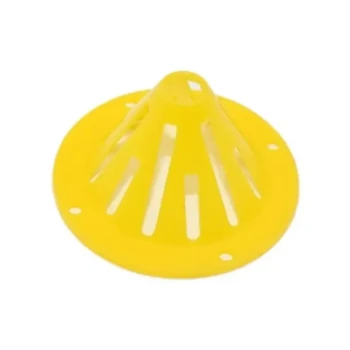
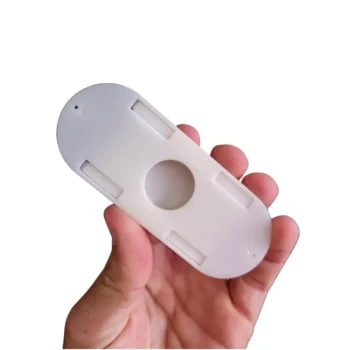
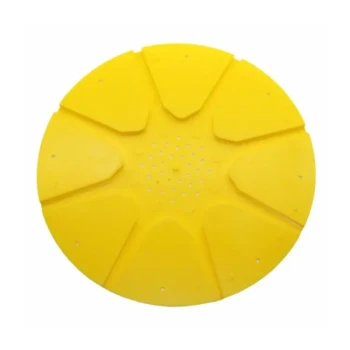
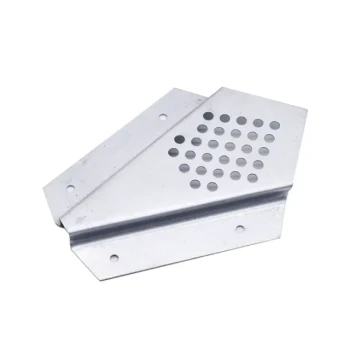
The working principle of a Triangle Escape Board centers on exploiting a specific behavioral tendency of honeybees to navigate a physical barrier. The device functions as a passive, one-way gate that relies on the bee's instinct to turn right when encountering an obstacle, channeling them out of the honey super while preventing their return.
The Triangle Escape Board turns the hive's internal traffic into a one-way street by leveraging the bees' natural navigation patterns. This design allows bees to exit the honey super to rejoin the colony below, but the triangular maze renders re-entry virtually impossible.
The Mechanics of the Design
The "Right-Turn" Instinct
The core mechanism of this tool is biological rather than mechanical. It is designed around the observation that bees have a natural tendency to turn right when they encounter a wall or barrier while walking.
The board features a maze-like structure that guides the bees along specific paths. As bees attempt to leave the honey super to return to the brood nest, this instinct guides them seamlessly toward the exit points.
The One-Way Maze
While the exit path is intuitive for the bees, the return path is not. Once the bees have passed through the escape and descended into the brood box, the design acts as a confused labyrinth from the other side.
If a bee attempts to climb back up into the honey super, the triangular geometry and the "turn right" instinct lead them into dead ends rather than the entry hole. This effectively keeps the honey supers clear of bees once they have departed.
Operational Requirements
Proper Orientation
For the physics of the maze to work, the board must be installed correctly relative to the hive bodies. The board is placed between the honey supers (top) and the brood boxes (bottom).
Crucially, the triangle side must face down, toward the brood boxes. If placed upside down, the geometry will not align with the bees' movement patterns, and the clearing process will fail.
Timeframe for Clearing
Unlike chemical fumes or forced air, this is a passive process that requires patience. It typically takes up to 24 hours for the majority of bees to navigate the escape and vacate the super.
Sealing the Environment
The system relies on the escape board being the only path out of the super. You must ensure that all upper entrances located above the board are completely closed.
If an upper entrance is left open, robber bees may enter the undefended honey super, or the hive bees may simply bypass the escape board entirely.
Understanding the Trade-offs
Time Efficiency
The primary limitation of the Triangle Escape Board is speed. It is not an instant solution; it requires a waiting period of roughly 24 hours, necessitating two trips to the apiary (one to install, one to harvest).
Installation Precision
The effectiveness of the board is entirely dependent on correct installation. Failure to orient the triangle side downward or to seal upper entrances will render the device useless, potentially leaving you with a super full of bees during harvest.
Making the Right Choice for Your Harvest
To determine if this tool aligns with your apiary management style, consider the following recommendations:
- If your primary focus is low-stress harvesting: This is the ideal tool, as it clears bees gently without the agitation caused by blowers or the potential residue of chemical repellents.
- If your primary focus is speed and efficiency: You may find this method frustrating, as it requires a 24-hour waiting period and multiple site visits compared to instant clearing methods.
- If your primary focus is equipment compatibility: Ensure your boxes match the board dimensions, as these are specifically manufactured to fit standard 8-frame or 10-frame configurations.
The Triangle Escape Board is a precision tool that trades speed for a calmer, chemical-free harvest, provided you respect the geometry of the installation.
Summary Table:
| Key Aspect | Details |
|---|---|
| Core Principle | One-way traffic using bees' natural "right-turn" instinct |
| Design | Passive triangular maze that prevents re-entry to honey supers |
| Installation | Must be placed triangle-side down with all upper entrances sealed |
| Clearing Time | Typically 24 hours for a stress-free, bee-free harvest |
| Best For | Chemical-free honey harvesting and reducing colony agitation |
Scale Your Success with HONESTBEE Wholesale Beekeeping Solutions
For commercial apiaries and distributors, efficiency and quality are non-negotiable. HONESTBEE offers a comprehensive wholesale portfolio designed to streamline your operations and expand your market reach. We supply everything from essential consumables and specialized hardware—like hive-making and honey-filling machines—to unique honey-themed cultural merchandise.
Whether you are stocking professional-grade beekeeping tools or upgrading your industrial machinery, our team is ready to support your growth with reliable, large-scale supply solutions. Contact us today to explore our full catalog and wholesale pricing.
Related Products
- HONESTBEE Wooden Bee Escape Board with Triangle Mesh Design for Beekeeping
- HONESTBEE 4-Way Metal Corner Wooden Bee Escape Board
- HONESTBEE Multi Exit Plastic Bee Escape Board for Efficient Honey Harvesting
- High-Efficiency Diamond Maze Bee Escape for Clearing Supers
- Professional Cone Style Bee Escape for Efficient Honey Harvesting
People Also Ask
- How is a bee escape board used to clear a hive body for honey harvesting? Optimize Your Chemical-Free Harvest
- What is a bee escape board and what problem does it solve? Simplify Your Honey Harvest with Passive Clearing
- How is a bee escape board used and how does it function? Master This Gentle Honey Harvesting Tool
- What are the proper steps for using a bee escape board for honey harvesting? Master the Passive Clearing Technique
- What tools and methods are used to clear honey bees from honey supers? Efficient Harvesting for Commercial Beekeepers