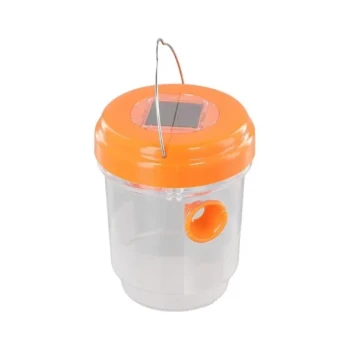
Small Hive Beetle infestations are often detectable through a combination of visible insects, damaged comb, and fermented honey odors. During hive inspections, adult beetles appear as dark, fast-moving insects that flee across the comb when exposed to light. Early monitoring is improved by deploying corrugated cardboard traps or specialized in-hive beetle traps, which exploit the beetles’ tendency to hide in dark, narrow spaces.
The most reliable early-warning approach combines systematic visual inspections with in-hive monitoring traps. Look for adult beetles, spiny larvae, slimy or damaged comb, and fermented-smelling honey, then use traps to detect beetles that escape during routine hive checks.
How to Recognize a Small Hive Beetle Infestation
Identify adult beetles during hive inspections
Adult Small Hive Beetles are typically about one-third the size of a honey bee. They mature from reddish-brown to black and have distinctive club-shaped antennae.
When a hive is opened, adult beetles often run quickly across the comb and seek shelter. Their rapid movement away from light means that visual inspections alone can underestimate the true population.
Look for larvae on the comb
Small Hive Beetle larvae are approximately 10–11 mm long. They have visible spines along the back and three pairs of small proto-legs near the head.
Unlike wax moth larvae, Small Hive Beetle larvae do not produce silk webbing. This is an important identification point when distinguishing between two common secondary hive pests.
Check for slimy or collapsing comb
A characteristic symptom is a slimy appearance on the honeycomb. Larval activity and excretions can cause stored honey and comb surfaces to break down.
Inspect honey stores, pollen, brood areas, and damaged sections of comb rather than examining only the uppermost frames.
Detect fermented or unusual odors
Infested honey may develop a distinct fermented odor caused by larval excretions. Some inspections describe the smell as similar to decaying or fermented fruit.
Honey discoloration, fermentation, and breakdown of stored products indicate that beetles may have progressed beyond simple presence to active colony damage.
Observe colony and hive abnormalities
Additional warning signs can include:
- Damaged honeycomb
- Discolored or fermented honey
- Disturbed or abnormal bee clustering
- Visible adults or larvae in hive boxes
- Deterioration of stored pollen and brood-area materials
These symptoms should be recorded consistently so managers can compare infestation levels across hives and apiary locations.
Why Visual Inspection Alone Can Miss Beetles
Adult beetles hide when exposed to light
Small Hive Beetles naturally avoid light and seek concealment in dark areas. When the hive is opened, they may disappear into frame gaps, corners, or other inaccessible spaces before an inspector can count them.
This makes a quick visual check useful but incomplete, particularly in commercial apiaries where many colonies must be assessed efficiently.
Infestation levels can be underestimated
A hive may contain beetles even when no adults are visible on the comb surface. Traps provide a concealed monitoring area that can reveal beetle activity between inspections.
For larger operations, standardized trap checks and inspection records create more objective data than relying only on brief observations.
Pest Monitoring Equipment for Early Detection
Corrugated cardboard pest traps
Corrugated cardboard traps can be integrated into hive bodies or positioned in areas where adult beetles naturally seek shelter. The beetles enter the corrugations, allowing beekeepers to inspect, count, and remove them.
These traps are practical for routine monitoring because they are simple to deploy and provide a physical indication of beetle activity before extensive comb damage occurs.
Specialized in-hive beetle traps
Dedicated Small Hive Beetle traps are commonly placed between frames or in other hive locations where beetles congregate. Their dark, confined structure is designed to exploit the pest’s concealment behavior.
For distributors and commercial beekeepers, specialized traps can form part of a broader IPM-compatible product portfolio alongside inspection tools and hive hardware.
Beetle trap bottom boards
Trap-equipped bottom boards provide another monitoring point beneath the colony. They can help capture or expose beetle activity while supporting routine hive inspections.
These boards may be especially useful when standardized equipment is required across multiple yards, because technicians can apply the same inspection procedure to each hive.
Visual inspection and hive tools
Basic inspection equipment remains essential. Hive tools, protective equipment, lighting, frame-handling tools, and inspection records allow technicians to examine comb, brood, pollen, and stored honey systematically.
Because adult beetles move quickly, inspections should include frame edges, corners, gaps, and other dark hiding places rather than only the central comb surface.
Digital imaging and documentation equipment
High-definition digital imaging equipment can support the documentation of adult beetles, larvae, comb damage, and fermentation symptoms. Photographs and video provide a record for comparison between inspection dates.
This is particularly valuable for commercial apiaries, field technicians, and distributors supporting customers who need objective evidence of infestation severity or pest dispersal.
Identification manuals and reference guides
Pest identification manuals provide standardized visual criteria for distinguishing Small Hive Beetles from wax moths and other hive pests. They are useful when multiple inspectors, service teams, or customers must apply consistent identification standards.
A reliable reference should cover adult beetle appearance, larval characteristics, comb symptoms, and key differences from web-forming pests.
Building an Early-Warning Monitoring Program
Combine traps with scheduled inspections
The strongest approach uses both passive trapping and active visual inspection. Traps detect beetles that hide during hive opening, while inspections reveal larvae, comb damage, fermentation, and colony abnormalities.
Monitoring should be performed consistently across colonies so that changes in activity can be identified early.
Record findings by hive and apiary location
Document the number of adults or larvae observed, trap activity, damaged frames, odor changes, and affected stores. Consistent records help managers identify high-risk colonies and compare pest pressure between apiary sites.
For larger operations, these records also support decisions about containment, equipment movement, and follow-up inspections.
Inspect vulnerable materials beyond the brood box
Small Hive Beetle checks should include honey supers, stored frames, pollen, and other hive materials that may support pest activity. Managed frame storage equipment and protected off-season storage help reduce reinfestation risks.
Tightly fitting hive bodies and well-maintained hive components also support general colony security, although they should complement—not replace—active monitoring.
Use monitoring data to guide intervention
Monitoring equipment is most valuable when results lead to timely action. Confirmed beetle activity can prompt closer inspections, removal of heavily affected materials, strengthened hive management, or other targeted IPM measures.
The purpose of early detection is to intervene before larvae cause widespread fermentation, comb breakdown, or colony stress.
Understanding the Trade-offs
Traps improve detection but require regular checks
A trap only provides useful information when it is inspected on a defined schedule. Neglected traps can become difficult to interpret and may fail to provide a timely warning.
Commercial operations should select equipment that is easy to access, replace, clean, and distribute consistently across all monitored hives.
Visual checks are informative but not fully quantitative
Visual inspection can confirm obvious symptoms, but fast-moving beetles may escape detection. Counts can also vary between inspectors and inspection conditions.
Using traps, photographs, standardized forms, and repeat inspections improves consistency and makes results more comparable.
Beetle traps are monitoring tools, not a complete control program
A trap can reveal or capture adult beetles, but it does not by itself address every source of infestation. Strong colony management, sound hive construction, protected frame storage, and broader IPM procedures remain necessary.
Oil-filled stand barriers and other pest-control hardware may support prevention or control, but they should be selected and deployed as part of an integrated plan.
Do not confuse Small Hive Beetles with wax moths
Wax moth damage is more strongly associated with dense silk webbing, dark cocoons, and tunneled honeycomb. Small Hive Beetle infestations instead feature dark adults, spiny larvae, slimy comb, and fermented-smelling honey.
Accurate identification matters because the monitoring and management response may differ.
Making the Right Choice for Your Goal
Use a layered equipment strategy based on the scale of the operation and the required level of documentation.
- If your primary focus is early detection: Deploy corrugated cardboard or specialized in-hive beetle traps and inspect them on a consistent schedule.
- If your primary focus is large-apiary surveillance: Combine standardized traps, hive inspection tools, digital imaging, and inspection records across every yard.
- If your primary focus is accurate pest identification: Keep identification manuals available and train inspectors to distinguish Small Hive Beetles from wax moths.
- If your primary focus is distributor or reseller supply: Build a practical portfolio that includes traps, bottom boards, inspection equipment, hive components, and managed frame-storage solutions.
- If your primary focus is reducing colony-loss risk: Use monitoring results to trigger targeted IPM actions before fermentation and comb breakdown become extensive.
With the right combination of visual checks, physical traps, documentation, and timely response, apiary managers can detect Small Hive Beetles earlier and protect colonies more effectively.
Summary Table:
| Sign | Description | Monitoring Equipment |
|---|---|---|
| Adult beetles | Dark, fast-moving insects fleeing light | Corrugated cardboard traps, in-hive traps |
| Larvae | Spiny, 10-11mm, no webbing | Visual inspection, digital imaging |
| Slimy comb | Wet, decaying comb due to larval activity | Inspection tools, documentation |
| Fermented odor | Smell of decaying fruit from honey | Visual inspection, records |
| Hive abnormalities | Damaged comb, disturbed clustering | Hive tools, inspection records |
Protect your apiary from Small Hive Beetle infestations with HONESTBEE's comprehensive range of monitoring equipment and beekeeping supplies. As a wholesale provider for commercial apiaries and distributors, we offer specialized traps, hive inspection tools, and full-spectrum beekeeping equipment to ensure early detection and effective pest management. Our dedicated customer service, rapid response times, and ultra-fast delivery ensure your operations run smoothly. For distributors, we provide OEM/ODM support, competitive profit margins, and supply reliability. Contact us today to enhance your pest monitoring strategy and safeguard your colonies. Get in touch with our experts!
Related Products
- Australian Pine Wood Langstroth Screen Bottom Board for Wholesale
- Professional Reversible Beehive Hive Entrance
- Plastic Beetle Blaster Trap Beekeeping Tools and Supplies
- 8 Frame and 10 Frame Propolis Trap Collector Screen for Propolis Collection
- Gourd Shaped Hanging Wasp Trap Professional Wasp Catcher
People Also Ask
- How are screen bottom boards and sticky boards utilized to detect Varroa mites? Master Passive Apiary Monitoring
- What is the primary function of a screen bottom board? Achieve Accurate Varroa Mite Assessment in Your Apiary
- Why is the combination of a screen bottom board and a sticky trap board essential for monitoring Varroa mite? Guide
- What is the primary function of a standard screen bottom board when assessing honeybee grooming behavior? - Key Mite Data
- What role do screen bottom boards and monitoring inserts play in assessing Varroa mite mortality and maintaining hive hygiene in Langstroth hives?