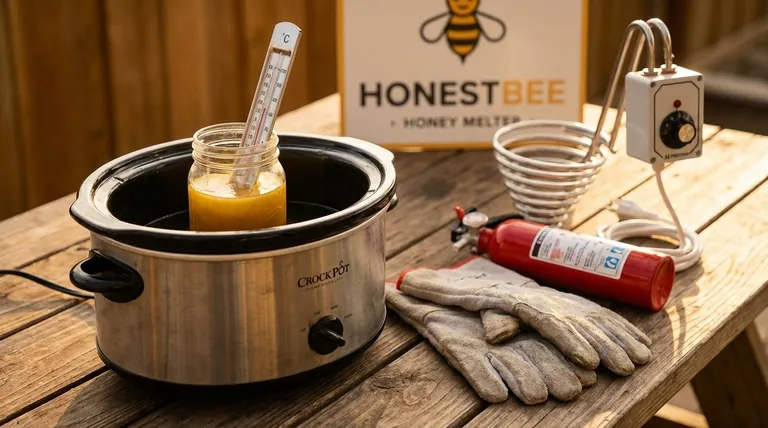
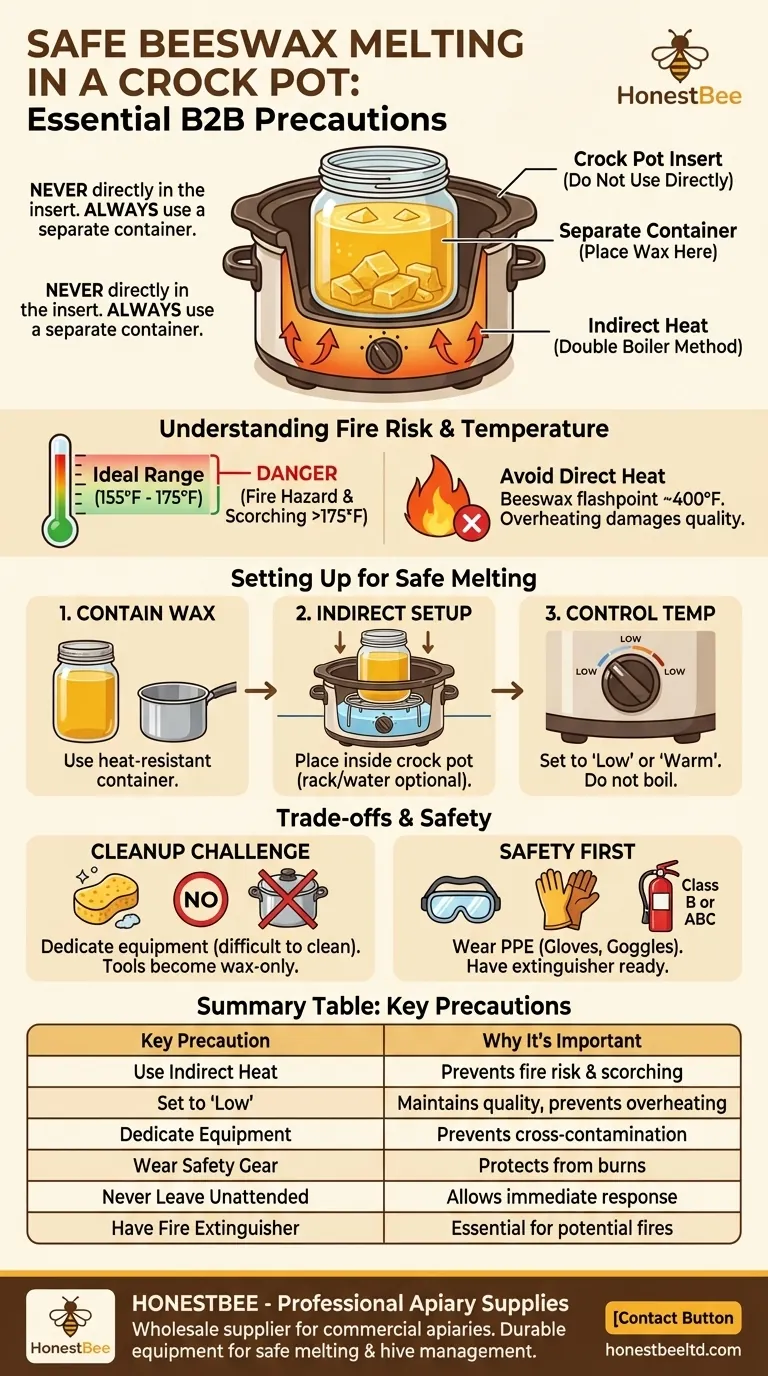
To safely melt beeswax in a crock pot, you must use it as an indirect heat source. Always place the beeswax in a separate, heat-proof container (like a glass jar or smaller pot) inside the crock pot, never directly in the ceramic insert. Set the crock pot to its lowest temperature setting to prevent overheating, which can damage the wax and create a fire hazard.
A crock pot is one of the safest tools for melting beeswax precisely because it provides gentle, indirect heat. The key is to treat it like a controlled double boiler, prioritizing temperature management and accepting that any equipment used will become permanently dedicated to wax work due to the difficulty of cleanup.
Why Indirect Heat is Non-Negotiable
Understanding the Fire Risk
Beeswax is a flammable material. While it melts at a relatively low temperature (around 145°F or 63°C), it can become volatile and even ignite if its temperature rises too high, with a flashpoint near 400°F (204°C).
Direct heat, such as placing a pot on a stove burner, creates hot spots and makes it very difficult to control the temperature evenly. This dramatically increases the risk of scorching the wax or starting a fire.
The Crock Pot as a Double Boiler
The safest method for melting beeswax is a double boiler, which uses hot water to gently heat a separate container holding the wax. A crock pot excels at mimicking this setup.
By placing your wax in a jar or can inside the crock pot, the appliance's heating element warms the air (and sometimes a shallow water bath) around your container. This provides the slow, even, and indirect heat necessary for safe melting.
Setting Up Your Crock Pot for Melting
Step 1: Contain the Wax
Choose a heat-resistant container that will hold your beeswax. A large glass canning jar, a tin can, or a small pouring pot are all excellent choices.
Place this container directly into the ceramic insert of your crock pot. For added stability and more even heat distribution, you can place it on a small metal rack or add an inch of water to the bottom of the crock pot.
Step 2: Control the Temperature
Always use the 'Low' or 'Keep Warm' setting on your crock pot. The goal is to melt the wax slowly, not to bring it to a boil.
For best results and to preserve the wax's quality, the ideal temperature is between 155°F and 175°F (68°C - 79°C). Heating beeswax above this range can darken its color, diminish its natural honey aroma, and degrade its beneficial properties.
Step 3: Monitor the Process
Never leave melting wax unattended. Although a crock pot is very safe, you should always remain aware. Check on the wax periodically until it is fully melted.
Understanding the Trade-offs and Pitfalls
The Cleanup Challenge is Real
Beeswax is incredibly difficult to remove from surfaces once it cools and hardens. It is not water-soluble and will leave a persistent residue.
For this reason, it is strongly recommended that you dedicate a crock pot, utensils, and containers solely for beeswax work. Attempting to clean a multi-use kitchen crock pot completely after melting wax is often an exercise in futility.
Personal Safety is Paramount
Even at low temperatures, melted wax can cause serious burns. Always wear appropriate personal protective equipment (PPE).
This includes safety goggles to protect your eyes from splashes, heat-resistant gloves when handling the hot container, and a long-sleeved shirt.
Prepare for Emergencies
Because beeswax is flammable, you must be prepared. Keep a Class B or ABC fire extinguisher within easy reach. Never use water to extinguish a wax fire, as this will cause it to spread.
Work in a well-ventilated area to avoid the buildup of fumes from the melting wax.
Making the Right Choice for Your Goal
With the proper setup, a crock pot is an outstanding tool for hobbyists and crafters. Your specific goal will determine your primary point of focus.
- If your primary focus is safety: Treat the crock pot as a double boiler by using an internal container and never leave it unattended.
- If your primary focus is preserving wax quality: Use the 'Low' setting and a thermometer to keep the temperature below 175°F.
- If your primary focus is efficiency and minimal cleanup: Designate a specific crock pot and all associated tools exclusively for your wax projects.
By respecting the properties of beeswax and using your tools correctly, you can ensure a safe, clean, and successful melting process every time.
Summary Table:
| Key Precaution | Why It's Important |
|---|---|
| Use Indirect Heat (Container inside crock pot) | Prevents direct heat exposure, reducing fire risk and wax scorching. |
| Set to 'Low' or 'Warm' | Maintains wax quality and prevents overheating (ideal: 155°F-175°F). |
| Dedicate Equipment | Beeswax is difficult to clean; dedicated tools prevent cross-contamination. |
| Wear Safety Gear (gloves, goggles) | Protects from hot wax splashes and potential burns. |
| Never Leave Unattended | Allows for immediate response to any issues, ensuring safety. |
| Have a Fire Extinguisher Ready | Essential for handling potential wax fires (Class B or ABC). |
Ready to equip your apiary with professional-grade supplies?
As a trusted wholesale supplier for commercial apiaries and distributors, HONESTBEE provides the durable, reliable equipment you need for safe and efficient beekeeping operations—from wax melting tools to full hive management systems. Let us help you streamline your workflow and enhance productivity.
Contact HONESTBEE today to discuss your wholesale needs and discover how our solutions can benefit your business.
Visual Guide
Related Products
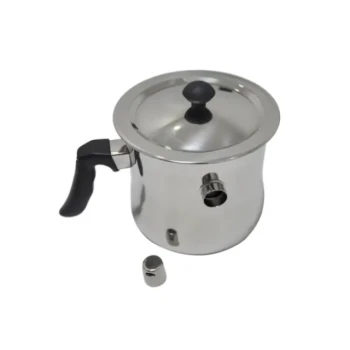
- Beeswax Melter for Candle Making Honey Bee Wax Melter
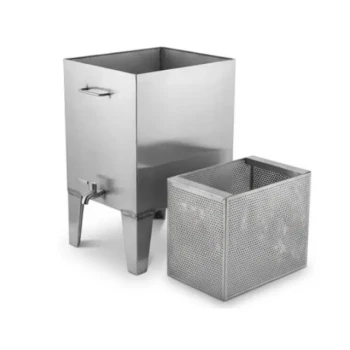
- Solar Beeswax Melter Easy Solar Wax Melter for Beeswax
- Steam Beeswax Melter Wax Warmer for Wax Processing
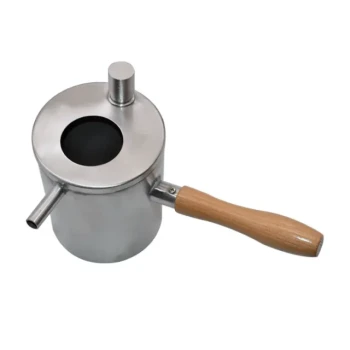
- Professional Stainless Steel Wax Melter for Beekeeping and Crafts
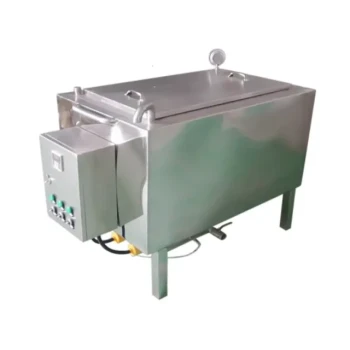
- Electric Commercial Beeswax Melter for Factory Use
People Also Ask
- What is the best way to melt beeswax? Safely Preserve Quality with Indirect Heat
- What is the best way to melt beeswax? Use a Solar Wax Melter for Simple, Pure Results
- What types of beeswax melters are available for beekeepers? Choose the Right One for Your Operation
- What safety precautions should be taken when melting beeswax? A Guide to Flammable Wax Handling
- What types of beeswax melters are available for different scales of beekeeping? Solar vs. Electric Melters Compared