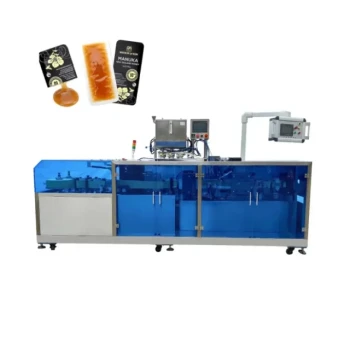
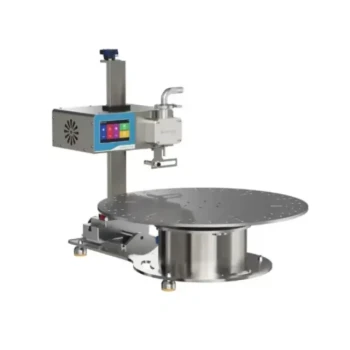
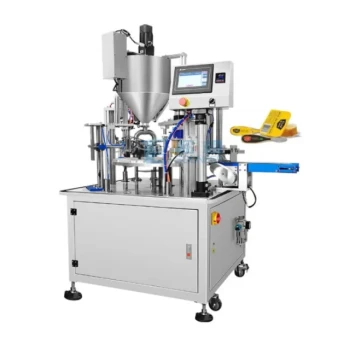
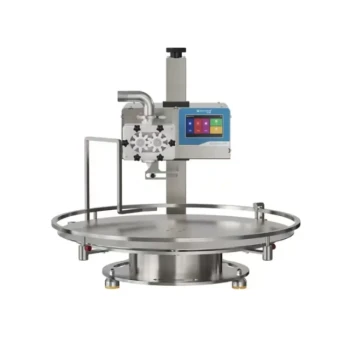
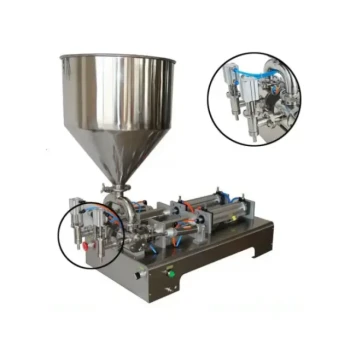
Industrial automatic honey filling machines solve the critical bottlenecks of manual labor by automating high-precision dosing and sterile packaging.
These machines address the inherent difficulties of handling high-viscosity liquids, specifically targeting inconsistencies in filling volumes, contamination risks from manual handling, and the slow throughput that limits market expansion. By integrating advanced metering systems, they ensure every container meets strict weight requirements while maintaining the high hygiene standards necessary for global export.
Automatic honey filling machines transform honey processing from a labor-intensive chore into a scalable, high-precision industrial operation. They eliminate the "human factor" to guarantee product consistency, hygiene, and the rapid output necessary for large-scale distribution and international trade.
Overcoming Volumetric Inaccuracy and Material Waste
High-Precision Metering Systems
Manual filling often leads to overfilling or underfilling due to the sticky nature of honey and human error. Automated systems use high-precision quantitative pumps to ensure exact net weights, protecting profit margins by drastically reducing material waste.
Managing High-Viscosity Flow
Honey’s thickness changes based on temperature and variety, making manual pouring unpredictable and messy. Industrial machines utilize specialized piping and metering controls to maintain a consistent flow rate, ensuring uniform fills regardless of environmental fluctuations.
Reducing Product Give-Away
In manual lines, operators often overfill slightly to ensure compliance with minimum weight laws. Automation provides the precision needed to hit the exact target weight, which, across thousands of units, results in significant cost savings for the producer.
Mitigating Contamination and Food Safety Risks
Non-Contact Filling Technology
Human interaction is the primary source of secondary contamination in food processing lines. These machines utilize non-contact filling and closed-loop operating systems to ensure the honey moves from storage tanks to bottles in a sterile environment.
Compliance with Global Standards
For distributors, ensuring clients meet international food safety standards is vital for accessing lucrative export markets. Automated lines are built with hygienic-grade materials that satisfy the rigorous audit requirements of both pharmaceutical and consumer food sectors.
Enhanced Shelf Life
Specialized sealing processes integrated into automated lines help protect the product from external contaminants and moisture. This ensures the honey maintains its quality over time, making it a more viable commercial good for long-distance shipping and retail display.
Scaling Throughput for Commercial Growth
Drastic Increases in Daily Output
Manual processes cannot keep pace with the demands of large-scale retail distribution or apiaries entering the commercial market. Automation allows for continuous, high-speed operation, significantly increasing daily bottling capacity and shortening order fulfillment cycles.
Transitioning from Bulk to Retail
These machines bridge the gap between raw honey collection and standardized retail packaging. By standardizing the output, they allow brands to move from selling bulk raw product to high-margin, shelf-ready branded merchandise.
Labor Efficiency and Cost Reduction
By replacing labor-intensive manual filling, apiaries can reallocate their workforce to higher-value tasks like quality control or market development. This shift reduces the overall cost-per-unit, making the final product more competitive in a crowded marketplace.
Understanding the Trade-offs
Initial Investment vs. Long-Term ROI
The upfront cost of high-grade automated machinery is significantly higher than manual setups. However, this is offset by lower labor costs, reduced waste, and the ability to fulfill the large-volume contracts that manual lines simply cannot handle.
Maintenance and Technical Complexity
Precision machinery requires a more sophisticated maintenance schedule compared to simple manual tools. Successful implementation depends on choosing a partner who offers rapid response times and deep technical expertise to minimize downtime.
Setup and Changeover Times
While automated lines are fast, switching between different bottle sizes or honey varieties requires setup time. Modern machines address this with user-friendly interfaces, but operators still require specialized training to manage the equipment effectively.
Choosing the Right Solution for Your Distribution Network
As a distributor or wholesaler, your goal is to provide equipment that balances technical sophistication with operational reliability and fast fulfillment.
- If your primary focus is rapid market entry for smaller apiaries: Recommend compact models that emphasize ease of cleaning and hygiene over pure throughput speed.
- If your primary focus is large-scale industrial fulfillment: Prioritize fully integrated lines featuring advanced quantitative controls and seamless integration with downstream labeling and sealing units.
By addressing these core production challenges with expert-vetted technology, you empower your clients to scale their operations with confidence and precision.
Summary Table:
| Production Challenge | Machine Solution | Business Benefit |
|---|---|---|
| Volumetric Inaccuracy | High-precision quantitative pumps | Minimized material waste & higher margins |
| Contamination Risks | Non-contact, closed-loop systems | Compliance with global food safety standards |
| Low Throughput | Continuous high-speed automation | Ability to fulfill large-scale retail contracts |
| High Labor Costs | Automated bottling & sealing | Reduced cost-per-unit & optimized workforce |
| Viscosity Changes | Specialized flow control systems | Consistent fill levels regardless of honey type |
Partner with HONESTBEE to Scale Your Distribution Business
Maximize your profit margins and supply chain reliability with HONESTBEE. As a premier one-stop sourcing partner for distributors and wholesalers, we provide a comprehensive portfolio ranging from high-precision honey-filling machines to specialized hive-making hardware and essential consumables.
Why choose HONESTBEE?
- Deep Industry Expertise: Professional guidance for commercial apiaries and B2B resellers.
- Rapid Fulfillment: Ultra-fast delivery and efficient order processing to keep your stock moving.
- Premium Service: Dedicated support with OEM/ODM capabilities and global certifications.
Streamline your honey production and supply chain—Contact us today!
References
- Polya Yordanova. New Challenges for the Development of Beekeeping in Bulgaria – Trends and Problems. DOI: 10.54664/okhc1840
This article is also based on technical information from HonestBee Knowledge Base .
Related Products
- Automatic Honey Filling and Filtering Machine for Beekeeping Bottle Filling
- Fully Automatic Honey Filling Packaging Machine for Processing Line
- Semi Automatic Small Honey Bottle Filling Machine Honey Filler
- Automatic Single-Dose Snap & Squeeze Honey Sachets Packing Machine
- Precision Durable Efficient HONESTBEE Rotary Honey Filling Machine
People Also Ask
- What process advantages do professional honey filtering and filling machines provide? Optimize Your Organic Honey Output
- How do honey filling and filtering machines increase product value? Turn Raw Honey into Premium Export-Grade Goods
- How do honey filtration and filling machinery contribute to industrialization? Scale Your Commercial Honey Production
- What specific issues do industrial filtration and automated filling machinery address? Ensure Honey Quality & Compliance
- How does the use of professional honey filtration and filling machinery facilitate international honey exports?