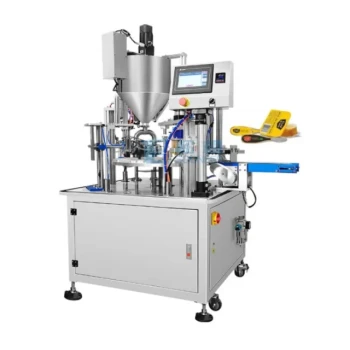
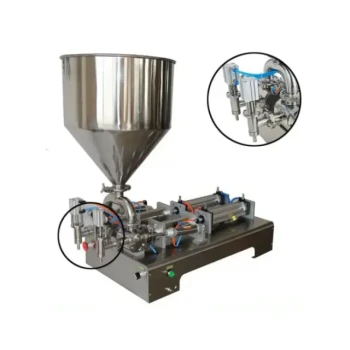
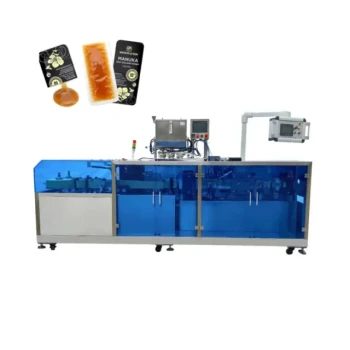
To ensure commercial viability and regulatory compliance, industrial filtration and automated filling machinery primarily address the removal of physical contaminants and the elimination of inconsistent packaging.
Filtration systems target specific impurities like wax debris and larval remains while protecting the honey's distinct flavor profile. Simultaneously, automated filling units resolve issues of weight variance, viscosity management, and biological contamination, ensuring the final product meets the rigorous hygiene and standardization standards required for international export.
Core Insight Manual honey processing creates bottlenecks in quality control, often leading to contamination and irregular packaging that disqualifies producers from major markets. Industrial machinery solves this by creating a closed-loop system that guarantees purity and precise metering without stripping the honey of its natural characteristics.
Solving Purity Challenges in Processing
Removing Physical Contaminants
The primary role of industrial filtration is the efficient separation of debris. Raw extraction often introduces wax debris, larval remains, and other hive particulates that must be removed to create a marketable product.
Preserving Flavor Integrity
While aggressive filtration can strip honey of its essence, modern industrial machinery is calibrated to balance clarity with quality. The goal is to remove impurities without compromising the natural flavor characteristics that define the honey’s floral source.
Preventing Secondary Contamination
Integrated units operate within a closed environment. This design specifically addresses the risk of re-introducing dust or bacteria during the transfer between the filtration and packaging stages, a common failure point in manual operations.
Solving Consistency Issues in Packaging
Precision Metering and Weight Control
Automated filling machinery utilizes advanced metering controls to address product loss and legal non-compliance. By strictly controlling filling volumes—typically for specifications between 0.25kg and 5kg—producers ensure that every jar meets exact net weight requirements.
Managing Viscosity Variables
Honey viscosity changes with temperature and batch composition, which makes manual filling difficult and messy. Automated systems adjust to these variables to maintain high consistency, ensuring a uniform fill level and aesthetic presentation across thousands of units.
Standardization for Global Compliance
Major international markets, specifically Germany, the United States, and the United Kingdom, enforce strict regulatory standards. Automation ensures that every batch complies with these hygiene and packaging regulations, opening access to large-scale distribution channels.
Understanding the Operational Trade-offs
Capital Intensity vs. Output Stability
Adopting industrial-grade machinery requires a significant upfront investment compared to manual extraction. However, this equipment mitigates the risks of agricultural crop failure by allowing for the production of stable, high-value-added products like refined honey and propolis, smoothing out revenue volatility.
Standardization vs. Artisanal Variance
Industrial machinery is designed for uniformity. While this is excellent for large retail distributors who demand identical products, it eliminates the slight variations in weight and texture that are sometimes characteristic of small-batch, artisanal honey.
Making the Right Choice for Your Goal
To determine the level of automation required for your operation, consider your specific market targets:
- If your primary focus is International Export: Prioritize machinery with sterile packaging processes and precise metering to strictly satisfy the regulatory requirements of the US and European markets.
- If your primary focus is Operational Efficiency: Focus on integrated filtering and filling units that minimize raw material loss and reduce the labor costs associated with manual extraction.
Investing in industrial processing is not merely about speed; it is the only reliable method to guarantee the hygiene and standardization necessary for global market entry.
Summary Table:
| Challenge | Impact on Quality | Machinery Solution |
|---|---|---|
| Physical Impurities | Wax and debris reduce marketability | Industrial filtration systems |
| Biological Risks | Contamination during manual transfer | Closed-loop processing units |
| Weight Variance | Non-compliance with export laws | Precision metering & weight control |
| Viscosity Changes | Inconsistent filling and product waste | Automated temperature-adjusted filling |
| Global Standards | Restricted access to international markets | Standardized hygienic automation |
Scale Your Apiary Operations with HONESTBEE
Transitioning from manual processing to industrial excellence is essential for global market entry. HONESTBEE specializes in supporting commercial apiaries and distributors with high-performance beekeeping tools and machinery.
Whether you need precision honey-filling machines, industrial-grade hive-making hardware, or essential industry consumables, our comprehensive wholesale offering is designed to stabilize your output and maximize your margins.
Ready to upgrade your production line? Contact us today to discover how our specialized equipment can bring efficiency and standardization to your honey processing business.
References
- Fernanda Baena‐Díaz, Luciana Porter‐Bolland. Apis mellifera en México: producción de miel, flora melífera y aspectos de polinización. Revisión. DOI: 10.22319/rmcp.v13i2.5960
This article is also based on technical information from HonestBee Knowledge Base .
Related Products
- Automatic Honey Filling and Filtering Machine for Beekeeping Bottle Filling
- Precision Durable Efficient HONESTBEE Rotary Honey Filling Machine
- Fully Automatic Honey Filling Packaging Machine for Processing Line
- Economy Small Honey Filling Machine Honey Bottle Filler Packaging Machine
- Double Nozzle Small Honey Filling Machine Honey Sachet Packing Packaging Equipment
People Also Ask
- What process advantages do professional honey filtering and filling machines provide? Optimize Your Organic Honey Output
- How do honey filling and filtering machines increase product value? Turn Raw Honey into Premium Export-Grade Goods
- How do honey filtration and filling machinery contribute to industrialization? Scale Your Commercial Honey Production
- How does the use of professional honey filtration and filling machinery facilitate international honey exports?
- How do modern beekeeping training programs and efficient farming equipment contribute to high honey yields? Boost Output