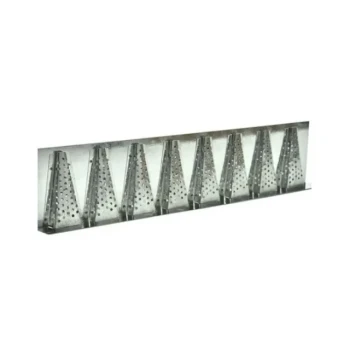
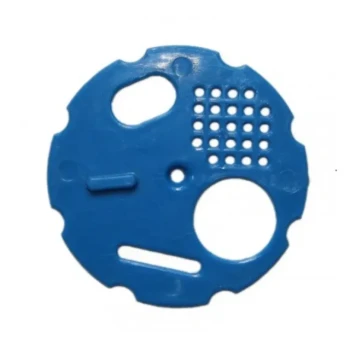
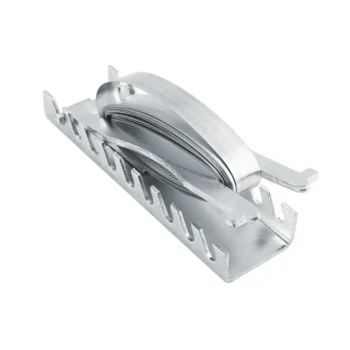
Beehive entrance guards serve as a critical mechanical filter. They function by physically restricting the size of the hive opening, creating a precise barrier that allows smaller honeybees to pass freely while blocking the entry of larger predatory insects like wasps and large moths.
By narrowing the point of entry, entrance guards do more than just block predators; they significantly reduce the colony's energy expenditure on defense and preserve critical honey reserves from theft.
The Mechanics of Exclusion
Size-Based Filtration
The primary mechanism of an entrance guard is physical isolation based on size. The structure is calibrated to be just large enough for a worker bee to navigate but too small for bulkier pests.
This passive defense system operates 24/7 without requiring active energy from the colony. It effectively renders the hive impenetrable to larger invaders that rely on brute force or size to enter.
Preventing Resource Theft
Large moths and wasps are often driven by the scent of stored honey. Without a guard, these pests can enter the hive and deplete the colony's food stores.
By physically blocking these "honey-thieving pests," the guard ensures that the resources gathered by the colony remain available for their intended purpose: winter survival and brood rearing.
Optimizing Colony Efficiency
Reducing Defensive Casualties
When a hive is attacked by predators like wasps, the colony must dispatch guard bees to fight them off. This often results in a significant loss of worker bees.
Entrance guards minimize these confrontations. By acting as a force multiplier, the guard allows a smaller number of bees to defend the entrance easily, preserving the workforce.
Conserving Colony Energy
Defense is an energy-intensive activity. When a colony is constantly stressed by intruders, productivity drops.
Implementing a mechanical barrier relieves the colony of the constant need for aggressive defense. This allows the bees to focus their energy on foraging, honey production, and hive maintenance.
Understanding the Scope of Protection
Targeted Insect Defense
It is important to recognize that entrance guards are designed specifically for arthropod predators like wasps, hornets, and moths. They are highly effective at the micro-level of hive defense.
Limitations Against Larger Animals
While entrance guards handle insect threats, they do not protect against large mammals or climbing animals that might knock over or destroy the hive.
As noted in broader protection strategies, defending against these larger threats requires different hardware. High-strength hanging ropes or metal hive stands with anti-climbing designs are necessary to elevate the hive and prevent physical destruction by larger animals.
Securing Your Beekeeping Investment
To effectively protect your colony, you must match the defense method to the specific threat level of your environment.
- If your primary focus is insect predation: Install mechanical entrance guards to block wasps and moths while minimizing worker bee loss.
- If your primary focus is large animal attacks: Utilize high-strength hanging ropes or elevated metal stands to isolate the hive from climbing predators.
Effective hive security requires a layered approach that preserves both your honey reserves and the bees that produce them.
Summary Table:
| Feature | Protection Mechanism | Primary Benefit |
|---|---|---|
| Size Filtration | Physically restricts entry based on insect dimensions | Blocks large wasps and moths while allowing bee passage |
| Resource Defense | Prevents "honey-thieving" pests from entering | Preserves critical honey stores for winter and brood rearing |
| Defensive Efficiency | Acts as a mechanical force multiplier | Reduces worker bee casualties and defensive energy expenditure |
| Operational Focus | Relieves colony from constant intruder stress | Increases productivity in foraging and hive maintenance |
Secure Your Apiary Productivity with HONESTBEE
Protecting your colony from predators is essential for maintaining a profitable beekeeping operation. At HONESTBEE, we specialize in supporting commercial apiaries and distributors with high-quality, professional-grade solutions. From precision-engineered entrance guards and specialized hive-making machinery to honey-filling equipment and essential industry consumables, our comprehensive wholesale portfolio covers every stage of production.
Whether you are scaling your honey output or looking for durable hardware to supply your local market, HONESTBEE provides the tools you need to succeed. Contact us today to explore our full range of beekeeping equipment and wholesale opportunities!
References
- Svetlana Bacal. New contributions to the knowledge of honey bee (Apis Mellifera) pests. DOI: 10.53937/icz10.2021.24
This article is also based on technical information from HonestBee Knowledge Base .
Related Products
- Beehive Entrance Reducer Guardian Metal Hive Entrance for Bees
- 8-Cone Galvanized Steel Bee Robber Guard
- Beehive Entrance Discs Plastic Bee Entrance Disc for Bee Hives
- Professional Hive Front Entrance Bee Feeder
- Multi-Functional Rotary Hive Entrance Disc for Beekeeping
People Also Ask
- Why are entrance reducers used to counter hornet infestations? Protect Your Hive with Strategic Choke Points
- What is the purpose of an entrance reducer for a beehive? Strengthen Colony Defense and Prevent Robbery
- What are the proper guidelines for using hive entrance reducers? Master Temperature Control & Colony Defense
- Why is it critical to maintain a smaller entrance for a newly established bee hive? Boost Colony Growth and Security
- What is the physical mechanism behind the use of hive entrance reducers? Protect Your Bees from Vespa velutina