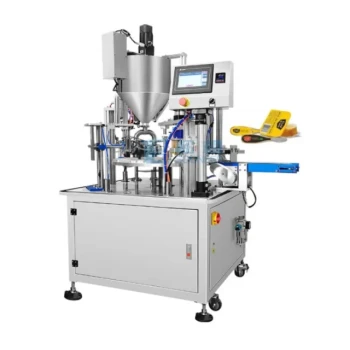
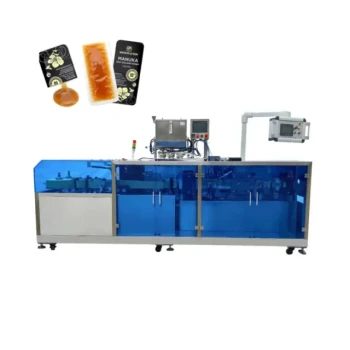
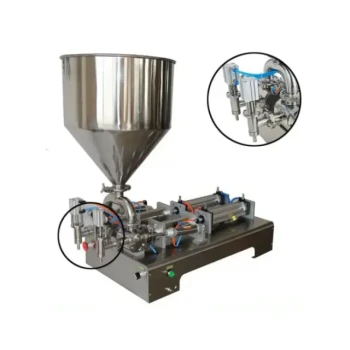
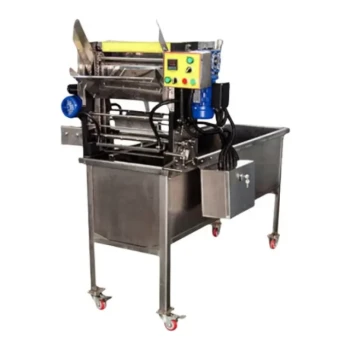
Automated honey-filling machines are the cornerstone of professionalizing urban beekeeping, transforming a localized harvest into a standardized, market-ready commodity. They provide the essential infrastructure for sterile processing, precise volumetric measurement, and high-volume throughput required to meet commercial retail standards. By integrating these systems, urban operations move beyond hobbyist roots to become reliable suppliers capable of meeting the rigorous demands of modern distribution networks.
Core Takeaway: Automated filling technology serves as the critical link between biological production and industrial commerce, ensuring the hygiene, precision, and scalability necessary for honey to compete in high-end retail and wholesale markets.
Transitioning from Localized Harvests to Commercial Scaling
Standardizing the Urban Commodity
In a commercialized urban setting, honey is collected from diverse micro-regions, leading to natural variations. Automated filling machines standardize this output, providing precise weight control and hermetic sealing that transform raw honey into a professional product. This consistency is vital for distributors who require uniform inventory for their retail partners.
Achieving Economies of Scale
To move from a community experiment to a sustainable business, operations must achieve economies of scale. High-quality hardware facilities allow producers to handle high-yield honeybee populations effectively. This industrial-grade equipment ensures that the conversion from biological assets to marketable goods is both rapid and cost-effective.
Building Brand Trust Through Consistency
For wholesalers, a brand’s value is tied to its reliability. Automated systems ensure that every jar meets commercial net weight standards, which is a prerequisite for distribution in high-end department stores or specialty outlets. This precision builds the "regional brand" identity that urban beekeeping relies on for its market premium.
Ensuring Regulatory Compliance and Product Integrity
Maintaining Sterile Processing Environments
Urban environments present unique challenges, such as potential exposure to dust or airborne impurities. Enclosed filling processes are vital for preventing contamination during the bottling stage. This guarantees that the final product meets strict food safety standards required by global distributors.
Preserving Natural Biological Properties
Modern automated machinery is designed to maximize the retention of natural antioxidants and beneficial microorganisms. By utilizing closed, hygienic processing, these machines protect the honey's lactic acid bacteria and physiological characteristics. This technical edge allows distributors to market the product as both raw and highly safe for consumption.
Enhancing Market Competitiveness
Hygienic sealing and high-precision quantitative filling are not just about safety; they are about market competitiveness. Products that feature professional-grade packaging and consistent fill levels are more likely to be accepted by B2B buyers. This technology enables urban producers to offer a "full-spectrum" product portfolio that rivals traditional large-scale apiaries.
Understanding the Trade-offs
High Initial Capital Expenditure
The primary hurdle for many operations is the significant upfront investment required for automated systems. While manual filling is cheaper in the short term, it lacks the speed and precision necessary for high-volume wholesale contracts. Distributors must evaluate whether their suppliers have the financial stability to maintain this critical infrastructure.
Technical Maintenance and Downtime
Sophisticated machinery requires specialized maintenance and technical expertise to operate. Any mechanical failure can lead to production bottlenecks, impacting order fulfillment times. To mitigate this, professional operations must pair their equipment with a dedicated service team to ensure rapid response times during peak harvest seasons.
The Perception of "Craft" vs. "Industrial"
There is a delicate balance between the "urban craft" appeal and the need for industrial efficiency. While automation ensures safety and volume, some boutique retailers may fear a loss of the "handmade" story. Leading distributors overcome this by highlighting how automation actually protects the purity of the urban environment's unique harvest.
Leveraging Technology for Efficient Distribution
For distributors and wholesalers, the integration of automated filling technology in urban beekeeping is a signal of a mature, reliable partner. It ensures that the supply chain remains robust and that the product meets the high expectations of the modern consumer.
- If your primary focus is rapid order fulfillment: Partner with producers who utilize high-speed automated lines to ensure ultra-fast delivery and consistent stock levels.
- If your primary focus is high-end retail placement: Prioritize suppliers using enclosed, sterile filling systems that guarantee the highest hygiene standards and premium packaging quality.
- If your primary focus is brand longevity: Look for operations that combine genetic honeybee selection with automated processing to ensure a stable, high-yield product portfolio for years to come.
The shift toward automation in urban beekeeping is not merely an upgrade in equipment, but a fundamental evolution into a professionalized, high-performance industry ready for global distribution.
Summary Table:
| Feature | Commercial Benefit | Strategic Impact |
|---|---|---|
| Volumetric Precision | Ensures consistent net weight | Meets retail/legal standards & builds brand trust |
| Enclosed Processing | Prevents airborne contamination | Guarantees food safety for high-end distribution |
| High-Volume Throughput | Enables economies of scale | Reduces labor costs & speeds up order fulfillment |
| Hermetic Sealing | Preserves biological properties | Maintains honey quality and "raw" market premium |
| Standardized Packaging | Uniform inventory appearance | Increases competitiveness for B2B retail placement |
Elevate Your Distribution Efficiency with HONESTBEE
Are you a distributor, wholesaler, or B2B reseller looking to professionalize your honey supply chain? HONESTBEE is your premier partner for one-stop beekeeping sourcing. We provide a comprehensive, full-spectrum portfolio designed for high-performance commercial operations.
Why partner with HONESTBEE?
- Comprehensive Equipment: From high-precision honey-filling and hive-making machines to specialized consumables and cultural merchandise.
- Rapid Fulfillment: Benefit from our ultra-fast delivery and efficient order processing to keep your inventory stocked.
- Industry Expertise: Leverage our deep professional knowledge to select the right hardware for your target market's needs.
- Exceptional Service: Experience dedicated support and rapid response times tailored to the demands of commercial apiaries.
Transform your production capabilities and maximize your profit margins with a reliable industry leader.
Contact HONESTBEE Today for a Wholesale Consultation
References
- Joan Casanelles‐Abella, Monika Egerer. Examining Honeybee ( <i>Apis mellifera</i> ) Dominance Patterns Within Urban Bee Communities Worldwide. DOI: 10.1002/ece3.71979
This article is also based on technical information from HonestBee Knowledge Base .
Related Products
- Fully Automatic Honey Filling Packaging Machine for Processing Line
- Automatic Honey Filling and Filtering Machine for Beekeeping Bottle Filling
- Precision Durable Efficient HONESTBEE Rotary Honey Filling Machine
- Semi Automatic Small Honey Bottle Filling Machine Honey Filler
- Precision Automated Packaging Turntable Honey Spoon Filling Sealing Packing Machine
People Also Ask
- Why are fully automatic honey filling and packaging lines essential? Boost Your Honey's Market Value and Quality
- What is a fully-automatic honey filler? Streamline Your Production with High-Precision Automation
- How do automated honey filling and packaging machines affect profitability? Boost Margins with HONESTBEE Technology
- How do automated honey filling and packaging machines contribute to the market value of honey products? Maximize Your ROI
- How do industrial-grade automated honey filling and packaging machines mitigate the risk of physical contamination?