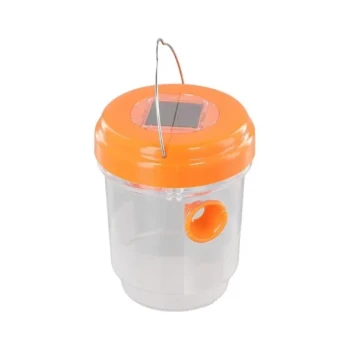
Industrial-grade swarm traps and transport boxes are the primary engines of low-cost biological asset acquisition and safe logistical movement in modern beekeeping. These specialized tools allow apiaries to capture high-quality local bee stocks and relocate them with minimal mortality, providing a scalable and cost-effective alternative to purchasing expensive pre-packaged colonies.
Professional swarm management equipment transforms a chaotic natural event into a predictable growth strategy. By utilizing industrial-grade tools, beekeepers can capture wild genetic resources and expand their hive counts while significantly reducing labor costs and livestock loss.
Reducing Acquisition Costs for Apiary Growth
Capturing Local Biological Resources
Industrial-grade swarm traps provide beekeepers with a cost-effective method for acquiring new biological resources. By simulating an ideal nesting environment, these devices attract wild bee swarms, allowing apiaries to increase their scale without the high overhead of purchasing commercial packages.
Simulating Optimal Nesting Environments
Professional traps are engineered to function as a mobile and controlled primary settlement space. When paired with specialized lures and attractants, these devices entice wild colonies to settle voluntarily, ensuring a high success rate for establishing new production units.
Converting Wild Stocks into Managed Units
The use of professional capture tools allows for the seamless transfer of wild colonies into permanent hives without sustaining damage. This process facilitates the continuous renewal of apiary populations, ensuring that expansion is both steady and sustainable over the long term.
Maximizing Operational Resilience
Preventing Hive Loss Through Preemptive Capture
Swarm traps serve as a critical preemptive measure to recover bees that might otherwise depart an existing colony permanently. By capturing these swarming bees, beekeepers minimize the loss of valuable livestock and protect the overall productivity of the apiary.
Streamlining Scientific Colony Splitting
Expansion is not limited to wild capture; professional tools like division boards and queen cages enable scientific colony splitting. This structured approach to propagation improves the predictability of scaling, even for operators with limited management experience.
Reducing Labor and Operational Friction
Utilizing specialized "Swarm Catchers" allows for the efficient collection of bees from various heights and difficult locations. This specialized equipment significantly reduces labor costs during the peak swarming season, making the expansion process more manageable for commercial operations.
Ensuring Survival During Transit
The Engineering of Industrial-Grade Transport
Once captured, the survival of the colony depends on the quality of the transport box. Industrial-grade boxes feature specialized ventilation designs and sturdy structures specifically built to withstand the rigors of long-distance movement.
Minimizing Stress and Mortality Rates
High-quality transport equipment is designed to minimize stress on the bees during relocation. By maintaining airflow and structural integrity, these boxes ensure that mortality rates remain low, protecting the beekeeper's investment during the critical transition to a new site.
Supporting Large-Scale Logistical Needs
For distributors and wholesalers, providing a full-spectrum product portfolio that includes these transport solutions is essential. High-performance transport boxes are a prerequisite for any operation looking to move large volumes of bees quickly and efficiently across different regions.
Understanding the Trade-offs
The Risk of Pathogen Introduction
While capturing wild swarms is a cost-effective expansion strategy, it carries the inherent risk of introducing diseases or parasites into a managed apiary. Distributors should emphasize the importance of quarantine protocols when selling capture equipment to professional clients.
Dependency on Seasonal Cycles
Swarm trapping is highly dependent on seasonal timing and local environmental conditions. Unlike purchasing packages, which can be scheduled, capture-based expansion requires rapid response times and a readiness to deploy equipment exactly when the swarming season begins.
Equipment Durability vs. Weight
There is a constant trade-off between the durability of industrial-grade traps and the need for them to be lightweight for easy deployment. Premium trading services focus on sourcing equipment that uses advanced materials to provide high structural strength without adding unnecessary weight for the field technician.
How to Apply This to Your Product Strategy
Recommendations for Distributors and Wholesalers
Distributors must recognize that swarm management is a specialized niche requiring professional-grade solutions rather than consumer-level hobbyist gear.
- If your primary focus is serving high-volume commercial apiaries: Prioritize the stocking of well-ventilated, stackable transport boxes that facilitate the safe movement of hundreds of colonies simultaneously.
- If your primary focus is supporting cost-sensitive growing operations: Emphasize a one-stop sourcing approach that bundles swarm traps with high-potency lures and attractants to maximize their capture success rate.
- If your primary focus is building a reputation for technical expertise: Provide comprehensive kits that include division boards, queen cages, and specialized swarm catchers to support both wild capture and scientific hive splitting.
By integrating these specialized tools into a comprehensive product portfolio, distributors can become essential partners in the successful scaling of modern beekeeping operations.
Summary Table:
| Tool Category | Core Function | Operational Impact |
|---|---|---|
| Swarm Traps | Captures wild colonies via simulated nests | Low-cost acquisition of biological assets |
| Transport Boxes | Safe movement with advanced ventilation | Minimized mortality rates during logistics |
| Splitting Tools | Facilitates scientific hive division | Predictable and controlled apiary scaling |
| Swarm Catchers | Efficient collection from difficult heights | Significant reduction in seasonal labor costs |
Partner with HONESTBEE to Scale Your Beekeeping Wholesale Business
As a premier one-stop sourcing partner for commercial apiaries and B2B resellers, HONESTBEE provides a comprehensive wholesale portfolio—from industrial-grade swarm traps and honey-filling machinery to essential industry consumables and cultural merchandise.
We empower our distributors with:
- Premium OEM/ODM Support: Tailor high-performance equipment to your specific market demands.
- Optimized Profit Margins: Competitive wholesale pricing on a full spectrum of professional-grade tools.
- Unmatched Reliability: Rapid response times, deep industry expertise, and ultra-fast delivery to ensure your supply chain never breaks.
Ready to enhance your product offering with professional-grade solutions? Contact our expert team today to request a catalog.
References
- André Brunckhorst, Arno Wieringa. Caracterização dos apicultores do Estado de Goiás. DOI: 10.54018/sssrv6n1-006
This article is also based on technical information from HonestBee Knowledge Base .
Related Products
- Plastic Transporting Bee Packages and Nuc Boxes for Beekeeping
- HONESTBEE Collapsible Tiered Bee Swarm Catcher for Beekeeping
- HONESTBEE Professional Telescopic Pole Bee Swarm Catcher
- JZBZ Style Professional Battery Box with 20 Shipping Cages
- Professional Queen Bee Introduction and Transport Cage
People Also Ask
- What role do bee package boxes play in the commercial transport and expansion of honeybee colonies? - Logistic Essentials
- What are beekeeping boxes called? A Guide to Hive Bodies and Box Types
- How do standardized bee packages serve as a recovery mechanism for commercial beekeeping? Ensure Business Continuity
- What is the commercial value of using standardized bee packages? Drive Scalability in Large-Scale Apiaries
- Why is the timely introduction of high-quality bee packages critical? Save Your Apiary from Asian Hornet Invasions