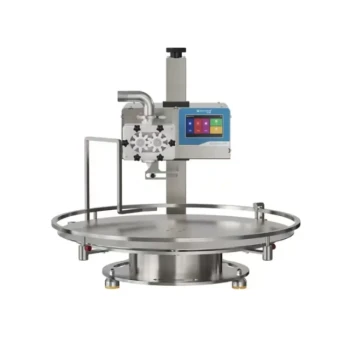
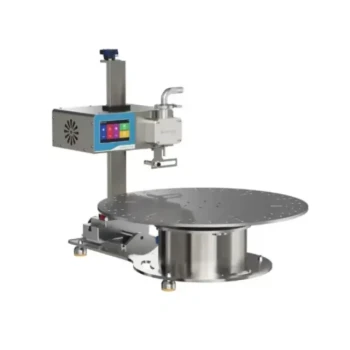
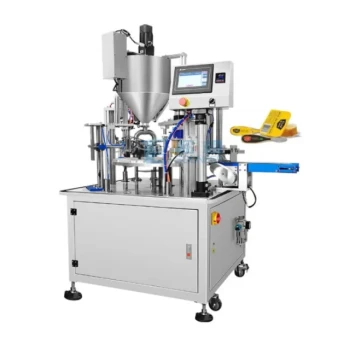
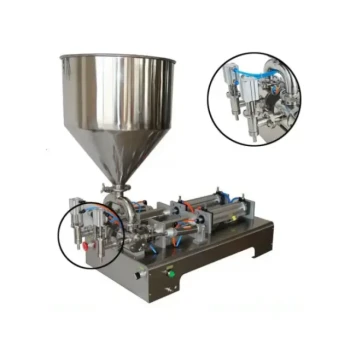
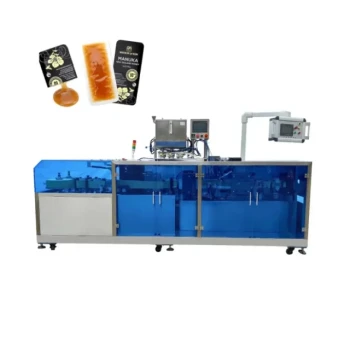
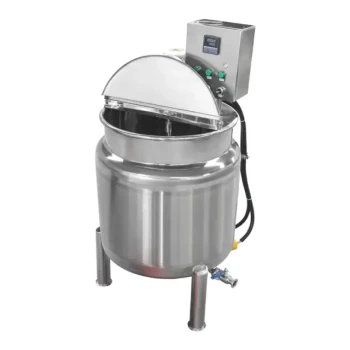
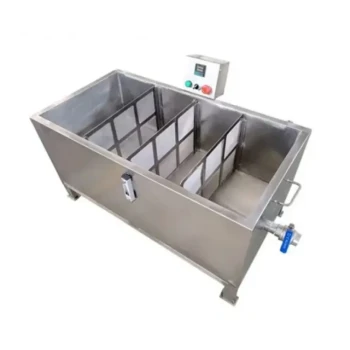
Industrial honey filling machines are the cornerstone of food safety in commercial apiary operations. By utilizing fully enclosed sanitary piping and precise volumetric technology, these machines eliminate human contact and environmental exposure during the packaging phase. This process prevents secondary contamination from microbes like yeast and mold while ensuring every unit meets strict net-weight regulations for international trade.
Modern honey filling systems transition production from manual risk to mechanical precision. This shift ensures that the honey’s biological stability and purity remain intact from the processing facility to the end consumer, providing distributors with a reliable and compliant product.
Eliminating Microbial and Environmental Risk
Fully Enclosed Sanitary Piping
Industrial-grade machines utilize enclosed systems to move honey through the production line. This design acts as a physical barrier against dust, airborne pathogens, and pests.
By minimizing the honey's exposure to the external environment, processors effectively block the introduction of yeast, mold, and bacteria. This is critical for maintaining the honey's long-term shelf life and flavor integrity.
The Role of Contact-Free Automation
Manual filling is a primary source of secondary contamination in food production. Automated systems replace human intervention with sterile filling technologies and drip-proof nozzles.
This mechanical approach ensures that the honey remains untouched by operators. For wholesalers, this reduction in human error translates to fewer batch rejections and higher product safety scores.
Ensuring Regulatory and Trade Compliance
Precision Volumetric Filling
Consistency is a legal requirement in commercial distribution. Industrial machines use high-precision quantitative pumps or weight-based metering to ensure every container is filled to the exact declared net weight.
This accuracy prevents "under-filling" legal risks and "over-filling" profit loss. It ensures that every batch meets international trade standards and standardized packaging laws required for global export.
Clean-In-Place (CIP) Technology
Maintaining hygiene across different batches is simplified through CIP systems. These automated cleaning protocols flush the system without requiring the complete disassembly of the machinery.
CIP is particularly vital when processing honey that must be monitored for pesticide or metal residues. It prevents cross-contamination between different honey varieties, ensuring that organic or premium batches remain untainted.
Enhancing Market Value and Brand Trust
Professional Packaging Aesthetics
In high-end international markets, the appearance of the final product is as important as the contents. Automated machines provide leak-proof sealing and a clean, professional finish that manual methods cannot replicate.
A securely sealed container prevents fermentation and maintains biological activity. For B2B resellers, this professional presentation enhances brand credibility and justifies premium pricing.
Scalability and Efficient Fulfillment
Industrial-grade equipment is designed for high-speed automated filling, allowing for rapid order fulfillment. This efficiency is essential for distributors who require large-scale, standardized output to meet seasonal market demands.
Expertly maintained machinery ensures that production speeds do not compromise hygiene. This balance of speed and safety is what allows commercial apiaries to compete in the global supply chain.
Understanding the Trade-offs
The Challenge of High Viscosity
Honey's natural viscosity changes with temperature, which can impact filling accuracy. Machines must be equipped with temperature-controlled hoppers or specialized pumps to handle thick, raw honey without damaging its natural enzymes.
Initial Investment vs. Long-Term Reliability
The high upfront cost of a full-spectrum sanitary system can be a barrier for smaller operations. However, the trade-off is a significant reduction in waste and a total elimination of the costs associated with product recalls due to contamination.
Making the Right Choice for Your Goal
As a distributor or wholesaler, selecting the right equipment partner is essential for maintaining your reputation and supply chain efficiency.
- If your primary focus is International Export: Prioritize machines with high-precision metering and documented compliance with international food safety regulations.
- If your primary focus is Rapid Fulfillment: Invest in high-speed, fully automated lines that feature integrated CIP systems to minimize downtime between batches.
- If your primary focus is High-End Specialty Honey: Look for systems that emphasize low-heat processing and contact-free technology to preserve biological activity and flavor.
By leveraging advanced filling technology, commercial producers can guarantee the purity and safety of their honey, ensuring a competitive and high-quality product for the global market.
Summary Table:
| Key Feature | Hygiene & Safety Impact | Commercial Advantage |
|---|---|---|
| Enclosed Piping | Blocks dust, pests, and airborne pathogens | Extended shelf life and product purity |
| Precision Metering | Prevents under-filling and legal risks | Compliance with international trade standards |
| CIP Systems | Eliminates cross-contamination between batches | Rapid batch turnover and minimal downtime |
| Automated Filling | Removes human contact and secondary risk | High-speed fulfillment for large-scale orders |
Scale Your Wholesale Operations with HONESTBEE Solutions
Are you a distributor or B2B reseller seeking a reliable partner for large-scale production? HONESTBEE offers a comprehensive one-stop sourcing experience tailored to the needs of commercial apiaries. We supply a full spectrum of beekeeping tools, specialized hardware like honey-filling machines, and essential industry consumables.
How we add value to your business:
- Comprehensive Portfolio: From hive-making machinery to cultural merchandise, get everything in one place.
- Optimized Profit Margins: Premium trading services designed for wholesalers and resellers.
- Rapid Fulfillment: Deep industry expertise paired with ultra-fast delivery and efficient order processing.
- Dedicated Support: Exceptional customer service with rapid response times to keep your supply chain moving.
Ready to enhance your product safety and operational efficiency? Contact our expert team today!
References
- Sibani Moharana, Surya Narayan Pradhan. Contaminants in Honey: A Comprehensive Review of Sources, Risks, and Detection Methods. DOI: 10.7759/s44388-025-06985-5
This article is also based on technical information from HonestBee Knowledge Base .
Related Products
- Commercial Rotary Honey Filling Machine for Production
- Precision Durable Efficient HONESTBEE Rotary Honey Filling Machine
- Fully Automatic Honey Filling Packaging Machine for Processing Line
- Precision Automated Packaging Turntable Honey Spoon Filling Sealing Packing Machine
- Automatic Honey Filling and Filtering Machine for Beekeeping Bottle Filling
People Also Ask
- What role do commercial honey filling machines play in honey distribution? Scaling Efficiency and Quality Control
- What technical support do commercial-grade filling machines provide? Convert Honey NTFPs into Marketable Commodities
- What is the significance of specialized honey filling equipment? Scaling from Beekeeping to Commercial Success
- Why is professional honey filling machinery critical for honey production? Scale Your Apiary's Profit & Efficiency
- Why is high-capacity honey filling machinery necessary for Giant Honey Bees? Solve the Apis dorsata Volume Crisis