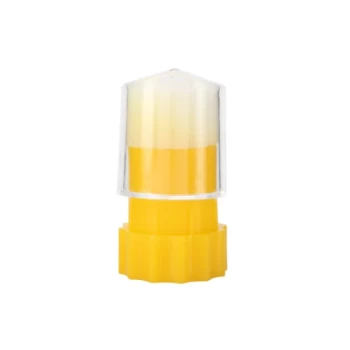
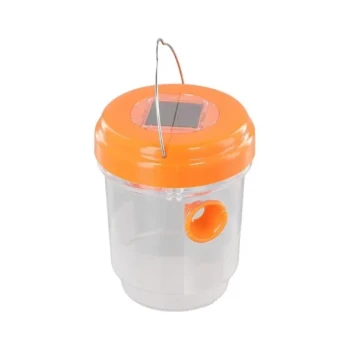
Swarm traps and catcher boxes act as passive acquisition tools designed to capture wild honeybee resources during the natural swarming season. These devices function by simulating the protected environment of a natural nest—often enhanced with attractants—to encourage wild swarms to inhabit them voluntarily.
Core Takeaway Utilizing swarm traps is a strategic method for scaling apiary operations without incurring the high capital costs of purchasing packaged bees. By tapping into wild bee populations, these tools allow for the expansion of production capacity through low-cost, active intervention.
The Mechanics of Colony Acquisition
Simulating Natural Habitats
The primary function of a catcher box is to mimic an ideal nesting site. By replicating the dimensions and protective qualities of a natural hollow, the box appeals to the biological instincts of scout bees searching for a new home.
Utilizing Chemical Attractants
To increase the success rate of capture, these devices are rarely left empty. Beekeepers utilize specific attractants—such as beeswax, honey, sugar water, or specific herbs—to signal resource abundance and suitability to passing swarms.
Converting Wild Resources to Managed Stock
Once a wild swarm settles into the trap, it effectively transitions from a natural resource to a managed asset. This process allows beekeepers to increase hive occupancy rates by leveraging the natural reproductive cycles of local wild bee populations.
Economic and Operational Impact
Reducing Apiary Overhead
The most significant role these tools play is financial. Introducing new bee stock through purchasing nucleus colonies or packages is expensive; capturing swarms provides a zero-cost alternative for acquiring the bees themselves.
Scaling Production Capacity
For apiaries focused on rapid expansion, relying solely on splitting existing hives can be slow. Swarm traps serve as a force multiplier, enabling the simultaneous acquisition of multiple new colonies to quickly scale up honey or pollination production.
Strategic Considerations and Trade-offs
Unpredictability of Wild Stock
While cost-effective, capturing wild swarms introduces genetic variability. Unlike purchased stock with known traits (such as temperament or disease resistance), wild colonies have unknown genetic histories that may require later requeening.
Seasonal Dependency
The efficacy of catcher boxes is strictly tied to the swarming season. This is not a year-round solution for expansion; it requires precise timing to ensure traps are deployed exactly when wild colonies are naturally reproducing and migrating.
Making the Right Choice for Your Goal
To determine if swarm trapping is the right expansion strategy for your operation, consider your primary objectives:
- If your primary focus is cost reduction: Prioritize the deployment of catcher boxes with beeswax or herbal lures to acquire stock without capital expenditure.
- If your primary focus is rapid, controlled scaling: Use swarm traps as a supplementary method to augment purchased stock, recognizing that catch rates can be variable.
Mastering the use of catcher boxes turns the natural phenomenon of swarming into a sustainable engine for apiary growth.
Summary Table:
| Feature | Purpose | Impact on Expansion |
|---|---|---|
| Passive Acquisition | Mimics natural nesting sites | Zero-cost acquisition of new bee colonies |
| Chemical Attractants | Signals suitability to scout bees | Increases trap occupancy and success rates |
| Resource Conversion | Turns wild swarms into managed stock | Rapidly increases hive count and production |
| Economic Scaling | Reduces capital expenditure | Minimizes overhead for commercial operations |
Scale Your Apiary Operations with HONESTBEE
Maximize your honey production and minimize overhead costs with high-quality beekeeping infrastructure. HONESTBEE provides commercial apiaries and distributors with the essential tools needed for rapid expansion, from precision-engineered catcher boxes and swarm traps to industrial-scale honey-filling machines and hive-making equipment.
Whether you are looking to source specialized hardware or stock a full range of industry consumables, we offer comprehensive wholesale solutions tailored to your business goals.
Ready to grow your honeybee stock efficiently? Contact HONESTBEE today to access premium equipment and expert wholesale support for your commercial success.
References
- Gidey Yirga. Assessment of beekeeping practices in Asgede Tsimbla district, Northern Ethiopia: Absconding, bee forage and bee pests. DOI: 10.5897/ajar10.1071
This article is also based on technical information from HonestBee Knowledge Base .
Related Products
- HONESTBEE Professional Telescopic Pole Bee Swarm Catcher
- HONESTBEE Collapsible Tiered Bee Swarm Catcher for Beekeeping
- Plastic Bee Pollen Trap Strips Comb Catcher Collector
- Professional Multi-Component Bucket Wasp Trap
- Gourd Shaped Hanging Wasp Trap Professional Wasp Catcher
People Also Ask
- What should be done if the swarm is situated on the bottom of a tree limb? A Guide to Methodical Bee Capture
- What role do swarm catchers play in maintaining the production scale of an apiary? Turn Colony Loss into Growth.
- What information should be gathered before attempting to catch a swarm of bees? A Safe and Successful Guide
- What precautions can be taken to prevent a newly captured swarm from absconding? Secure Your Swarm with Proven Methods
- What role does a Swarm Catcher play in the process of expanding apiary colony scale? Optimize Growth & Reduce Costs