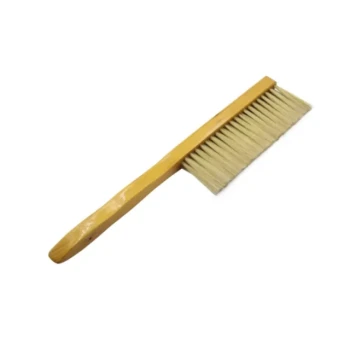
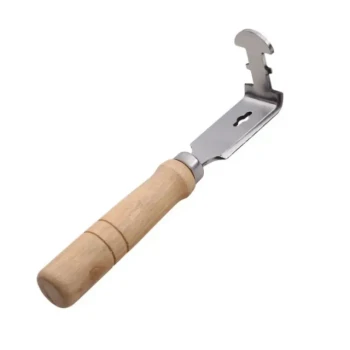
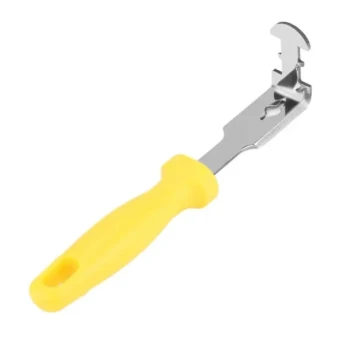
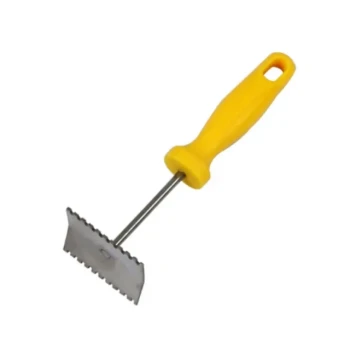
A pollen stripper serves as a precise, quantitative instrument for measuring the labor output of a honey bee colony. Installed at the hive entrance, this tool mechanically separates pollen pellets from the legs of returning foragers without causing physical injury. By collecting and weighing this material over a set duration, beekeepers can generate empirical data to evaluate the foraging efficiency and productivity of the worker bees.
Core Insight: The pollen stripper transforms complex biological behavior into a measurable metric (mass). This allows researchers to objectively determine how factors like maternal genetics or experimental treatments directly impact the "work ethic" and success rate of offspring.
The Mechanics of Measurement
Strategic Placement and Function
The pollen stripper is installed directly at the hive entrance, the unavoidable choke point for all returning foragers. Its physical structure is engineered to interact with the bees as they pass through to enter the colony.
Non-Invasive Separation
The primary function of the device is to strip pollen pellets from the bees' hind legs. Crucially, the design allows for the removal of these resources without causing physical harm to the worker bees, ensuring the test subjects remain viable for continued observation.
Quantifying Foraging Productivity
Converting Labor to Mass
The raw biological activity of foraging is difficult to judge by eye; the pollen stripper converts this activity into weight. By gathering the stripped pollen, the beekeeper obtains a tangible sample that represents the colony's collective effort.
Measuring Efficiency Over Time
Data is derived by weighing the pollen collected over a specific set period. This time-bound measurement allows for the calculation of foraging rates, providing a clear picture of labor productivity.
Applications in Research and Breeding
Assessing Maternal Inheritance
One of the most valuable roles of the pollen stripper is evaluating genetic traits. By measuring the pollen yield, breeders can determine if the offspring of a specific queen (maternal inheritance) possess superior foraging instincts or physical capabilities.
Verifying Experimental Treatments
When testing new supplements, medications, or management techniques, subjective observation is insufficient. The pollen stripper provides quantitative proof regarding whether a specific treatment has increased or decreased the foraging capacity of the treated group.
Understanding the Trade-offs
Contextualizing the Data
While the pollen stripper is excellent for measuring quantity (productivity), it does not inherently measure pollen quality. However, the collected samples can be used for secondary analysis, such as checking for environmental contaminants like pesticides, as noted in broader industrial applications.
Managing Colony Resources
It is vital to remember that the pollen collected is the colony's protein source. While the tool measures performance, prolonged use without breaks can deprive the hive of essential nutrients. The evaluation period must be balanced against the colony's nutritional needs.
Making the Right Choice for Your Goal
To effectively use a pollen stripper for evaluation, align your methodology with your specific objective:
- If your primary focus is Genetic Selection: Compare the total weight of pollen collected across different hives over identical timeframes to identify the most productive maternal lines.
- If your primary focus is Treatment Efficacy: Establish a baseline weight before applying a treatment, then measure the change in yield post-treatment to quantify the impact on worker efficiency.
- If your primary focus is Environmental Monitoring: Use the collected pollen not just for weight, but as a sampling mechanism to test for the presence of pesticides or pollutants in the foraging radius.
The pollen stripper bridges the gap between observation and data, turning the buzz of the hive into a clear, weighable metric of success.
Summary Table:
| Feature | Role in Performance Evaluation |
|---|---|
| Data Conversion | Transforms biological foraging activity into a measurable weight (mass). |
| Genetic Assessment | Evaluates the foraging instincts inherited from specific maternal queen lines. |
| Treatment Impact | Provides empirical proof of how supplements or medications affect colony labor. |
| Environmental Insights | Collects samples to test for pesticide exposure and local flora variety. |
| Time-Bound Metrics | Allows calculation of productivity rates over specific periods for precise comparison. |
Maximize Your Colony Insights with HONESTBEE
At HONESTBEE, we understand that for commercial apiaries and global distributors, data-driven results are the backbone of a successful beekeeping operation. Our comprehensive wholesale range includes specialized hive-making machinery, precision beekeeping tools, and advanced processing equipment designed to streamline your productivity assessments.
Whether you are selecting superior genetic lines or managing large-scale honey production, we provide the industrial-grade hardware and essential consumables you need to scale your business. Ready to upgrade your apiary’s efficiency?
Contact Us Today to Discuss Your Wholesale Needs
References
- Longtao Yu, Xiaobo Wu. Honey bee maternal effects improve worker performance and reproductive ability in offspring. DOI: 10.3389/fcell.2023.1156923
This article is also based on technical information from HonestBee Knowledge Base .
Related Products
- Stainless Steel Pollen Shovel with Wooden Handle
- Plastic Bee Pollen Trap Strips Comb Catcher Collector
- Heavy-Duty Ergonomic Grip Galvanized Pollen Shovel
- Heavy-Duty Ergonomic Stainless Steel Pollen Shovel
- 30 cm Plastic Entrance Hole Bee Pollen Trap and Collector
People Also Ask
- How do bee pollen collection tools affect the quality of bee pollen used in functional dairy ice cream production?
- Why should commercial apiaries focus on the collection of diversified bee products? Maximize Your Hive’s Profit Potential
- How does a specialized pollen collector facilitate the harvesting of diverse bee products? Automate High-Value Yields
- What is the impact of pollen collectors and associated equipment on the cost structure of pollen production? Maximize ROI
- What is the technical significance of using specialized cutting tools for propolis? Master Precision Pollen Harvesting