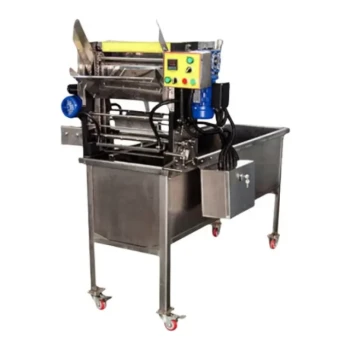
Automated honey-filling machinery serves as the fundamental catalyst for industrialization within the commercial apiary value chain. By integrating precise metering and high-speed automation, these machines enable large-scale operations to transition from bulk raw material suppliers to producers of retail-ready, branded products. This shift significantly reduces labor costs, ensures rigorous hygiene standards, and allows for the rapid scaling of production during peak honey flow periods.
Central Takeaway: Automated filling technology is the critical link that transforms raw honey harvests into standardized, market-ready inventory, providing the consistency and volume required for global distribution and high-value retail placement.
Elevating Apiaries from Suppliers to Brands
Enabling Immediate Retail Readiness
Automated machinery converts primary honey directly into pre-packaged units that meet strict market access standards. This capability allows commercial apiaries to bypass third-party processors, capturing more value within the internal supply chain.
Ensuring Absolute Product Consistency
Precise metering systems ensure that every jar or bottle contains the exact specified weight, minimizing material loss and maintaining brand integrity. For distributors and wholesalers, this consistency is a non-negotiable requirement for large-scale contract fulfillment.
Supporting High-Volume Throughput
During peak flowering seasons, the volume of honey produced can overwhelm manual labor forces. Industrial-grade machinery handles these concentrated production bursts, ensuring that the honey is processed and stabilized before quality can degrade.
Optimizing the Industrial Value Chain
Minimizing Secondary Contamination
Manual handling introduces significant risks of impurities and bacterial contamination. Automated systems utilize sterile filling technology and closed-loop processes to maintain the biological purity of the honey from the hive to the final package.
Full-Chain Standardization
When integrated with other industrial hardware, such as hive-making machinery, filling units contribute to a standardized production environment. This "full-spectrum" approach reduces the comprehensive operating cost per kilogram, making the end product more competitive in the wholesale market.
Reallocation of Human Capital
By automating the repetitive task of bottling, apiaries can reallocate their skilled workforce toward colony health monitoring and optimizing migration paths. This focus on biological productivity leads to higher yields and more resilient bee populations.
Understanding the Trade-offs and Limitations
High Initial Capital Expenditure
The primary barrier to entry is the significant upfront investment required for industrial-grade automation. While it reduces long-term labor costs, it requires a high volume of consistent production to justify the initial "one-stop" sourcing cost.
Maintenance and Technical Expertise
Automated lines require specialized knowledge to calibrate and maintain. Relying on high-tech machinery introduces a single point of failure; if the machine goes down during a peak harvest, it can create a massive bottleneck in the distribution chain.
Reduced Packaging Flexibility
Industrial filling lines are often optimized for specific bottle shapes and sizes. While they excel at high-speed standardized runs, they may lack the flexibility of manual operations when trying to switch between small-batch, artisanal, or custom-shaped containers.
How to Leverage This for Your Distribution Strategy
Applying This to Your Project
As a distributor or wholesaler, understanding the machinery behind the honey is vital for assessing a supplier's reliability and scalability. Your sourcing decisions should reflect the technological maturity of the apiary.
- If your primary focus is rapid order fulfillment: Prioritize suppliers who utilize high-speed automated lines, as they can scale production quickly to meet sudden market demands.
- If your primary focus is premium brand positioning: Look for partners with sterile filling technology to ensure the highest levels of hygiene and product purity for your end customers.
- If your primary focus is supply chain cost-efficiency: Seek apiaries that utilize full-chain standardization, including automated hive-making and filling, to ensure the most competitive bulk pricing.
Industrial-grade automation is the essential bridge that transforms biological honey production into a reliable, high-volume commercial asset.
Summary Table:
| Feature | Strategic Benefit | Industrial Impact |
|---|---|---|
| Precise Metering | Minimizes material loss and ensures weight accuracy | Maintains brand integrity and wholesale compliance |
| High-Speed Automation | Rapid processing during peak honey flow periods | Enables massive scaling and throughput efficiency |
| Sterile Filling | Eliminates risk of secondary human contamination | Guarantees biological purity for global export |
| Process Integration | Standardizes workflow with hive-making/packaging | Reduces total operating cost per kilogram |
| Labor Reallocation | Shifts human capital to biological hive health | Increases overall colony yields and resilience |
Maximize Your Wholesale Potential with HONESTBEE
Are you a distributor or B2B reseller looking to secure a reliable, high-volume supply chain? HONESTBEE provides the full-spectrum hardware and expertise needed to dominate the market. From industrial-grade honey-filling and automated hive-making machinery to premium consumables and cultural merchandise, we are your one-stop sourcing partner.
Why partner with HONESTBEE?
- Comprehensive Portfolio: Everything from specialized hardware to retail-ready consumables.
- Rapid Fulfillment: Efficient order processing and ultra-fast delivery to keep your inventory moving.
- OEM/ODM Support: Deep professional expertise to tailor equipment to your specific brand requirements.
- Exceptional Service: Dedicated support designed to help you maintain high profit margins and supply reliability.
Elevate your production standards and scale your distribution business today. Contact HONESTBEE for Wholesale Solutions
References
- Esteban Otto Thomasz, Agustín Garcia-Garcia. From the “rain-fed triad” to “Europe’s orchard”: the dependence of Spanish agricultural production on irrigation and pollination. DOI: 10.1007/s10113-025-02479-6
This article is also based on technical information from HonestBee Knowledge Base .
Related Products
- Fully Automatic Honey Filling Packaging Machine for Processing Line
- Automatic Honey Filling and Filtering Machine for Beekeeping Bottle Filling
- Precision Durable Efficient HONESTBEE Rotary Honey Filling Machine
- Precision Automated Packaging Turntable Honey Spoon Filling Sealing Packing Machine
- Semi Automatic Small Honey Bottle Filling Machine Honey Filler
People Also Ask
- Why are fully automatic honey filling and packaging lines essential? Boost Your Honey's Market Value and Quality
- What is a fully-automatic honey filler? Streamline Your Production with High-Precision Automation
- How do automated honey filling and packaging machines affect profitability? Boost Margins with HONESTBEE Technology
- How do automated honey filling and packaging machines contribute to the market value of honey products? Maximize Your ROI
- How do industrial-grade automated honey filling and packaging machines mitigate the risk of physical contamination?