
Choosing the right oxalic acid vaporizer wand is a critical decision for effectively managing Varroa mites in your beehives. The best choice balances cost, durability, and operational speed, ensuring the oxalic acid crystals are heated consistently and completely for a successful treatment.
The core challenge is not just buying a vaporizer, but investing in a tool that guarantees a complete and efficient treatment. A wand that fails to fully vaporize the acid or significantly slows down your workflow is a liability, regardless of its initial cost.
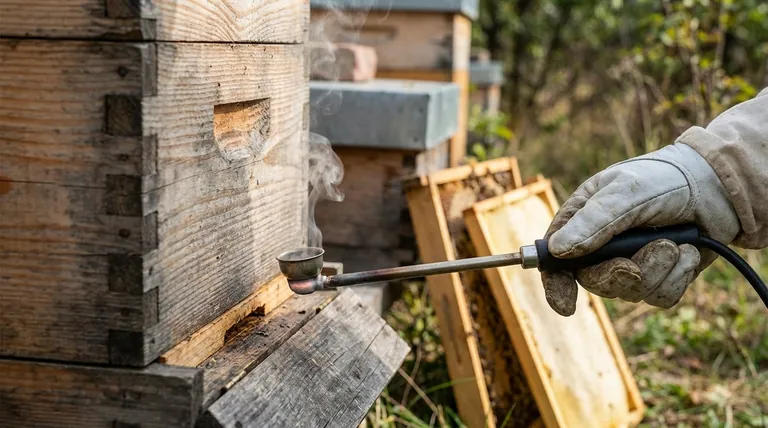
Core Factors for Evaluating Vaporizer Wands
Heating Performance and Consistency
The absolute primary function of a vaporizer is to heat oxalic acid crystals to their sublimation point (around 315°F or 157°C) so they turn directly into a gas.
The wand must reach and maintain this temperature consistently. If leftover crystals remain in the wand’s bowl after a treatment cycle, it signals an incomplete vaporization and a failed treatment.
Durability and Materials
Vaporizer wands are subjected to intense heat cycles. Less expensive models may work well initially but can degrade or fail more quickly over time.
Consider the materials used in the bowl and heating element. A durable, well-constructed wand is a better long-term investment, especially for beekeepers with multiple hives.
Speed of Operation
The total time per hive includes heat-up, treatment, and cool-down. For beekeepers with more than a few hives, this time adds up quickly.
Some models are designed for rapid cooling and can be safely dipped in water. This feature dramatically shortens the time between hive treatments, making your work far more efficient.
Power Source and Functionality
Most vaporizer wands are powered by a 12V source, typically a car or utility battery.
Consider the length and quality of the power cord. A short or flimsy cord can be a significant inconvenience in the apiary, limiting your reach and mobility between hives.
Understanding the Trade-offs
The Cost vs. Time Equation
A low-cost vaporizer is appealing, but it may have a slow heat-up time. While this might be acceptable for one or two hives, it becomes a major bottleneck when treating a larger apiary.
Calculate the value of your time. Often, spending more on a faster, more efficient wand pays for itself by saving you hours of work over a season.
The Risk of Ineffective Treatment
The biggest hidden cost of a cheap or faulty wand is treatment failure. If the device doesn't get hot enough, you won't deliver the correct dose of vaporized acid.
This leads to poor Varroa mite control, potentially weaker colonies, and the need to re-treat, wasting both time and resources. A reliable heating element is non-negotiable.
The Importance of a Proper Seal
For the treatment to be effective, the vapor must be contained within the hive. The design of the wand should allow you to seal the hive entrance effectively during vaporization.
A poor seal not only reduces the treatment's efficacy but also increases your exposure to the acid vapor, creating a significant safety hazard.
How to Apply This to Your Apiary
Choosing the right tool ultimately depends on the scale of your beekeeping operation.
- If you have 1-5 hives: A reliable, basic model is likely sufficient, but prioritize one with positive reviews for consistent heating over speed.
- If you manage 5-20 hives: Invest in a mid-range model that emphasizes faster heating and, critically, a rapid cool-down feature to minimize time between hives.
- If you are a commercial beekeeper: Your primary concerns are durability and speed, so a heavy-duty, professional-grade vaporizer designed for constant, back-to-back use is essential.
Ultimately, the right vaporizer wand makes a critical hive management task simpler, safer, and more effective.
Summary Table:
| Factor | Key Consideration | Impact on Treatment |
|---|---|---|
| Heating Performance | Must consistently reach 315°F (157°C) | Ensures complete sublimation and effective mite kill |
| Durability | Quality of materials for heat resistance | Long-term reliability and cost-effectiveness |
| Speed of Operation | Heat-up and cool-down times | Efficiency for treating multiple hives |
| Power Source | 12V battery compatibility and cord length | Convenience and mobility in the apiary |
Upgrade your Varroa mite control with the right equipment. HONESTBEE supplies durable, high-performance beekeeping supplies and equipment to commercial apiaries and beekeeping equipment distributors through wholesale-focused operations. Let us help you select a vaporizer wand that guarantees effective, efficient treatments for your operation. Contact our experts today to discuss your needs and place your wholesale order!
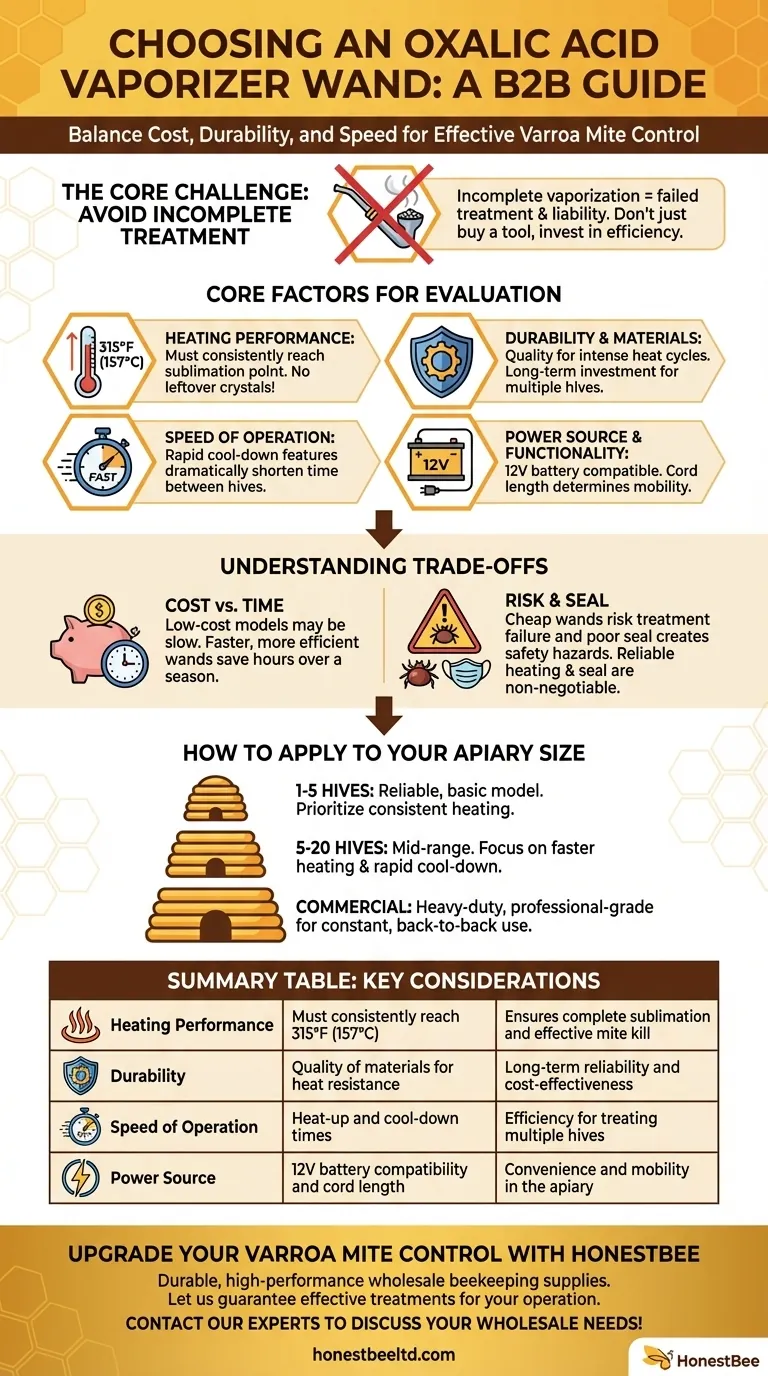
Visual Guide
Related Products
- Oxalic Acid Vaporizer 12V for Bee Varroa Mite Treatment
- Durable 12V Oxalic Acid Vaporizer for Varroa Mite Treatment Beehive Beekeeping Tool
- Heavy Duty 12V Oxalic Acid Evaporator Vaporizer for Bee Varroa Mite Treatment Beekeeping Fumigator Atomizer
- 12V Bee Mite Removal Evaporator Oxalic Acid Vaporizer for Bee Fumigation Treatment 180W Atomization
- Adjustable Formic and Acetic Acid Dispenser for Bee Mite Treatment
People Also Ask
- What factors determine how often to treat for varroa mites with oxalic acid? Time Your Treatment for Maximum Efficacy
- What are the technical advantages of using professional Sublimators? Maximize Mite Control with Precision Vaporizers
- What is the technical objective of applying oxalic acid via a sprayer? Maximize Varroa Resistance in Your Apiary
- How can oxalic acid treatment be applied effectively when capped brood is present? Master the 3-Stage Vapor Protocol
- What is the overall goal of using oxalic acid in late fall for beekeepers? Maximize Winter Survival with a Broodless Treatment



