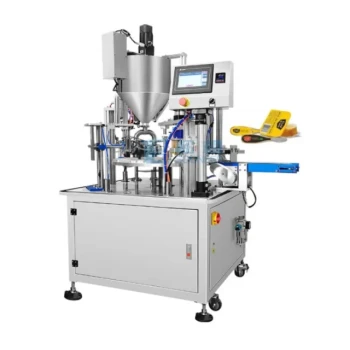
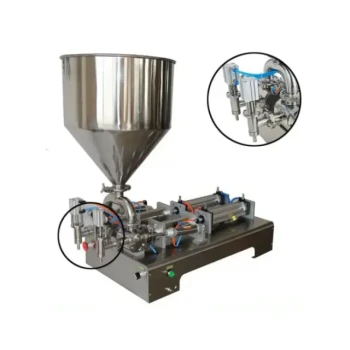
Industrial honey-filling machines are the strategic cornerstone of modern honey commercialization. These systems utilize high-precision quantitative technology to ensure product consistency, maintain rigorous hygiene standards, and significantly reduce manual labor costs. By automating the transition from bulk harvest to retail-ready packaging, they empower distributors to meet strict international trade requirements while maximizing profit margins through increased operational efficiency.
Core Takeaway: Industrial filling machines transform honey from a raw commodity into a high-value retail asset by ensuring precise weight accuracy, aseptic processing, and aesthetic consistency, which are essential for competing in global markets.
Technical Precision and Product Integrity
High-Accuracy Metering and Viscosity Management
Honey presents unique physical challenges due to its high viscosity and tendency to "string" during the pour. Industrial machines utilize volumetric pumping systems or weight sensors to achieve extreme consistency across every unit. This precision ensures that the volume of each bottle aligns perfectly with the labeled weight, protecting the distributor from regulatory scrutiny.
Preservation of Nutritional Components
Advanced filling equipment often integrates temperature control and filtration systems to maintain the honey's natural quality. By precisely managing heat, these machines prevent the degradation of enzymes and nutritional components while ensuring the honey remains fluid enough for rapid packaging. This technical balance is critical for maintaining the "premium" status of bee products.
Aseptic Operations and Contamination Control
Manual handling is the primary source of secondary contamination in food processing. Industrial-grade machines utilize a closed processing path and integrated sealing technology to isolate the product from air and external pollutants. This prevents moisture absorption and chemical changes during storage, extending the shelf life of the product for long-distance distribution.
Commercial Scalability and Market Value
From Bulk Sales to High-Margin Packaging
The most significant commercial advantage is the ability to transition from bulk sales to high-value-added fractional packaging. Automation allows large-scale annual harvests to be rapidly converted into standardized commercial products. This speed enables distributors to respond to market demand fluctuations with much higher agility than manual operations allow.
Meeting International Trade Standards
International exports and high-end retail channels require adherence to strict food safety and labeling regulations. Automated filling provides the stable precision and hygienic safety necessary to pass these audits. Standardized filling also improves the visual consistency of the packaging, meeting the aesthetic expectations of modern consumers in global markets.
Reduction in Operational Overhead
By replacing manual pouring with mechanical operation, businesses can significantly reduce labor costs and material waste. High-precision flow control systems minimize spills and overfills, which, when aggregated over thousands of units, represents a substantial saving in raw material costs. This efficiency directly improves the bottom line for wholesalers and resellers.
Understanding the Trade-offs
Initial Capital vs. Long-term ROI
The primary barrier to entry is the initial capital expenditure required for high-grade automated lines. While the reduction in labor and waste provides a strong ROI, the upfront cost requires careful volume projections to justify. Small-scale distributors must balance their current throughput against the machine's capacity to avoid under-utilization.
Maintenance and Cleaning Complexity
Due to the sticky nature of honey, these machines require rigorous cleaning protocols to prevent bacterial growth and mechanical jams. Specialized "Clean-in-Place" (CIP) systems are often necessary, which adds to the technical complexity of the operation. Maintenance of high-precision sensors also requires a level of technical expertise that may necessitate specialized staff training.
Strategic Recommendations for Your Goal
How to Integrate Filling Technology into Your Supply Chain
Identifying the right equipment depends on your specific market position and growth targets. As a one-stop sourcing partner, we recommend evaluating your needs based on the following criteria:
- If your primary focus is international export: Prioritize machines with integrated aseptic sealing and high-precision weight sensors to ensure 100% compliance with foreign regulatory bodies.
- If your primary focus is rapid market expansion: Invest in high-speed automated lines that can quickly convert large bulk harvests into retail stock to ensure ultra-fast delivery to your clients.
- If your primary focus is premium/specialty honey: Look for equipment with advanced temperature control and gentle filtration to protect the delicate nutritional profile and flavor of high-end bee products.
Optimizing your filling process is the most effective way to ensure your honey products meet the rigorous demands of the global professional market.
Summary Table:
| Advantage Category | Key Feature | Business Impact |
|---|---|---|
| Technical Precision | High-accuracy volumetric metering | Minimizes product waste and ensures regulatory weight compliance. |
| Product Integrity | Aseptic closed-path processing | Prevents contamination and preserves nutritional enzymes for premium status. |
| Commercial Scaling | Rapid bulk-to-retail conversion | Enables quick response to market demand and high-margin fractional packaging. |
| Operational Cost | Automated flow & temperature control | Reduces manual labor overhead and eliminates stringing/spillage losses. |
Scale Your Honey Business with HONESTBEE
Are you a distributor or wholesaler looking to maximize your operational efficiency and profit margins? HONESTBEE provides a comprehensive one-stop sourcing solution tailored for commercial apiaries. From high-precision honey-filling machines and hive-making equipment to specialized hardware and cultural merchandise, we supply the full spectrum of beekeeping tools and consumables.
Why partner with us?
- Comprehensive Portfolio: Access everything from machinery to essential industry consumables.
- Industry Expertise: Leverage our deep professional knowledge to optimize your supply chain.
- Rapid Fulfillment: Benefit from our ultra-fast delivery and dedicated customer service.
Empower your business with reliable equipment and premium trading services. Contact our expert team today to discuss your wholesale needs!
References
- Monika Sharma. Agroforestry as Scientific Tool for Promoting Sustainable Livelihood in Rural Communities: A Review. DOI: 10.55362/ije/2025/4642
This article is also based on technical information from HonestBee Knowledge Base .
Related Products
- Commercial Rotary Honey Filling Machine for Production
- Precision Durable Efficient HONESTBEE Rotary Honey Filling Machine
- Fully Automatic Honey Filling Packaging Machine for Processing Line
- Economy Small Honey Filling Machine Honey Bottle Filler Packaging Machine
- Precision Automated Packaging Turntable Honey Spoon Filling Sealing Packing Machine
People Also Ask
- What role do commercial honey filling machines play in honey distribution? Scaling Efficiency and Quality Control
- What technical support do commercial-grade filling machines provide? Convert Honey NTFPs into Marketable Commodities
- What is the significance of specialized honey filling equipment? Scaling from Beekeeping to Commercial Success
- Why is professional honey filling machinery critical for honey production? Scale Your Apiary's Profit & Efficiency
- Why is high-capacity honey filling machinery necessary for Giant Honey Bees? Solve the Apis dorsata Volume Crisis