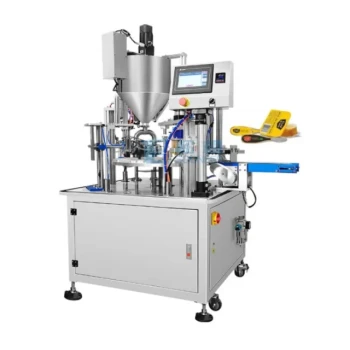
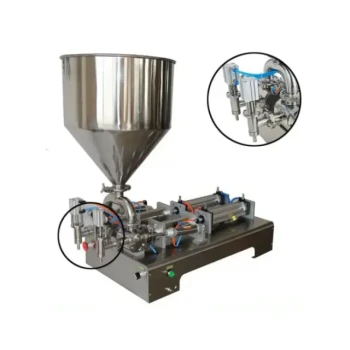
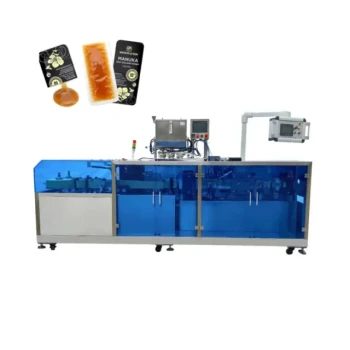
Precision filling and automated hygiene control are the technical foundations of industrial honey commercialization. These machines utilize high-precision quantitative technology to ensure consistent volume, minimize product waste, and maintain a closed environment that prevents secondary contamination. By meeting strict international food safety standards, these systems allow honey products to transition from bulk commodities to high-value, export-ready retail goods.
Industrial honey-filling machines transform raw production into a standardized commercial operation by combining mechanical precision with rigorous hygiene protocols. This technical infrastructure is essential for distributors looking to guarantee product consistency and regulatory compliance across global markets.
Engineering Precision and Product Consistency
High-Precision Quantitative Metering
Industrial-grade machines use advanced flow control systems to ensure that every container receives the exact volume specified on the label. This level of quantitative accuracy is critical for meeting international trade standards and avoiding the legal risks associated with under-filling.
Managing High Viscosity and "Stringing"
Honey presents unique physical challenges due to its thickness and tendency to form long threads during pouring. Technical filling solutions employ specialized nozzles and heating elements to manage honey viscosity, ensuring a clean break after each fill and preventing sticky residue on the packaging.
Visual Uniformity for Retail Markets
Consistency in fill levels is a major factor in consumer trust and brand perception. Automated systems ensure that every bottle on a retail shelf looks identical, providing the visual consistency required for high-end market placement and professional branding.
Food Safety and Regulatory Compliance
Mitigation of Secondary Contamination
By utilizing a closed processing path, industrial machines significantly reduce the risk of environmental pollutants entering the product. This sterile filling environment is a key requirement for achieving the food safety certifications necessary for distribution in regulated markets like the EU or North America.
Isolation from External Elements
Integrated sealing technologies effectively isolate the honey from air and moisture immediately after filling. This prevents moisture absorption and chemical changes during transport, ensuring the honey maintains its chemical profile and shelf-stable properties until it reaches the end consumer.
Compliance with International Export Standards
For wholesalers and distributors, technical standardization is a gateway to global trade. Industrial machines provide the standardized post-processing documentation and quality control evidence required to clear customs and meet the rigorous audits of major international retailers.
Operational Efficiency and Scalability
Reduction in Material Waste and Labor Costs
Manual filling is prone to spills and overfills, which aggregate into significant financial losses over time. Automated systems minimize raw material waste and reduce the need for manual labor, allowing distributors to scale their volume without a linear increase in overhead.
Versatility in Packaging Sizes
Modern filling lines are designed for rapid reconfiguration, allowing for a full-spectrum product portfolio. This flexibility enables suppliers to switch between small retail jars and larger bulk containers quickly, responding to market demands with ultra-fast delivery times.
Supporting High-Value Fractional Packaging
The ability to move from bulk sales to fractional packaging allows producers to capture higher margins. Industrial equipment provides the technical guarantee that small-scale operations or cooperatives can produce retail-ready products that compete with established global brands.
Understanding the Trade-offs
Initial Capital Expenditure and Maintenance
While the long-term ROI is high, the initial investment for industrial-grade equipment is significant. Furthermore, these machines require dedicated maintenance protocols and specialized technical knowledge to ensure they remain sanitary and calibrated, which may necessitate ongoing professional support.
Complexity of Cleaning and Sanitization
Because honey is highly viscous and sugar-rich, the cleaning process for automated lines is intensive. Failure to follow strict Clean-In-Place (CIP) procedures can lead to bacterial growth or cross-contamination between batches, potentially compromising an entire production run.
Making the Right Choice for Your Goal
How to Apply This to Your Project
- If your primary focus is international export: Prioritize machines with fully closed paths and certified food-grade contact surfaces to ensure compliance with global safety regulations.
- If your primary focus is maximizing profit margins: Invest in high-precision metering systems that minimize overfilling and reduce raw material waste across high-volume runs.
- If your primary focus is rapid market responsiveness: Select modular filling lines that allow for quick changeovers between different bottle shapes and sizes to satisfy diverse retail orders.
By integrating industrial-grade filling technology, distributors can ensure their honey products meet the highest standards of safety, precision, and marketability required for global commercial success.
Summary Table:
| Key Feature | Technical Benefit | Commercial Impact |
|---|---|---|
| Quantitative Metering | Precise volume control | Minimizes waste & ensures trade compliance |
| Closed System | Contamination prevention | Meets international food safety standards |
| Viscosity Control | Anti-drip technology | Professional branding & visual consistency |
| Modular Tooling | Versatile packaging sizes | Rapid response to diverse market demands |
Elevate Your Honey Distribution with HONESTBEE
As a leading partner for commercial apiaries and B2B distributors, HONESTBEE delivers a comprehensive, one-stop sourcing solution for the honey industry. Our industrial-grade honey-filling machines and specialized hardware are engineered to maximize your profit margins through high-precision accuracy and reduced material waste.
Why Partner with HONESTBEE?
- Full-Spectrum Portfolio: Access everything from hive-making and honey-filling machines to essential industry consumables.
- Premium Trading Services: Benefit from dedicated OEM/ODM support and deep professional industry expertise.
- Operational Excellence: Experience ultra-fast delivery and rapid response times to ensure supply reliability.
Ready to transition from bulk commodities to high-value retail products? Contact us today to explore our wholesale offerings and see how our equipment can drive your global success.
References
- Ariel Vázquez-Elorza, Jéssica Geraldine Villatoro-Hernández. Prospectiva del sector socioeconómico de la producción apícola en la Península de Yucatán, México. DOI: 10.55965/setp.4.07.a1
This article is also based on technical information from HonestBee Knowledge Base .
Related Products
- Commercial Rotary Honey Filling Machine for Production
- Precision Durable Efficient HONESTBEE Rotary Honey Filling Machine
- Fully Automatic Honey Filling Packaging Machine for Processing Line
- Economy Small Honey Filling Machine Honey Bottle Filler Packaging Machine
- Automatic Honey Filling and Filtering Machine for Beekeeping Bottle Filling
People Also Ask
- What role do commercial honey filling machines play in honey distribution? Scaling Efficiency and Quality Control
- What technical support do commercial-grade filling machines provide? Convert Honey NTFPs into Marketable Commodities
- What is the significance of specialized honey filling equipment? Scaling from Beekeeping to Commercial Success
- Why is professional honey filling machinery critical for honey production? Scale Your Apiary's Profit & Efficiency
- Why is high-capacity honey filling machinery necessary for Giant Honey Bees? Solve the Apis dorsata Volume Crisis