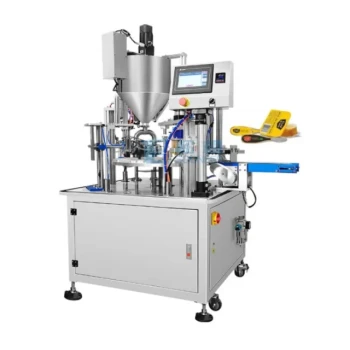
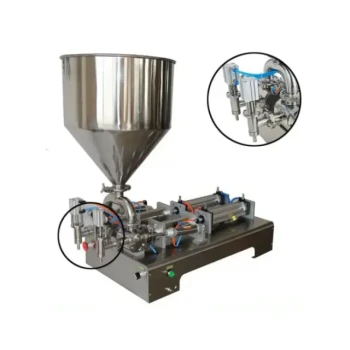
Honey machinery must protect the product’s chemistry, hygiene, and declared net quantity—not merely move viscous honey. For floral honey, the process should support moisture below 20%, sucrose below 5%, reducing sugars above 60%, HMF below 40 mg/kg, and diastase activity above 8 Schade units. Longan honey requires tighter targets: sucrose below 2%, reducing sugars above 70%, HMF below 30 mg/kg, while still maintaining moisture below 20% and diastase above 8 Schade units.
The essential standard is controlled, low-stress processing. Machinery should provide gentle temperature management, effective moisture reduction, fine filtration, hygienic product contact, accurate filling, and documented process control so that longan and floral honey remain within their chemical, sensory, and food-safety specifications.
Which Quality Parameters the Machinery Must Protect
Moisture content and fermentation control
Honey-processing equipment should support final moisture control below 20% for the stated specifications. International commercial specifications may use a limit below 21%, but distributors should confirm the requirement of the destination market and buyer contract.
A temperature-controlled vacuum dehumidifier is preferable to uncontrolled heating because it removes moisture while limiting thermal exposure. Excess moisture can promote fermentation and spoilage during storage and distribution.
Sucrose and reducing sugars
For general floral honey, machinery and processing conditions must preserve compliance with sucrose below 5% and reducing sugars above 60%. Longan honey requires the more stringent targets of sucrose below 2% and reducing sugars above 70%.
These values are primarily verified by laboratory testing rather than by the filling machine itself. The machinery must nevertheless avoid processing conditions that alter the honey’s sugar profile or encourage adulteration, dilution, or cross-contamination between batches.
HMF and diastase activity
HMF must remain below 40 mg/kg for the general specification and below 30 mg/kg for longan honey. Diastase activity should remain above 8 Schade units.
The equipment must therefore avoid excessive or prolonged heating. High temperatures can accelerate HMF formation and reduce enzyme activity, causing a compliant raw material to fail after processing.
Machinery Capabilities Required for Compliance
Controlled low-temperature processing
Processing lines should include accurate temperature control, product-temperature monitoring, and adjustable heating where preheating is necessary. Heating should be used only to improve flow, dehumidification, or filtration—not to compensate for poorly designed pumps or filling systems.
For longan honey, the tighter HMF limit makes thermal control especially important. Suppliers should be able to provide temperature ranges, control accuracy, alarm functions, and operating records.
Vacuum dehumidification
A vacuum dehumidifier should provide controlled moisture removal without excessive thermal stress. Its design should prevent localized overheating, scorching, or extended residence time.
The system should also allow operators to verify the moisture result through laboratory testing before the product proceeds to final filling.
Fine filtration
Fine filtration equipment should remove visible impurities and processing residues while minimizing unnecessary exposure to heat, air, and mechanical stress. Filtration must not strip the product’s characteristic floral aroma or materially alter its natural composition.
The filtration system should be designed for hygienic cleaning and should prevent previously processed batches from contaminating longan or floral honey.
High-viscosity pumping
Honey has high viscosity, particularly when processed at moderate temperatures. Pumps should therefore provide sufficient torque and controlled flow without excessive shear, air entrainment, or foaming.
Suitable systems normally require high-torque drives, sanitary product paths, and precision flow-control valves. Stable flow is important for both accurate filling and consistent product appearance.
Accurate filling and net-content control
Automated filling machines should meter each container accurately enough to meet applicable trade and packaging requirements for declared net quantity. The system should support repeatable dosing despite changes in honey viscosity and temperature.
Useful capabilities include adjustable filling volumes, feedback-based control, container detection, drip reduction, and automatic rejection of underfilled or improperly positioned containers.
Hygienic product-contact design
All product-contact components should be made from appropriate food-grade, corrosion-resistant materials, with stainless steel commonly used for tanks, pipes, filters, pumps, and filling heads.
The equipment should support effective cleaning, drainage, inspection, and sanitation. Hygienic design is essential because contamination introduced during filtration or filling can undermine compliance even when the honey’s chemical parameters are satisfactory.
Standards and Controls Distributors Should Verify
Food-safety and hygienic manufacturing requirements
Machinery should be suitable for use in a controlled food-processing environment following applicable GMP, sanitation, HACCP, and local food-safety requirements. The precise legal standard depends on the destination market.
Some markets or buyers may reference standards such as NMX-F-036-NORMEX-2006 or other national and international honey specifications. That reference should be confirmed against the importing country’s current regulations rather than treated as a universal requirement.
Laboratory verification
Machinery cannot independently prove that honey meets every quality specification. The processing operation should use laboratory testing to verify:
- Moisture content
- Sucrose and reducing sugars
- HMF
- Diastase activity
- Purity and adulteration indicators
- Acidity and other buyer- or market-specific parameters
For longan honey, testing is particularly important because its limits for sucrose, reducing sugars, and HMF are stricter than the general floral-honey targets stated in the reference specification.
Batch traceability and process records
A commercially suitable line should support records for batch identity, processing temperature, dehumidification conditions, filtration, filling quantity, cleaning, and release testing.
Traceability helps distributors and producers demonstrate that a lot was processed under controlled conditions and allows rapid investigation if a shipment fails quality testing.
Packaging and labeling compatibility
The filling line should handle clean, durable, food-grade containers and support consistent closure application. Labeling equipment should be compatible with required product information and legal warnings, including applicable warnings concerning infant botulism risks.
Label content and warning requirements vary by jurisdiction, so the equipment should provide flexibility rather than assume one universal label format.
Why Longan Honey Requires More Process Discipline
Tighter chemical limits
Longan honey’s specified sucrose limit of below 2% and HMF limit of below 30 mg/kg leave less tolerance for process variation than the corresponding general floral-honey limits.
A filling line that operates acceptably for a less sensitive product may still be unsuitable if it creates temperature spikes, excessive residence time, or inconsistent flow.
Preservation of floral identity
Floral honey is sold partly on its distinctive aroma, flavor, and natural characteristics. Excessive heating, aggressive processing, or poor storage control can reduce volatile aromas and diminish the product’s sensory identity.
Equipment selection should therefore consider not only throughput, but also the ability to preserve the characteristics associated with the declared floral source.
Understanding the Trade-offs
Lower temperature versus filling speed
Lower temperatures better protect HMF and diastase values but increase viscosity and may reduce filling speed. The correct solution is controlled, targeted preheating and properly sized pumping equipment—not simply raising the temperature.
Fine filtration versus product character
Filtration improves cleanliness and appearance, but an unnecessarily aggressive filtration setup may affect natural characteristics or create pressure and throughput problems.
The filtration grade should match the buyer’s clarity requirement and the product’s intended market while preserving the honey’s desired sensory profile.
Automation versus validation effort
Automation improves dosing consistency, hygiene, labor efficiency, and order fulfillment. However, automated systems still require calibration, cleaning validation, operator training, and routine product testing.
A highly automated line without documented verification can create the appearance of control without reliably demonstrating compliance.
One line for multiple honey types
A shared line can improve utilization and reduce capital cost, but it increases the risk of cross-contact, aroma transfer, and incorrect batch settings.
Processors handling longan and floral honey should use validated cleaning procedures, clear batch segregation, and changeover controls.
How to Evaluate Machinery for Your Market
The right specification should be based on the strictest product and destination-market requirements you expect to serve.
- If your primary focus is longan honey: Prioritize precise low-temperature control, vacuum dehumidification, validated HMF protection, fine filtration, and laboratory release testing against the stricter sucrose and HMF limits.
- If your primary focus is general floral honey: Select equipment that consistently maintains moisture below 20%, protects diastase activity, controls HMF, and preserves the declared floral aroma and sensory profile.
- If your primary focus is export distribution: Require hygienic food-contact construction, traceable process records, accurate net-content control, adaptable labeling, and documentation aligned with the destination market’s current regulations.
- If your primary focus is high-volume fulfillment: Prioritize high-torque pumping, precision flow control, automated filling, rapid changeover, and cleaning systems that maintain consistency without excessive heating.
The best honey line is one that combines gentle processing, hygienic design, accurate filling, and documented laboratory verification to protect both compliance and product value.
Summary Table:
| Parameter | Floral Honey | Longan Honey |
|---|---|---|
| Moisture | <20% | <20% |
| Sucrose | <5% | <2% |
| Reducing Sugars | >60% | >70% |
| HMF | <40 mg/kg | <30 mg/kg |
| Diastase | >8 Schade units | >8 Schade units |
Ensure your honey processing line meets these standards. HONESTBEE offers a full spectrum of beekeeping machinery—from gentle dehumidifiers and fine filtration to precise fillers—with OEM/ODM support and fast delivery. Our experts help you protect product quality and achieve compliance. Contact us today for a tailored solution: #ContactForm.
Related Products
- Fully Automatic Honey Filling Packaging Machine for Processing Line
- Precision Durable Efficient HONESTBEE Rotary Honey Filling Machine
- Automatic Honey Filling and Filtering Machine for Beekeeping Bottle Filling
- Economy Small Honey Filling Machine Honey Bottle Filler Packaging Machine
- Double Nozzle Small Honey Filling Machine Honey Sachet Packing Packaging Equipment
People Also Ask
- Why are fully automatic honey filling and packaging lines essential? Boost Your Honey's Market Value and Quality
- What is a fully-automatic honey filler? Streamline Your Production with High-Precision Automation
- How do automated honey filling and packaging machines affect profitability? Boost Margins with HONESTBEE Technology
- How do automated honey filling and packaging machines contribute to the market value of honey products? Maximize Your ROI
- How do industrial-grade automated honey filling and packaging machines mitigate the risk of physical contamination?