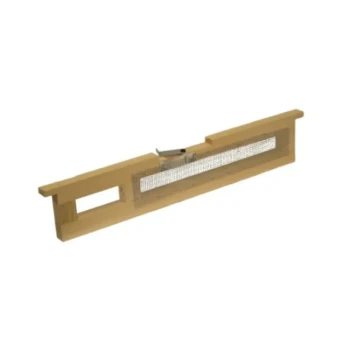
Artificial insemination (AI) equipment removes the randomness of natural mating, allowing for precise control over the genetic lineage of Caucasian honeybees. By moving the breeding process from the open air to a controlled environment, these tools ensure that specific, superior traits are stably inherited rather than diluted by uncontrolled hybridization.
The Core Value of AI in Beekeeping Artificial insemination is not merely a reproductive tool; it is a mechanism for genetic stabilization. It converts the inherent variability of nature into a predictable production system, ensuring that the unique physiological advantages of the Caucasian honeybee are consistently replicated to meet commercial demands.
Moving from Randomness to Directional Breeding
Eliminating Environmental Variables
In traditional beekeeping, mating occurs in the air, where the queen mates with random drones. This introduces a high degree of genetic uncertainty.
Artificial insemination equipment grants breeders total control over the paternal line. This allows for the specific selection of drones that carry desired genetic markers, bypassing the risks of natural, open-air mating.
Preserving the Long Proboscis Trait
The Caucasian honeybee is distinct for its exceptionally long proboscis (up to 7.5 mm). This physiological trait makes them superior pollinators for deep-flower crops like alfalfa.
Without controlled breeding, this trait can be diluted through cross-breeding with other strains. AI equipment ensures that queens are mated with drones that possess this specific physical characteristic, fixing the trait within the population.
Stabilizing High Foraging Activity
Productivity is directly linked to the foraging drive of the colony. Caucasian bees are known for high foraging activity, but this behavior must be reinforced across generations.
AI allows breeders to perform "directional breeding," systematically selecting for high-energy behaviors. This ensures that the offspring maintain the aggressive foraging habits required for high honey and propolis yields.
Enhancing Health and Operational Efficiency
Accelerating Disease Resistance
Natural selection for disease resistance is slow and inefficient. AI equipment speeds up this process by allowing breeders to cross queens with proven resistance to pests like Varroa mites.
By strictly controlling the mating pairs, technicians can increase the frequency of resistance alleles (gene variants) in the population. This "fixes" the genetic traits that protect against viral infections and mite infestations much faster than nature allows.
Systematizing Queen Replacement
Relying on natural queen replacement can lead to gaps in productivity. AI facilitates the systematic production of high-quality queens.
This allows beekeepers to replace queens on a schedule rather than reacting to colony failure. The result is a sustained high level of productivity and technical efficiency across the entire apiary.
Understanding the Trade-offs
Technical Complexity and Cost
While AI offers precision, it requires significant investment in specialized equipment and training. It transforms beekeeping from a husbandry practice into a technical laboratory discipline.
Risk of Genetic Bottlenecks
Directional breeding is powerful, but it narrows the gene pool. Focusing exclusively on a few traits (like honey yield or proboscis length) without careful management can reduce overall genetic diversity, potentially making the population vulnerable to unforeseen environmental stressors.
Making the Right Choice for Your Goal
To maximize the utility of artificial insemination for Caucasian honeybees, align your breeding strategy with your specific operational targets:
- If your primary focus is crop pollination: Prioritize mating lines that exhibit the longest proboscis length to maximize efficiency on deep-flower legumes.
- If your primary focus is honey production: Select drones from colonies with the highest recorded foraging activity and propolis collection behaviors.
- If your primary focus is colony survival: Use AI to cross-breed exclusively with lines demonstrating high hygienic behavior and Varroa resistance to reduce chemical dependencies.
Artificial insemination transforms the Caucasian honeybee from a natural resource into a precision-engineered asset for high-yield agriculture.
Summary Table:
| Key Benefit | Impact on Productivity | Genetic Control Mechanism |
|---|---|---|
| Trait Preservation | Maintains long proboscis (7.5mm) for deep-flower pollination | Fixed paternal line selection |
| Disease Resistance | Faster adaptation to Varroa mites and viral infections | Targeted crossing of resistance alleles |
| Foraging Stability | Ensures consistent high honey and propolis yields | Directional breeding for high-energy behavior |
| Operational Efficiency | Systematized queen replacement schedules | Predictable production systems |
Elevate Your Breeding Precision with HONESTBEE
Transform your apiary into a high-performance production system with professional-grade artificial insemination tools. HONESTBEE specializes in supporting commercial apiaries and distributors with a comprehensive wholesale selection of beekeeping machinery and essential consumables.
Whether you need precision hive-making equipment, honey-filling machines, or specialized breeding hardware to fix superior genetic traits, we provide the industrial-strength solutions required for modern beekeeping.
Maximize your genetic potential today—Contact HONESTBEE for Wholesale Solutions!
References
- G. Gumbatova. Development Peculiarities in Azerbaijan Apis mellifera subsp. caucasica Gorbachev, 1916. DOI: 10.33619/2414-2948/103/20
This article is also based on technical information from HonestBee Knowledge Base .
Related Products
- Queen Bee Artificial Insemination Instrument Equipment for Instrumental Insemination
- Stainless Steel Beekeeping Queen Grafting Tool for Honey Bee Rearing
- Plastic Beekeeping Honey Bee Larvae Grafting Tools for Queen Rearing and Chinese Grafting
- Plastic Chinese Queen Grafting Tool for Bee Queen Rearing
- Double Head Beekeeping Grafting Tools for Beekeepers
People Also Ask
- Why is maintaining sanitary conditions important during artificial insemination? Protect Your Queen from Fatal Infections
- Why are artificial insemination instruments critical in bee hybridization? Master Genetic Control & Pure Breeding
- What is the core value of bee artificial insemination instruments in breed improvement? Achieve Precise Genetic Control
- Why is professional bee artificial insemination equipment considered a core tool for genetic control in honeybee breeding? Ensure 100% Purity
- Why is high-purity CO2 used for queen bee artificial insemination? Unlock Precision Breeding & Faster Egg-Laying