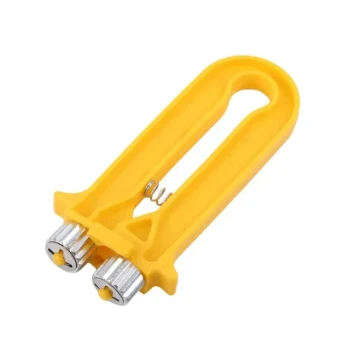
Cross-wires serve a critical dual purpose in the design of bee swarm traps: excluding pests and providing structural support. Their most immediate function is to create a physical barrier that prevents birds, squirrels, and other large intruders from colonizing the nest space. Simultaneously, they offer mechanical reinforcement to handle the significant weight of an incoming colony.
Core Takeaway Cross-wires are not merely defensive; they are structural components that prevent pest infestation and support the heavy load of a swarm—which can weigh up to 30 pounds—ensuring the trap remains a secure and stable environment for honeybees.
Establishing a Defensive Perimeter
Blocking Unwanted Guests
Swarm traps (bait hives) are attractive real estate for many creatures, not just bees.
Cross-wires create a physical gate that effectively stops birds, squirrels, and rodents from entering. Without this barrier, these animals often damage the interior or build their own nests, rendering the trap useless for honeybees.
Permitting Bee Access
While the wires exclude large intruders, they are designed to be non-intrusive to insects.
The spacing allows scout bees and the eventual swarm to pass through freely. This selective permeability ensures that the trap remains exclusive to your target species.
Managing Weight and Stability
Supporting the Swarm's Mass
A full honeybee swarm is surprisingly dense and heavy.
According to data, a swarm can weigh between 10 to 30 pounds. This sudden addition of weight can stress a lightweight trap if it is not properly reinforced.
Load Distribution
The cross-wires act as a form of internal scaffolding.
They help distribute the structural load of the swarm across the opening area. This prevents the weight from concentrating in a way that might damage the trap or cause the clustering bees to fall.
Facilitating Trap Setup
Securing Pheromone Lures
Attracting scouts requires the precise placement of scent lures.
Cross-wires provide an ideal, central anchor point for securing pheromone lures. Tying lures to these wires places the scent directly in the entrance airflow, maximizing its reach to passing scouts.
Understanding the Trade-offs
Potential for Obstruction
While wires are necessary for security, there is a balance to be struck regarding density.
If cross-wires are installed too thickly or with spacing that is too tight, they can impede the rapid flow of bees during the actual swarming event. The goal is a barrier to rodents, not a barricade to insects.
Entrance Debris
Any physical barrier across an entrance has the potential to catch material.
Leaves or debris can occasionally get snagged on the wires. It is important to ensure the design does not encourage the accumulation of blockage that could seal the trap off entirely.
Making the Right Choice for Your Goal
When constructing or selecting your swarm trap, consider how the cross-wires align with your specific environment.
- If your primary focus is Pest Exclusion: Ensure the wires are spaced narrowly enough to block small rodents (like mice) while maintaining a clear path for bees.
- If your primary focus is Structural Integrity: Verify that the wires are securely fastened to the trap body to support the potential 30-pound load of a large capture.
Properly installed cross-wires turn a simple box into a secure, durable vault capable of housing a massive colony.
Summary Table:
| Feature | Primary Function | Key Benefit |
|---|---|---|
| Pest Exclusion | Blocks birds, squirrels, and rodents | Prevents trap colonization by non-target species |
| Structural Support | Internal scaffolding & load distribution | Safely supports swarm weights of 10-30 lbs |
| Lure Placement | Central anchor point | Maximizes pheromone scent reach in airflow |
| Selective Access | Optimized wire spacing | Allows scout bees free entry while barring predators |
Elevate Your Beekeeping Operation with HONESTBEE
At HONESTBEE, we specialize in empowering commercial apiaries and distributors with high-performance beekeeping solutions. Whether you need durable swarm traps, precision hive-making machinery, or honey-filling equipment, our comprehensive wholesale portfolio is designed to scale your business. From essential consumables to specialized hardware and honey-themed cultural merchandise, we provide the tools you need to succeed in the modern market.
Ready to optimize your apiary or expand your distribution line? Contact us today to discuss your bulk requirements and custom solutions!
References
- Michael K. O’Malley, Catherine M. Zettel Nalen. Swarm Trapping for Pest Control Operators. DOI: 10.32473/edis-in785-2009
This article is also based on technical information from HonestBee Knowledge Base .
Related Products
- HONESTBEE Professional Telescopic Pole Bee Swarm Catcher
- HONESTBEE Collapsible Tiered Bee Swarm Catcher for Beekeeping
- Plastic Bee Pollen Trap Strips Comb Catcher Collector
- Professional Bee Frame Wiring Tool with Integrated Tensioning System by HONESTBEE
- Professional Frame Preparation: The HONESTBEE Electric Wire Embedder
People Also Ask
- What should be done if the swarm is situated on the bottom of a tree limb? A Guide to Methodical Bee Capture
- What role do swarm catchers play in maintaining the production scale of an apiary? Turn Colony Loss into Growth.
- What information should be gathered before attempting to catch a swarm of bees? A Safe and Successful Guide
- What precautions can be taken to prevent a newly captured swarm from absconding? Secure Your Swarm with Proven Methods
- What role does a Swarm Catcher play in the process of expanding apiary colony scale? Optimize Growth & Reduce Costs