Initializing experimental honey bee colonies requires immediate stability to ensure data validity. Providing drawn comb and honey is essential because it grants immediate survival security to vulnerable units, such as package bees. This practice mitigates the risks of early spring food shortages, significantly shortens the time required for colony establishment, and ensures that colonies achieve consistent initial weights and population sizes for accurate research comparison.
Core Takeaway By removing the immediate burden of foraging and wax construction, providing drawn comb and honey creates a "survival buffer" that protects new colonies from early spring resource gaps. This standardization is critical for research, as it ensures all experimental units reach comparable biological baselines rapidly.
The Impact on Colony Survival
Immediate Security for New Units
New colonies, particularly those established from package bees, are in a precarious state. They lack the infrastructure (comb) and the energy reserves (honey) necessary for immediate stability. Providing drawn comb and honey bridges this gap, offering immediate survival security while the bees acclimate to their new environment.
Preventing Resource-Based Failure
The early spring period often presents significant environmental challenges, including fluctuating temperatures and inconsistent nectar flows. Without supplemental resources, a new colony faces the immediate threat of starvation. Pre-installing honey prevents the negative impacts of these potential food shortages, ensuring the colony does not collapse before the experiment truly begins.
Optimizing for Research Integrity
Shortening the Establishment Period
For research purposes, the time between colony installation and data collection is a critical variable. Providing ready-made infrastructure shortens the colony establishment period. This allows the colony to bypass the energy-intensive phase of initial comb building, shifting their focus immediately to brood rearing and population growth.
Ensuring Standardization
In experimental settings, variables must be controlled to ensure that differences in results are due to the treatment, not the starting conditions. Colonies initiated with different methods can vary wildly in how fast they grow. Using drawn comb and honey ensures that these colonies achieve consistent initial weights and population sizes more rapidly, creating a uniform baseline for study.
Understanding the Trade-offs
The Requirement of Clean Resources
While this method is superior for standardization, it relies heavily on the availability of specific resources. You must have access to drawn comb and honey that are free from disease or chemical residues.
The Risk of Variable Introduction
If the drawn comb or honey is not uniform across all test units, you risk introducing a new variable. For this method to work as intended, the quality and quantity of the provided resources must be identical for every colony in the experiment.
Making the Right Choice for Your Goal
When designing your experimental protocol, consider your primary objectives:
- If your primary focus is Colony Survival: Prioritize providing ample honey stores to buffer against unpredictable early spring weather and preventing starvation.
- If your primary focus is Data Consistency: Ensure every colony receives the exact same amount of drawn comb to force rapid, uniform population growth across all experimental units.
By standardizing the initial input of energy and infrastructure, you transform biological variables into reliable constants for your research.
Summary Table:
| Factor | Impact of Providing Resources | Benefit for Researchers |
|---|---|---|
| Energy Expenditure | Eliminates immediate need for wax production and foraging. | Accelerates colony establishment and brood rearing. |
| Survival Security | Buffers against early spring starvation and resource gaps. | Reduces experimental unit loss and attrition rates. |
| Data Integrity | Standardizes initial weights and population baselines. | Minimizes variables for more accurate comparisons. |
| Timeline | Bypasses the infrastructure building phase. | Shortens the gap between installation and data collection. |
Scale Your Apiary Operations with HONESTBEE Precision
Maintaining research-grade consistency or commercial-scale productivity requires high-quality infrastructure. At HONESTBEE, we specialize in supporting commercial apiaries and distributors with a full spectrum of professional-grade beekeeping tools and machinery.
Whether you need specialized hive-making machines to produce your own drawn-comb frames, precision honey-filling equipment for your harvest, or a reliable bulk supply of essential industry consumables, we provide the hardware necessary to transform biological variables into reliable constants.
Partner with HONESTBEE to enhance your operational efficiency—Contact us today to discuss your wholesale needs!
References
- Ge Zhang, Matthew E. O’Neal. North American Prairie Is a Source of Pollen for Managed Honey Bees (Hymenoptera: Apidae). DOI: 10.1093/jisesa/ieab001
This article is also based on technical information from HonestBee Knowledge Base .
Related Products
- Heart-Shaped Comb Honey Frame and Honeycomb Cassette
- Wooden Bee Brush with Double-Row Horsehair Bristles
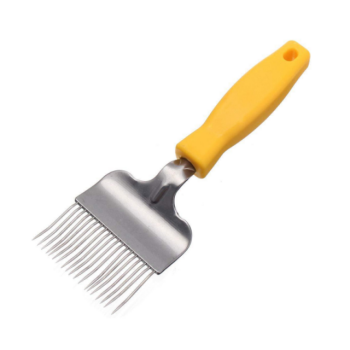
- Professional Bent Tine Honey Uncapping Fork with Ergonomic Grip
- Plastic Honey Comb Frames Cassette Box for Honey
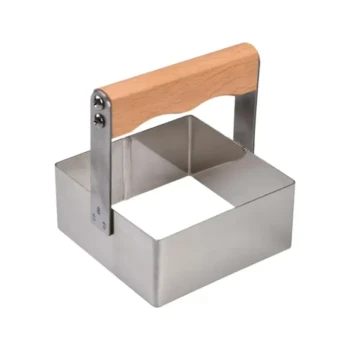
- Heavy Duty Stainless Steel Honeycomb Cutter
People Also Ask
- How are honeybee combs utilized for non-destructive colony monitoring? Master Population Density Tracking
- What is a honeycomb frame? The Key to Modern, Sustainable Beekeeping
- What is the technical purpose of exchanging honeycomb frames? Master Apiary Equalization for Growth
- What frame to use for honeycomb? Choose the Right System for Pure, Edible Comb
- What is the significance of sampling honeycomb frames and hive bottoms? A Guide to Scientific Sanitation Monitoring